DPI in text usually means dots per inch, a measurement used to describe the resolution or detail of printed images. However, its meaning can change depending on the conversation. If you’re wondering What Does DPI Mean in Text, it can refer to screens, printers, photographs, or digital designs.
You may see this term in text messages, Instagram conversations, TikTok comments, gaming chats, and discussions about technology. People often search for What Does DPI Mean in Text because DPI is not a typical texting abbreviation like LOL or BRB.
Understanding the context is important because DPI has several technical meanings. In this guide, you’ll learn what it means, how people use it online, and how to respond when someone mentions it in a message. Knowing What Does DPI Mean in Text can help you understand its intended meaning in different conversations.
Quick Answer: What Does DPI Mean in Text?
DPI most commonly stands for dots per inch. It describes how many individual dots fit into one inch of a printed image. A higher DPI generally means more detail in printing, although the final quality also depends on the image and printer.
For example:
- “This image needs 300 DPI.” The image should have a suitable resolution for high quality printing.
- “Check the DPI before printing.” Check the image’s print resolution.
- “My mouse has adjustable DPI.” The message refers to mouse sensitivity rather than printing.
DPI is not a universal slang expression. It is mainly a technical abbreviation, and the exact meaning depends on the topic being discussed.
What Does DPI Stand for?
DPI stands for dots per inch. It is a measurement associated with printing and image output. It tells you how many printed dots are placed within one inch of a printed area.
For example, a printer setting of 300 DPI means the printer can place 300 dots across each inch in a particular direction. This measurement helps describe the level of detail in printed output.
People often discuss DPI when working with:
- Printing: Choosing image settings for clear printed documents and photographs.
- Graphic design: Preparing artwork, posters, flyers, and other designs.
- Photography: Checking image quality before printing pictures.
- Scanners: Discussing the detail captured when scanning documents or photos.
- Gaming: Adjusting mouse sensitivity for better control.
The term can appear in everyday conversations when someone asks about image quality or device settings.
Is DPI Slang, an Acronym, or an Abbreviation?
DPI is a technical abbreviation, not traditional internet slang. It is formed from the first letters of the words “dots per inch.” Unlike expressions such as IDK, IMO, and BRB, it does not usually communicate an emotion or shorten a common sentence. Instead, it refers to a measurement or setting.
For example:
- “What DPI should I use for this poster?” Asking about print resolution.
- “I changed my mouse DPI.” Talking about mouse sensitivity.
- “The scanned document looks blurry at this DPI.” Discussing scan quality.
Although people use it in casual messages, its meaning remains connected to technology.
Does DPI Have More Than One Meaning?
Yes. Although dots per inch is a common meaning, DPI can refer to different things depending on the subject.
Here are some examples:
- Dots Per Inch: A measurement used in printing and image resolution.
- Mouse Sensitivity: A setting that affects how quickly a mouse pointer moves across a screen.
- Data Processing Interface: A possible technical expansion used in specific software or system contexts.
- Deep Packet Inspection: A networking method used to examine data moving through a network.
The first two meanings are especially relevant in everyday conversations about printing, computers, and gaming. If someone sends DPI without explaining the subject, you may need to ask what they are discussing.
Where Do People Use DPI Online?
DPI appears on different social media platforms and messaging apps. However, it is usually used when people discuss technology, photography, design, or gaming rather than ordinary social conversations.
DPI on TikTok
On TikTok, people may mention DPI in videos or comments about graphic design, photography, printing, and gaming equipment.
For example:
- “What DPI do you use for your mouse?”
- “Make sure the poster is 300 DPI.”
- “This design looks better at a higher resolution.”
In gaming videos, DPI often refers to mouse sensitivity. In design tutorials, it usually relates to print settings. The topic of the TikTok video helps explain which meaning the creator intends.
DPI on Snapchat
On Snapchat, DPI may appear in conversations about pictures, editing, printing, or computer equipment.
For example:
- “Can you send me the image in 300 DPI?”
- “I need to check the DPI before printing it.”
- “What’s your mouse DPI?”
These messages are generally technical rather than slang based. The sender is discussing an image or device setting.
DPI on Instagram
Instagram users may mention DPI in comments, direct messages, and conversations about photography or graphic design.
Examples include:
- “Is this image 300 DPI?”
- “The print quality depends on the file.”
- “What DPI did you use for this artwork?”
Designers and photographers may discuss DPI when preparing images for physical products, posters, or professional printing.
DPI on WhatsApp
On WhatsApp, people may use DPI when sharing design files, photographs, screenshots, or technical instructions.
For example:
- “Please send the original image with its full resolution.”
- “The printer needs a 300 DPI file.”
- “Can you check the mouse DPI setting?”
On WhatsApp, DPI usually refers to a technical detail rather than a casual expression.
DPI in SMS Text Messages
People can also use DPI in regular SMS conversations, especially when discussing printing services, computer settings, or digital images.
For example:
- “The shop asked for a 300 DPI picture.”
- “I changed the DPI on my mouse.”
- “Can you check the image resolution?”
The meaning depends on the subject of the conversation, not the messaging service.
What Does DPI Mean in Text? 10 Real Chat Examples
These conversations show how people might use DPI when discussing different topics. Each example includes an explanation to make the meaning clear.
Example 1: Preparing an Image for Printing
A: The printing shop asked me to send a better image.
B: Did they mention the DPI?
A: Yes, they need 300 DPI.
Meaning: Person B is asking about the image’s print resolution. The shop wants a file suitable for printing.
Example 2: Discussing a Mouse Setting
A: My mouse feels too slow when I play games.
B: Try increasing the DPI.
A: I’ll test that.
Meaning: DPI refers to mouse sensitivity. Increasing it can make the pointer move farther with the same physical mouse movement.
Example 3: Asking About a Poster
A: I’m designing a poster for the school event.
B: What DPI are you using?
A: I’m setting it up for high quality printing.
Meaning: Person B wants to know the resolution setting for the poster.
Example 4: Sharing a Photograph
A: I want to print this vacation picture.
B: Check its DPI first.
A: Okay, I’ll check the file.
Meaning: Person B is reminding the sender to check if the image is suitable for printing.
Example 5: Talking About Graphic Design
A: My design looks blurry after printing.
B: What DPI did you use?
A: I’m not sure. I need to check.
Meaning: Person B suspects that the print settings may be affecting the image quality.
Example 6: Asking About Gaming Equipment
A: What mouse do you use for gaming?
B: I use one with adjustable DPI.
A: That’s useful for different games.
Meaning: DPI refers to the mouse’s sensitivity setting, which can be adjusted for different playing styles.
Example 7: Discussing a Scanned Document
A: I scanned my old certificates.
B: What DPI did you select?
A: I used 300.
Meaning: They are discussing the scanner’s resolution setting. It affects how much detail the scan captures.
Example 8: Asking for a Better Design File
A: I sent you the logo. Is it ready for printing?
B: Can you check if it’s high enough DPI?
A: I’ll ask the designer.
Meaning: Person B wants to make sure the logo file is suitable for printed use.
Example 9: Adjusting Mouse Sensitivity
A: My cursor moves too quickly.
B: Your DPI might be too high.
A: I’ll lower the setting.
Meaning: The conversation is about reducing mouse sensitivity to make the pointer easier to control.
Example 10: Discussing Print Quality
A: Why does my small picture look pixelated on the poster?
B: It might not have enough image detail for that print size.
A: Does DPI affect that?
B: Yes, but the original image dimensions matter too.
Meaning: They are discussing print quality. DPI is one factor, but the actual image resolution also matters.
These examples show that DPI is usually a technical term used in conversations about printing, images, scanners, and computer mice.
How to Reply When Someone Says DPI
Your reply depends on what the other person is discussing. If they mention DPI while talking about a picture, they may be asking about print resolution. If they are discussing gaming equipment, they probably mean mouse sensitivity.
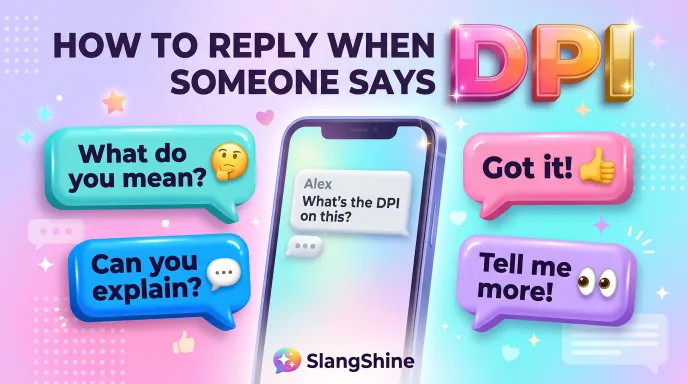
Here are some natural ways to respond.
1. Casual Replies
Use these when someone mentions DPI in an ordinary conversation.
- “I think it’s 300 DPI.”
- “Let me check the settings.”
- “I’m not sure about that.”
- “I’ll ask the designer.”
- “Which DPI do you recommend?”
2. Funny Replies
If you are chatting with a friend who enjoys technology or gaming, you can keep the conversation playful.
- “My mouse is faster than my reactions!”
- “I need to check my settings first.”
- “That’s too technical for my morning!”
- “My mouse needs an upgrade.”
- “Let’s not confuse me with too many settings!”
3. Friendly Replies
These responses work when you want to understand the other person’s question.
- “Can you explain which DPI you mean?”
- “Are you talking about printing or gaming?”
- “I can check that for you.”
- “Thanks for explaining.”
- “Let me find the right setting.”
4. Neutral Replies
If you want to keep your answer short and direct, try these options.
- “Understood.”
- “I’ll check.”
- “That makes sense.”
- “Can you clarify?”
- “Thanks for the information.”
If you are unsure what DPI means in a particular message, ask if the person is talking about printing, image resolution, or mouse sensitivity.
Is DPI Rude or Offensive?
No, DPI is not generally rude, offensive, or insulting. It is a technical abbreviation used in conversations about devices, digital images, and printing. For example, if someone asks, “What DPI is your mouse set to?” they are simply asking about a computer setting.
Similarly, “Can you send this image at 300 DPI?” is a request for a particular print related specification. There is no widely recognized offensive meaning of DPI in ordinary texting. However, an unfamiliar abbreviation can have a different meaning in a specialized workplace or online community.
Is DPI Safe to Use in Text Messages?
Yes. DPI is safe to use when discussing printing, photography, graphic design, or computer equipment. It is useful when both people understand the technical subject. If the other person is unfamiliar with the term, explain what it means instead of assuming they know it.
For example:
- Technical: “Please export the image at 300 DPI.”
- Simple: “Please prepare the image in a high quality format for printing.”
Is DPI Appropriate at School or Work?
Yes. DPI is commonly used in educational and professional settings, especially in design, photography, printing, and technology. Students may encounter it while preparing posters, presentations, or scanned assignments. At work, designers and printing teams may discuss DPI when preparing files for physical output.
For example:
- “The poster should be prepared at 300 DPI.”
- “Please check the scanner’s DPI setting.”
- “What DPI setting are you using for the gaming mouse?”
DPI is appropriate in professional communication when it is relevant to the task. For people who are unfamiliar with the abbreviation, writing out “dots per inch” can make the message clearer.
Who Uses DPI?
DPI is used by people who work with digital images, printing equipment, computers, and gaming devices. It is not limited to a particular age group.
Students
Students may encounter DPI when preparing school projects, posters, photographs, or scanned documents. For example, a teacher may ask students to submit a high resolution image for a printed assignment.
Graphic Designers
Graphic designers frequently discuss DPI when preparing artwork for printing. They may use it while creating brochures, business cards, flyers, posters, and other printed materials.
Photographers
Photographers may discuss DPI when preparing pictures for physical prints. They often need to consider image dimensions and print size to get a clear result.
Gamers and Computer Users
Gamers often use DPI when discussing mouse sensitivity. Some gaming mice allow users to adjust this setting to control how quickly the cursor moves.
Printers and Printing Businesses
Printing professionals may discuss DPI when checking artwork, photographs, and documents before producing physical copies. DPI is more common in technology and design discussions than in everyday casual texting. Its use depends on a person’s interests, work, and online activities.
Where Did the Term DPI Come From?
DPI comes from the technical measurement dots per inch. It developed through printing and imaging technology, where people needed a way to describe how densely printed dots were placed on a surface.
As printers and digital design tools became more widely used, DPI became a familiar term among photographers, designers, and printing professionals.Later, it became common in everyday computer conversations.
People began using the abbreviation when discussing image quality, scanning settings, and printer specifications. In gaming, DPI also became widely recognized because computer mice use it to describe sensitivity. This gave the abbreviation another common use outside traditional printing.
Today, you may encounter DPI in design tutorials, product descriptions, gaming discussions, and casual messages. Unlike many internet slang words, DPI did not originate as a social media expression. It comes from a technical measurement that people now use in everyday digital conversations.
DPI vs. IDK, IDC, IMO, and BRB
DPI is different from common texting abbreviations such as IDK, IDC, IMO, and BRB. While those expressions shorten everyday phrases, DPI usually refers to a technical measurement or setting.
| Term | Meaning | Type | Usage | Popularity |
| DPI | Dots Per Inch | Technical abbreviation | Printing and image resolution | Common in technical topics |
| IDK | I Don’t Know | Texting abbreviation | Expressing uncertainty | Very common |
| IDC | I Don’t Care | Texting abbreviation | Showing a lack of concern | Very common |
| IMO | In My Opinion | Texting abbreviation | Sharing an opinion | Common |
| BRB | Be Right Back | Texting abbreviation | Saying you will return soon | Very common |
DPI vs. IDK
IDK stands for “I Don’t Know.” People use it when they do not have an answer. DPI usually refers to dots per inch or a computer mouse sensitivity setting. The two terms have completely different purposes.
DPI vs. IDC
IDC means “I Don’t Care.” It is often used to express a lack of interest or concern. DPI is a technical term, not an expression of someone’s feelings.
DPI vs. IMO
IMO stands for “In My Opinion.” It introduces a personal thought or viewpoint. DPI does not introduce an opinion. It describes a technical measurement or setting.
DPI vs. BRB
BRB means “Be Right Back.” People use it when they temporarily leave a conversation. DPI has no similar conversational function. It is mainly used when discussing technology, printing, or gaming. The main difference is that IDK, IDC, IMO, and BRB are everyday messaging shortcuts, while DPI is a technical abbreviation.
Real World Example of DPI in a Conversation
Imagine someone is preparing a birthday poster for a family celebration. They create the design on a computer and send it to a local printing shop. The shop checks the file and asks for a higher resolution version. The designer then sends a message to a friend:
A: The printing shop says my poster needs 300 DPI.
B: What does that mean?
A: It refers to dots per inch. It’s a measurement used for printing detail.
B: So I should check the image before sending it?
A: Exactly. The image also needs enough original resolution for the final print size.
In this situation, DPI refers to print resolution. The conversation is not about slang or social media language. Now consider a different situation. A gamer complains that their mouse moves too slowly.
A friend suggests increasing the DPI setting. Here, the abbreviation refers to mouse sensitivity. The same three letters can have different technical meanings, so the topic of the conversation is important.
FAQs About What Does DPI Mean in Text?
Q1. What does DPI mean in text messages?
Answer: DPI most commonly means dots per inch, a measurement used for printing and image resolution. In messages about gaming, it may refer to mouse sensitivity.
Q2. What does DPI mean on TikTok?
Answer: On TikTok, DPI usually refers to dots per inch or mouse sensitivity, depending on the video. It may appear in printing tutorials, graphic design content, or gaming discussions.
Q3. Is DPI slang?
Answer: No, DPI is mainly a technical abbreviation, not traditional internet slang. It stands for dots per inch and is commonly used in printing, photography, and technology.
Q4. Is DPI rude or offensive?
Answer: No, DPI is not generally rude or offensive. It is a technical term used to discuss image resolution, printing settings, and computer mice.
Q5. How should you reply to DPI?
Answer: You can reply with “I’ll check the settings,” “Are you talking about print resolution?” or “Do you mean mouse sensitivity?” Choose your response based on the conversation.
Conclusion
DPI most commonly means dots per inch, a technical measurement used to describe printed image detail. It can also refer to mouse sensitivity in gaming and computer conversations. If you’re wondering What Does DPI Mean in Text, its meaning depends on the context.
People may use it in messages on TikTok, Snapchat, Instagram, WhatsApp, and SMS when discussing printing, photography, graphic design, or technology. Unlike common texting abbreviations such as IDK and BRB, DPI is not usually used to express feelings or shorten everyday sentences.
It is a technical term, and its meaning depends on the subject. If you’re searching for What Does DPI Mean in Text, remember that the intended meaning can vary by context. If someone sends DPI without context, ask what they are discussing before assuming its meaning.
Explore More Texting Slang:
- What Does Dox Mean in Text? Is Your Privacy at Risk?
- What Does Double Mean in Text? Let’s Break It Down [2026]
- What Does DP Mean in Text? Find Out What It Stands For [2026]

Hi, I’m Anna Whitmore. I have 7+ years of experience writing about English slang and vocabulary. At SlangShine, I create simple, easy-to-understand content for English learners.