DPM in text usually means “Don’t Push Me.” People may use this abbreviation when they feel annoyed, pressured, or frustrated and want someone to stop bothering them. It can sound serious or slightly warning, depending on the conversation.
You might see DPM in a text message, social media comment, or private chat when someone wants to set a boundary. For example, a person might write, “DPM today, I’m already stressed,” to show that they do not want anyone adding more pressure.
However, DPM is not a widely recognized everyday abbreviation like LOL or BRB. Its meaning can change with the topic, so it is important to read the surrounding message before deciding what someone means.
Quick Answer: What Does DPM Mean in Text?
DPM usually stands for “Don’t Push Me” in texting. It tells someone not to pressure, annoy, challenge, or provoke the sender.
For example:
Person A: Come on, tell me what happened!
Person B: DPM right now. I don’t want to talk.
Here, DPM means “Don’t Push Me.” The sender wants the other person to stop asking questions.
- Full form: Don’t Push Me
- Meaning: Stop pressuring or provoking me
- Tone: Firm, annoyed, or serious
- Type: Informal abbreviation
- Common setting: Casual chats and online conversations
Important: DPM is relatively uncommon, so do not assume every person will understand it. The surrounding conversation helps confirm its meaning.
What Does DPM Mean in Text Messages?
In text messages, DPM can stand for “Don’t Push Me.” Someone may use it when another person keeps asking questions, demanding an answer, making repeated requests, or testing their patience. The phrase communicates a boundary. It tells the other person to stop applying pressure because the sender is uncomfortable, irritated, or simply not ready to respond.
For example, imagine that a friend keeps asking you to share a personal secret. You have already said that you do not want to discuss it. You might respond with “DPM, I’ll tell you when I’m ready.” In this situation, the abbreviation expresses frustration and asks the other person to respect your decision.
Here are a few ways it might appear:
- “DPM right now.” The sender does not want additional pressure at the moment.
- “Seriously, DPM.” The sender sounds irritated and wants the other person to stop.
- “DPM about this topic.” The sender does not want to be pushed into discussing something.
- “I said no, DPM.” The sender is firmly repeating a boundary.
- “DPM, I’m handling it.” The sender wants to deal with the situation independently.
The expression can sound blunt. Therefore, it is usually better suited to informal conversations with people who understand the sender’s tone.
How Is DPM Used on Social Media?
DPM may appear in comments, private messages, or casual conversations on social platforms. However, it is not a major or universally recognized social media abbreviation. Its use is relatively limited compared with common expressions such as IDK, TBH, and IMO.
Here is how someone might use it in different online settings.
DPM Meaning on TikTok
On TikTok, someone might use DPM in a comment or direct message when they feel another person is pushing them to explain something or respond to a situation.
For example:
Person A: Why aren’t you answering my question?
Person B: DPM, I’ll explain when I’m ready.
The sender is asking the other person to stop applying pressure.
DPM Meaning on Snapchat
On Snapchat, DPM may appear in a private conversation between friends. Someone could use it when another person keeps sending messages or asking for information they do not want to share.
For example:
Person A: Tell me who you were talking about!
Person B: DPM 😂 I’ll tell you later.
The emoji makes the response sound more playful, although the sender is still asking for space.
DPM Meaning on Instagram
On Instagram, DPM could appear in a direct message or comment when someone wants another person to stop pushing a topic.
For example:
Person A: You need to explain your post.
Person B: DPM. It’s personal.
Here, the sender does not want to discuss the matter publicly or privately.
DPM Meaning in WhatsApp Messages
In WhatsApp conversations, someone might use DPM when a friend or family member keeps asking for an answer.
For example:
Person A: Have you finished the work? Tell me now.
Person B: DPM, I’ll update you when it’s done.
The sender wants the other person to stop repeatedly asking about the task.
10 Examples of DPM in Text Conversations
Examples make it easier to understand how an uncommon abbreviation works in everyday messages. The following conversations show different situations where someone might use DPM to mean “Don’t Push Me.”
Example 1: When Someone Keeps Asking Questions
Person A: What happened between you two?
Person B: DPM. I don’t want to discuss it.
Meaning: The sender does not want to be pressured into explaining a personal situation.
Example 2: When Someone Needs Space
Person A: Why are you ignoring everyone?
Person B: DPM today. I just need some time.
Meaning: The sender wants space and does not want anyone pressuring them to talk.
Example 3: When a Friend Keeps Making Requests
Person A: Come with us tonight. You have to!
Person B: DPM 😂 I already said I’m busy.
Meaning: The sender is telling the friend to stop trying to change their decision.
Example 4: During an Argument
Person A: Admit that you were wrong.
Person B: DPM. Let’s calm down first.
Meaning: The sender feels pressured during the argument and wants the other person to stop.
Example 5: When Someone Wants to Handle a Problem Alone
Person A: Do you need me to fix everything?
Person B: DPM, I can handle this myself.
Meaning: The sender wants to solve the problem independently.
Example 6: When Someone Keeps Asking for an Update
Person A: Is it ready yet? Any news?
Person B: DPM, I’ll let you know when it’s finished.
Meaning: The sender is tired of repeated questions and wants the other person to wait.
Example 7: When Someone Is Already Frustrated
Person A: Why are you getting so upset?
Person B: DPM right now. I’ve had a difficult day.
Meaning: The sender is already stressed and does not want additional pressure.
Example 8: When Someone Refuses to Share a Secret
Person A: Just tell me! I promise I won’t tell anyone.
Person B: DPM, it’s not my story to share.
Meaning: The sender does not want to be pushed into revealing private information.
Example 9: When Someone Is Teasing a Friend
Person A: I’m going to keep asking until you answer!
Person B: DPM 😂 You’re so annoying.
Meaning: The sender is playfully telling the friend to stop, although the tone may depend on their relationship.
Example 10: When Someone Sets a Clear Boundary
Person A: You should change your decision.
Person B: DPM. I’ve already made up my mind.
Meaning: The sender is firmly asking the other person to respect their decision.
Across these examples, DPM communicates one main idea: stop putting pressure on me. The exact tone depends on the words, emojis, and relationship between the people chatting.
How to Reply When Someone Says DPM
Your response should depend on the situation. If someone uses DPM because they feel pressured, the best approach is to respect their boundary instead of continuing to argue.
Here are some natural replies for different situations.
1. Calm and Respectful Replies
Use these when someone seems genuinely annoyed or needs space.
- “Okay, I understand.”
- “No pressure. Take your time.”
- “I didn’t mean to upset you.”
- “I’ll give you some space.”
- “That’s fine. We can talk later.”
2. Friendly Replies
If you are close friends and the conversation is not serious, you can keep your response relaxed.
- “Alright, no worries.”
- “Haha, okay!”
- “Got it, I’ll stop asking.”
- “Take your time.”
- “No more questions from me.”
3. Funny Replies
If the other person is clearly joking, a playful response may fit.
- “Okay, okay, I surrender!”
- “Message received 😂”
- “Fine, I’ll behave.”
- “I’m backing off now!”
- “No pressure, boss!”
4. Replies During an Argument
If someone sounds genuinely upset, avoid making jokes or adding more pressure.
- “Let’s talk when we’re both calm.”
- “I respect your decision.”
- “I don’t want to argue.”
- “We can discuss this later.”
- “I’ll stop pushing the topic.”
A respectful reply is usually the best choice when someone uses DPM seriously. It shows that you understand their message and are willing to give them space.
Is DPM Rude or Offensive?
DPM is not automatically offensive, but “Don’t Push Me” can sound firm, irritated, or confrontational depending on the situation. For example, saying “DPM 😂” to a close friend may sound playful.
However, writing “I said DPM. Leave me alone” during an argument can sound angry. The expression itself is not necessarily an insult. It communicates that someone does not want to be pressured.
Consider these examples:
- Friendly: “DPM haha, I’ll tell you later.”
- Firm: “DPM. I’ve already answered your question.”
- Annoyed: “Seriously, DPM. Stop asking me.”
- Serious: “DPM about my personal life.”
The words around the abbreviation make a difference. If someone uses it in a serious conversation, it is better to respect their request instead of treating it as a joke.
Is DPM Safe to Use in Text Messages?
Yes, DPM can be used in casual text messages, but it is important to consider the tone. Since it means “Don’t Push Me,” the expression can sound direct. A person who does not know the abbreviation may also find it confusing.
You can use it when:
- A friend keeps asking the same question.
- Someone is pressuring you to make a decision.
- You want to end an uncomfortable conversation.
- You need time before discussing a personal issue.
- You want someone to respect your boundaries.
However, it may not be the best choice for professional messages, school communication, or formal conversations. Instead of writing “DPM,” use a clearer sentence such as “Please give me some time” or “I’d rather not discuss this right now.” Clear wording is better than an unfamiliar abbreviation when the conversation is important.
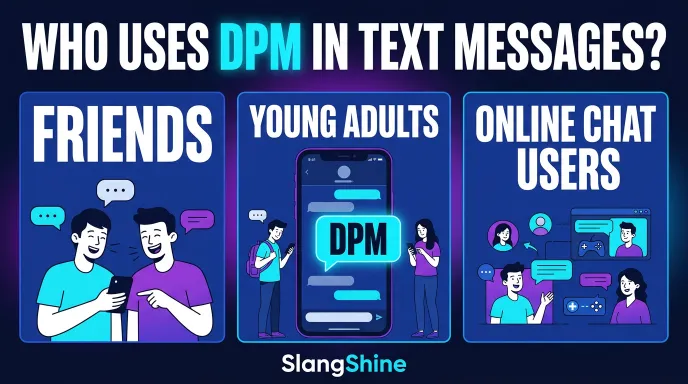
Who Uses DPM in Text Messages?
DPM may be used by people who communicate through informal text messages and online chats. However, it is not common enough to associate it with one particular age group or social media community.
You may encounter it in situations such as:
- Friends chatting: One person wants another to stop asking questions.
- Online conversations: Someone wants to set a boundary.
- Personal discussions: A sender does not want to share private information.
- Arguments: Someone feels irritated by repeated pressure.
- Casual group chats: A person wants others to stop pushing an idea.
Teenagers and adults may both understand or use the phrase, but familiarity varies. Many people will understand the complete phrase “Don’t Push Me” more easily than the abbreviation DPM.
Does DPM Have Other Meanings?
Yes. DPM can have other meanings outside casual texting. The correct interpretation depends on the subject and the surrounding words.
Here are some possible meanings:
| DPM Meaning | Context |
| Don’t Push Me | Informal texting |
| Damage Per Minute | Gaming |
| Dynamic Power Management | Technology |
| Deputy Prime Minister | Government |
| Director of Photography | Film production |
| Doctor of Podiatric Medicine | Medical profession |
| Disruptive Pattern Material | Military camouflage |
These meanings are not interchangeable. For example, a gamer discussing damage per minute may use DPM as a gaming term, while someone discussing a government official may use it as an abbreviation for Deputy Prime Minister. In a casual message, “Don’t Push Me” is a possible interpretation, but the context should always guide your understanding.
DPM vs. Common Texting Abbreviations
DPM is different from many popular texting abbreviations because it is less widely recognized. The following comparison helps explain how it fits into everyday digital communication.
| Abbreviation | Full Form | Meaning | Common Use |
| DPM | Don’t Push Me | Asking someone to stop applying pressure | Informal chats |
| IDK | I Don’t Know | Showing uncertainty | Everyday texting |
| IDC | I Don’t Care | Showing a lack of concern | Casual conversations |
| IMO | In My Opinion | Introducing a personal view | Comments and discussions |
| BRB | Be Right Back | Saying you will return shortly | Messaging |
| TBH | To Be Honest | Introducing an honest opinion | Social media and chats |
The main difference is familiarity: IDK, IDC, IMO, BRB, and TBH are widely recognized, while DPM is relatively uncommon and may need context.
Common Mistakes People Make About DPM
Because DPM has several possible meanings, it is easy to misunderstand it. Here are some mistakes to avoid.
1. Assuming Everyone Knows the Abbreviation
DPM is not as common as LOL or BRB. Some people may not recognize it, even if they understand the phrase “Don’t Push Me.”
2. Treating It as a Friendly Expression Every Time
The abbreviation can sound serious or irritated. Always consider the sender’s tone and the situation before replying.
3. Confusing It With DPMO
DPM and DPMO are different abbreviations. Do not add or remove letters when interpreting a message because the meaning may change.
4. Ignoring the Conversation Topic
A message about gaming, technology, or government may use DPM in a completely different way. The texting meaning should not automatically apply to every situation.
5. Using It in Formal Communication
DPM may confuse readers who are unfamiliar with it. In professional or important conversations, writing the full phrase is clearer.
Frequently Asked Questions
Q1. What does DPM mean in a text message?
Answer: DPM can mean “Don’t Push Me” in informal texting. It tells someone to stop pressuring, annoying, or provoking the sender.
Q2. What does DPM mean on TikTok?
Answer: In a casual TikTok conversation, DPM may mean “Don’t Push Me.” It can express frustration or tell someone to stop asking for something.
Q3. Is DPM a common texting abbreviation?
Answer: No. DPM is relatively uncommon compared with abbreviations such as LOL, BRB, and IDK. Some readers may need context to understand it.
Q4. Is DPM rude?
Answer: Not always. It can sound firm, annoyed, or playful, depending on the conversation and the relationship between the people involved.
Q5. How should I reply when someone says DPM?
Answer: You can say “Okay, I’ll give you some space,” “No pressure,” or “We can talk later.” Choose a calm reply if the sender seems upset.
Q6. Can DPM have other meanings?
Answer: Yes. DPM can also refer to terms such as Damage Per Minute in gaming or Deputy Prime Minister in government-related discussions.
Conclusion
DPM can mean “Don’t Push Me” in informal text messages. People may use it when they feel pressured, annoyed, or uncomfortable and want someone to stop pushing a topic or request.
The abbreviation can sound playful among close friends, but it may also communicate frustration or a serious boundary. Therefore, the surrounding conversation is important when interpreting it.
DPM also has other meanings in gaming, technology, government, and professional settings. Since it is not a widely recognized texting abbreviation, understanding the context is the best way to identify what the sender means.
Explore More Texting Slang:
- What Does Dox Mean in Text? Is Your Privacy at Risk?
- What Does DPI Mean in Text? The Meaning Behind This Term
- What Does DP Mean in Text? Find Out What It Stands For [2026]

Hi, I’m Emma Carter, an English language writer with over 8 years of experience in vocabulary and language learning. At SlangShine, I write simple, accurate, and easy-to-understand articles about slang, synonyms, idioms, and everyday English to help learners build confidence and improve their communication skills.