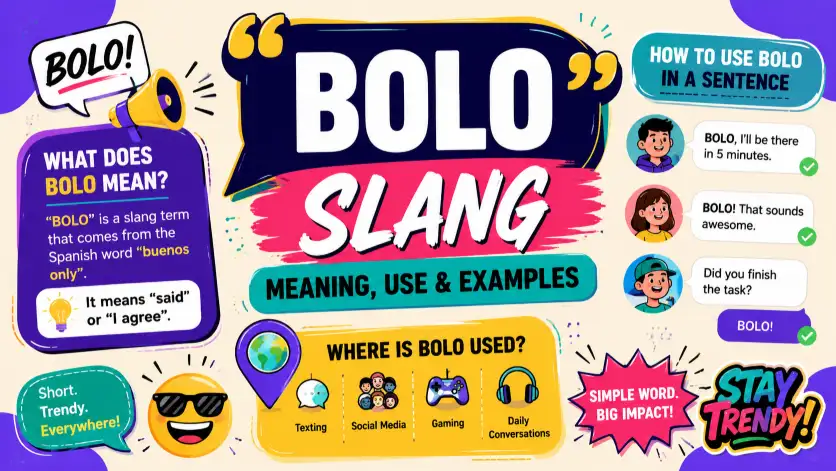
BOLO slang means “Be On the Lookout,” which tells someone to watch for, notice, or stay alert about something.
People often search for bolo slang because they see it in text messages, social media posts, online communities, or conversations and want to understand its meaning.
Unlike many internet slang words, BOLO started as an abbreviation used in official communication and later became common in casual conversations.
Today, people may use it when asking others to pay attention to a person, item, event, or situation.
For example, someone might text, “BOLO for a new update,” meaning “Keep an eye out for a new update.” The meaning depends on the context and who is using it.
Quick Answer:
BOLO slang stands for “Be On the Lookout.” It means to watch for something, stay aware, or pay attention because something important may appear or happen.
What Does BOLO Slang Mean in Text?
BOLO slang in text means “Be On the Lookout.” It is a short way of telling someone to stay alert or watch for something.
In everyday messages, people use BOLO when they want another person to notice something specific.
Examples:
- “BOLO for the new game release.”
- Meaning: Watch for the new game release.
- “BOLO, your package should arrive today.”
- Meaning: Keep an eye out because your package may arrive.
- “BOLO for discounts this weekend.”
- Meaning: Look for special offers.
The phrase is useful because it quickly communicates awareness without writing a longer sentence.
BOLO Full Form / Definition
The full form of BOLO slang is:
B — Be
O — On
L — the
O — Lookout
The phrase means to stay alert and watch carefully for something.
Although many people think of BOLO as internet slang, it originally came from practical communication where short messages were needed.
The term is commonly connected with:
- Law enforcement communication
- Security alerts
- Workplace notifications
- Community warnings
Over time, people started using BOLO in regular conversations, online chats, and social media.
What Does BOLO Stand For in Different Contexts?
The meaning of BOLO can change slightly depending on where it is used.
1. BOLO in Casual Texting
In texting, BOLO usually means “watch for something.”
Example:
“BOLO, I’m sending you the details later.”
Meaning:
“Keep an eye out because I will send you the details.”
Friends may use it when sharing plans, updates, or reminders.
2. BOLO in Professional Communication
In workplaces, BOLO can be used as a quick alert.
Example:
“BOLO for customer complaints after the update.”
Meaning:
“Be aware and watch for possible customer complaints.”
However, not every workplace uses this abbreviation, so the audience should understand it first.
3. BOLO in Law Enforcement
BOLO is strongly associated with police and security communication.
It may be used when officers or agencies need people to look for:
- A missing person
- A vehicle
- A suspect
- Important information
Example:
“Officers issued a BOLO for a missing vehicle.”
Here, BOLO is not casual slang. It is an official alert term.
Is BOLO Rude, Offensive, or Neutral?
BOLO slang is generally neutral and not rude or offensive. It is simply a shortened way to tell someone to pay attention or look out for something.
The tone depends on the situation.
Neutral Use
Example:
“BOLO for the concert tickets going on sale.”
This is a simple reminder.
Friendly Use
Example:
“BOLO! Your favorite snack is back in stores.”
This sounds casual and helpful.
Serious Use
Example:
“BOLO for a possible security issue.”
This sounds more urgent because the situation is important.
BOLO itself is not a negative word. The context determines the message feels casual, professional, or serious.
Where Is BOLO Commonly Used?
BOLO slang appears in different communication settings, but its popularity depends on the community using it.
Text Messages
People may use BOLO in short messages when they want someone to notice something.
Examples:
- “BOLO for my call tonight.”
- “BOLO, the meeting time changed.”
It saves time and keeps messages short.
Social Media Platforms
BOLO may appear on platforms like:
- X (Twitter)
Users may write it when sharing announcements, updates, or things people should watch for.
Examples:
- “BOLO for new product drops.”
- “BOLO for more details tomorrow.”
TikTok and Online Trends
On TikTok, BOLO can appear when creators tell followers to watch for upcoming content, trends, or announcements.
Example:
“BOLO for part two coming soon.”
Meaning:
“Look out for the next part.”
Gaming Communities
Gamers may use BOLO when talking about updates, events, or important information.
Examples:
- “BOLO for the new patch notes.”
- “BOLO for enemy movement.”
In gaming, it usually means staying aware.
Discord Communities
In Discord groups, BOLO can be useful for announcements.
Example:
“BOLO for the tournament schedule update.”
Meaning:
“Keep checking for the tournament schedule.”
Real Life Examples of BOLO Usage
The meaning of bolo slang becomes clearer when you see how people use it in different situations.
The tone can be friendly, casual, serious, or professional depending on the conversation.

Friendly Conversation Examples
BOLO is often used as a simple reminder between friends.
Example 1:
“BOLO for the new movie tickets. They might sell out fast.”
Meaning:
“Keep an eye out for the new movie tickets.”
Example 2:
“BOLO! Your favorite shoes are back in stock.”
Meaning:
“Watch for them because they are available again.”
In these situations, BOLO sounds helpful and casual.
Text Message Examples
In texting, BOLO is useful when someone wants to share quick information.
Example:
“BOLO for my message tonight. I’ll send the details.”
Meaning:
“Look out for my message tonight.”
Another example:
“BOLO, I’m almost there.”
Meaning:
“Be aware that I’m arriving soon.”
Social Media Examples
People may use BOLO in captions, comments, or posts when sharing updates.
Example:
“BOLO for our next giveaway!”
Meaning:
“Watch for our next giveaway.”
Creators and businesses may use it to encourage followers to pay attention to upcoming content.
Gaming Examples
In gaming communities, BOLO is often used to mean staying alert.
Example:
“BOLO for enemies near the bridge.”
Meaning:
“Stay alert and watch for enemies near the bridge.”
Another example:
“BOLO for the new update dropping tomorrow.”
Meaning:
“Keep an eye out for the new update.”
Argumentative or Serious Context
Although BOLO is usually neutral, it can appear in serious situations.
Example:
“BOLO for false information being shared online.”
Meaning:
“Stay alert and watch for misinformation.”
Here, the word carries a warning tone.
Origin and Background of BOLO Slang
The origin of BOLO slang comes from the phrase “Be On the Lookout.” It was not originally created as internet slang.
The abbreviation became popular because short messages are useful in situations where quick communication matters.
BOLO has historically been used in areas such as:
- Police communication
- Security alerts
- Emergency notifications
- Workplace updates
Over time, the abbreviation moved into everyday language. People began using it casually in texts, online posts, and conversations.
Unlike many modern internet slang terms, BOLO did not begin on platforms like TikTok or Reddit. Instead, it moved from professional communication into casual online language.
Comparison With Similar Slang Terms
Several words and phrases can have a similar meaning to BOLO, but they are used differently.
| Term | Meaning | Common Use |
| BOLO | Be On the Lookout | Alerts, reminders, updates |
| FYI | For Your Information | Sharing information |
| Heads up | A warning or reminder | Casual conversations |
| Watch for | Look carefully for something | General communication |
| Keep an eye out | Pay attention for something | Friendly conversations |
| Stay alert | Remain aware | Safety situations |
BOLO vs Heads Up
These phrases are similar, but they are not exactly the same.
BOLO:
- Focuses on watching or searching for something.
Example:
“BOLO for the missing package.”
Heads up:
- Gives someone advance information or warning.
Example:
“Heads up, the meeting time changed.”
When Should You Avoid Using BOLO?
Although bolo slang is generally harmless, it may not be the best choice in every situation.
Formal Writing
Avoid using BOLO in:
- Academic assignments
- Official reports
- Formal emails
Instead, use clearer phrases like:
- Watch for
- Be aware of
- Look out for
- Monitor
Example:
Informal:
“BOLO for customer complaints.”
Formal:
“Monitor customer complaints.”
When Your Audience May Not Know the Term
Not everyone understands abbreviations.
For example, a customer or new employee may not know what BOLO means.
Instead of:
“BOLO for changes.”
Use:
“Please watch for upcoming changes.”
This avoids confusion.
Important Public Messages
For serious announcements, clear language is usually better.
Example:
Less clear:
“BOLO for possible delays.”
Clearer:
“Please be aware that delays may occur.”
Simple wording helps everyone understand the message.
Why Do People Use BOLO?
People use bolo slang because it is short, clear, and easy to recognize in quick communication.
Saves Time
Typing “BOLO” is faster than writing:
“Be on the lookout for this.”
This is useful in text messages and online chats.
Creates a Sense of Urgency
BOLO can make people pay attention.
Example:
“BOLO for the announcement tomorrow.”
This tells people that something important may happen.
Works Well in Communities
Online groups, gaming communities, and social platforms often need quick ways to share updates.
BOLO helps members understand that they should watch for something.
Impact of Using Slang in Communication
Slang and abbreviations like BOLO can make communication faster, but they also have advantages and disadvantages.
Benefits of Using BOLO
- Makes messages shorter
- Helps share alerts quickly
- Creates a casual communication style
- Works well in online communities
Possible Problems
- Some people may not understand it
- It may seem too informal in professional settings
- Different communities may use abbreviations differently
Good communication depends on knowing your audience.
Is BOLO Safe for Social Media?
Yes, bolo slang is generally safe for social media use. It is a neutral abbreviation and does not contain offensive or harmful meaning.
People commonly use it for:
- Announcements
- Updates
- New releases
- Events
- Reminders
Examples:
Safe use:
“BOLO for our next event announcement.”
“BOLO for the new game update.”
The main thing to remember is that clear communication matters. If your audience may not understand BOLO, explain it or use a simpler phrase.
Frequently Asked Questions About BOLO Slang
Q1.What does BOLO stand for in slang?
BOLO stands for “Be On the Lookout.” It means to watch for something or stay aware.
Q2.Is BOLO an internet slang word?
BOLO is used online, but it did not originally start as internet slang. It became popular through professional communication before being adopted casually.
Q3.Is BOLO rude?
No. BOLO is a neutral abbreviation and is not considered rude or offensive.
Q4.What does BOLO mean in texting?
In texting, BOLO means “watch for” or “keep an eye out for something.”
Q5.Can I use BOLO at work?
It depends on your workplace. It may be acceptable in casual team chats, but formal communication should use clearer words.
Q6.What is the difference between BOLO and FYI?
BOLO asks someone to watch for something, while FYI simply provides information.
Conclusion
Bolo slang means “Be On the Lookout.” It is a short way to tell someone to stay aware, watch for something, or pay attention to an upcoming event, update, or situation.
The term is commonly used in texting, online communities, gaming conversations, and casual communication.
It is usually neutral and safe to use, but it may not fit formal writing where clearer language is preferred.
Understanding the context behind slang helps you communicate better. BOLO can be a useful shortcut when your audience knows the meaning, but simple phrases like “watch for” or “keep an eye out” are often better for wider audiences.
Discove More Articles:

Hi, I’m Anna Whitmore. I have 7+ years of experience writing about English slang and vocabulary. At SlangShine, I create simple, easy-to-understand content for English learners.