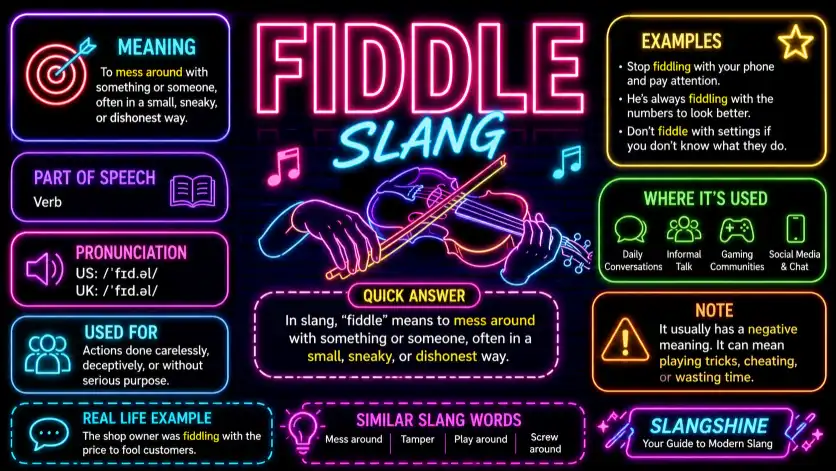
Fiddle in slang usually means to tamper with something, make small changes, or handle something in a dishonest or unnecessary way.
Depending on the context, it can also mean to waste time by doing unimportant things instead of focusing on what matters.
If you’ve searched for fiddle slang, you may have heard the word in everyday conversations, British English, movies, or social media.
Because fiddle has several meanings, it’s important to understand the context before using it.
This guide explains the different slang meanings of fiddle, where it’s commonly used, if it’s offensive, and how to use it correctly.
Word at a Glance:
| Feature | Details |
| Pronunciation (US) | /ˈfɪd.əl/ |
| Pronunciation (UK) | /ˈfɪd.əl/ |
| Part of Speech | Verb, Noun |
| Meaning | To tamper with something, waste time, or make unnecessary changes |
| Tone | Informal |
| Common Platforms | Text messages, social media, everyday conversations |
| Common Audience | Adults, students, professionals |
| Safe to Use? | ✅ Yes, in the right context |
| Offensive? | ❌ No, but it can describe dishonest behavior |
What Does Fiddle Mean in Slang?
In slang, fiddle usually means to change, adjust, or interfere with something, often without a good reason. It can also describe spending too much time making small changes instead of finishing a task.
In British English, fiddle may also mean to cheat or obtain money dishonestly. This meaning is common in news reports and everyday conversations.
The intended meaning depends on the situation.
A Simple Example
Emma: Why isn’t the printer working?
Jake: I think someone fiddled with the settings.
Here, fiddled means someone changed the settings unnecessarily.
Does Fiddle Stand for Anything?
No. Fiddle is not an abbreviation or acronym.
It is a regular English word that has developed several informal meanings over time. While it is also the name of a musical instrument, its slang meanings are completely different.
Different Meanings of Fiddle
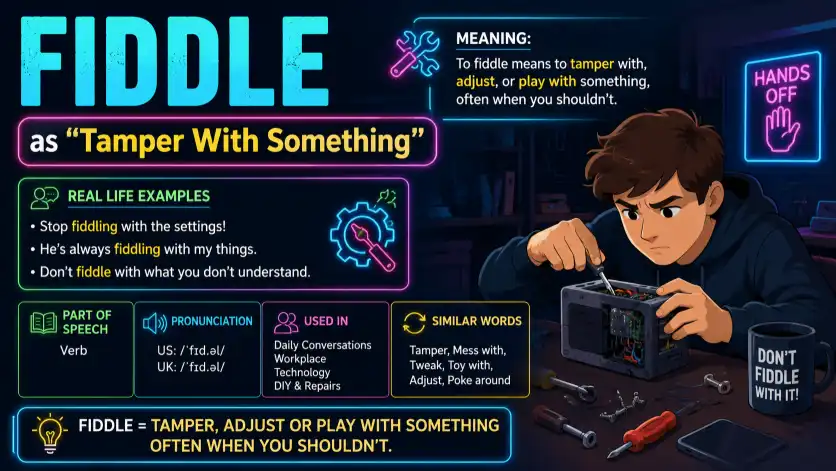
Fiddle as “Tamper With Something”
This is the most common slang meaning.
It means changing or adjusting something, often without permission or without a clear reason.
Example:
“Don’t fiddle with the controls unless you know how they work.”
Fiddle as “Waste Time”
Sometimes fiddle means spending time on small, unimportant tasks instead of doing the main job.
Example:
“Stop fiddling with your phone and finish your homework.”
Fiddle as “Cheat or Act Dishonestly”
In British English, fiddle can also mean cheating, especially when talking about money, taxes, or expenses.
Example:
“The company was accused of fiddling its financial records.”
Where Is Fiddle Commonly Used?
The slang word fiddle appears in many everyday situations, especially in British English.
| Platform or Situation | How It’s Used |
| Everyday conversations | Talking about changing or adjusting something |
| Workplace | Referring to unnecessary changes or dishonest actions |
| British news | Discussing fraud or financial cheating |
| Text messages | Telling someone to stop wasting time |
| Social media | Casual comments about fixing or changing things |
The meaning usually becomes clear from the rest of the conversation.
Is Fiddle Rude, Offensive, or Harmless?
Fiddle is generally harmless, but its meaning depends on the context.
When people say someone is fiddling with something, they usually mean that the person is making unnecessary changes or handling something without a clear reason.
However, in British English, fiddle can also mean to cheat or commit fraud, especially in discussions about money, taxes, or expenses.
In those situations, the word describes dishonest behavior.
| Situation | Appropriate? | Notes |
| Casual conversations | ✅ Yes | Common when talking about small changes |
| Text messages | ✅ Yes | Often means “stop messing with it” |
| Social media | ✅ Yes | Used in informal discussions |
| Workplace | ⚠️ Sometimes | Fine unless discussing dishonest actions |
| Formal writing | ❌ No | Use words like “adjust,” “modify,” or “tamper” instead |
Real Life Examples
Everyday Conversation
Emma: Who changed the TV settings?
Jake: I think Ben was fiddling with the remote.
Text Message
Friend: Why isn’t your laptop working?
Reply: I was fiddling with the settings and now it won’t start.
Workplace
Manager: Please don’t fiddle with the system unless you’ve been trained.
British English
“The businessman was accused of fiddling his expense claims.”
Here, fiddling means acting dishonestly.
Family Conversation
Mom: Stop fiddling with your dinner and eat it before it gets cold.
Here, fiddling means playing with something instead of using it properly.
Quick Answer:Fiddle Slang
In slang, fiddle most commonly means to tamper with something, make unnecessary changes, or waste time doing small, unimportant tasks. In some contexts, it can also refer to cheating or acting dishonestly, especially in British English.
| Meaning | Tone | Offensive? | Common Users | Common Places |
| To tamper with, make small changes, waste time, or cheat | Informal | ⚠️ Sometimes | Adults, students, workers, online users | Everyday conversations, social media, British English |
Origin and History
The word fiddle has been part of the English language for hundreds of years. It originally referred to the musical instrument now commonly called the violin.
Over time, people began using fiddle as a verb to describe moving or handling something with the hands.
Later, it developed additional informal meanings, such as making unnecessary adjustments, wasting time, or acting dishonestly.
Today, the slang meaning is especially common in British English, although phrases like “fiddle with” are widely understood in many English-speaking countries.
Similar and Opposite Slang Words
| Similar Slang | Meaning | Opposite Word | Meaning |
| Mess with | Interfere with something | Leave alone | Do not touch it |
| Tinker | Make small changes | Ignore | Pay no attention to it |
| Tamper | Change something without permission | Preserve | Keep something unchanged |
| Toy with | Handle casually or play with | Maintain | Keep in the same condition |
| Poke around | Explore or adjust something | Protect | Keep something safe |
When Should You Avoid Using Fiddle?
Avoid using fiddle when:
- Writing business reports or formal documents.
- Giving professional presentations.
- Speaking with people who may misunderstand the slang.
- Discussing serious legal or financial matters unless you specifically mean fraud or dishonest behavior.
In formal situations, words like adjust, modify, interfere, or tamper are usually clearer.
Why Do People Use Fiddle?
People use fiddle because it quickly describes someone making small changes or handling something unnecessarily.
Common reasons include:
- Describing someone adjusting an object.
- Talking about wasting time on small tasks.
- Referring to unnecessary changes.
- Describing dishonest actions in British English.
- Making casual conversations sound more natural.
Common Misunderstandings
A common misunderstanding is that fiddle always refers to the musical instrument.
In reality, the word has several meanings.
For example:
- Fiddle with the settings. → Make small changes.
- Stop fiddling with your phone. → Stop playing with it.
- Fiddle the accounts. → Change financial records dishonestly.
The surrounding conversation makes the intended meaning clear.
Frequently Asked Questions
Q1. What does fiddle mean in slang?
Answer: In slang, fiddle usually means to tamper with something, make unnecessary changes, or waste time on small tasks. In British English, it can also mean to cheat or act dishonestly, especially in financial matters.
Q2. What is fiddle slang for?
Answer: In British slang, fiddle is commonly used to mean cheating, tricking, or manipulating something dishonestly. It often appears in discussions about financial fraud, false expense claims, tax evasion, or rigged deals.
Example:
“He was caught fiddling his expenses.”
Q3. What does fiddle with mean?
Answer: Fiddle with means to keep adjusting, touching, or changing something, often without a good reason. It can also mean trying to fix something by making small changes.
Example:
“She kept fiddling with the TV remote until it started working.”
Q4. What is the other meaning of fiddle?
Answer: Besides its slang meanings, fiddle is also an informal name for a violin. It can also mean fidgeting or playing idly with something, such as your phone, keys, or clothing.
Example:
“Stop fiddling with your phone during dinner.”
Q5. Why do people say “fit as a fiddle”?
Answer: “Fit as a fiddle” is a popular English idiom that means being in excellent physical health or condition. The expression dates back to the 1600s, when fit meant “well-suited” and a well-made, well-tuned fiddle was considered to be in perfect working order.
Q6. What does it mean to “fiddle somebody”?
Answer: To fiddle somebody means to cheat, deceive, or overcharge them, usually to gain money or another unfair advantage.
Example:
“The dishonest contractor fiddled his customers for years.”
Q7. Is fiddle a rude word?
Answer: No. Fiddle is not considered rude or offensive. However, when it refers to cheating or fraud, it has a negative meaning because it describes dishonest behavior rather than insulting someone.
Q8. Is fiddle used on social media?
Answer: Yes. On social media, fiddle is often used to describe someone adjusting settings, experimenting with something, wasting time, or joking about constantly changing things.
| Context | Meaning of Fiddle |
| Everyday conversation | Make small changes or adjust something |
| British slang | Cheat or commit fraud |
| Text messages | Play with or keep changing something |
| Music | A violin or similar stringed instrument |
Conclusion
Fiddle slang most commonly means to tamper with something, make unnecessary changes, or waste time, while in British English it can also mean to cheat or act dishonestly, especially in financial situations.
Outside slang, fiddle is also an informal word for a violin and appears in well known expressions like “fit as a fiddle.”
Understanding the context will help you identify the correct meaning and use the word naturally in conversations.
You may also enjoy:

Hi, I’m Anna Whitmore. I have 7+ years of experience writing about English slang and vocabulary. At SlangShine, I create simple, easy-to-understand content for English learners.