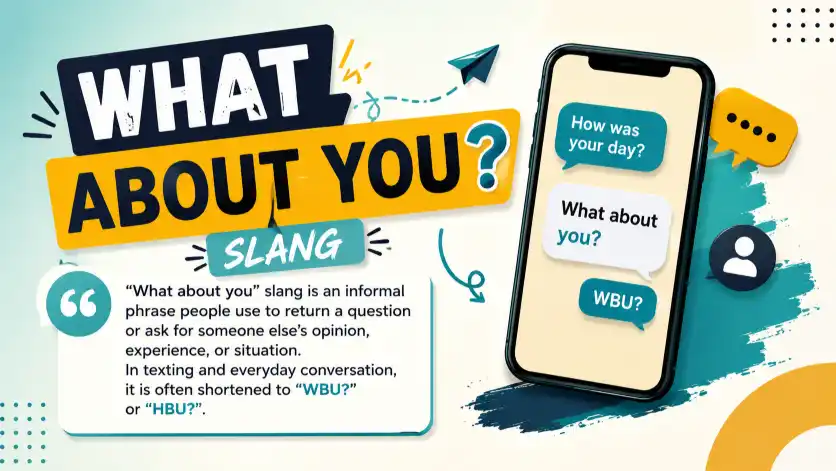
“What about you” slang is an informal phrase people use to return a question or ask for someone else’s opinion, experience, or situation. In texting and everyday conversation, it is often shortened to “WBU?” or “HBU?”.
Although the words themselves are standard English, the phrase often works like casual slang because it creates a relaxed and friendly tone.
Many people search for what about you slang because they see it in text messages, on social media, or while chatting online. They want to know if it has a hidden meaning, if it is rude, and when it is appropriate to use.
This guide explains the meaning, different uses, real life examples, common platforms, and situations where the phrase works best. By the end, you will know exactly how to use it naturally in conversations.
Quick Answer: What About You Slang?
“What about you?” is a casual way to ask another person the same question you have just answered. It keeps the conversation going and shows interest in the other person’s thoughts, feelings, plans, or experiences. The phrase is friendly, polite, and commonly used in texts, chats, social media, and face to face conversations.
What Does What About You Slang Mean?
“What about you?” means “And you?”, “How about you?”, or “What is your answer?” It invites the other person to share their own opinion, experience, or situation after you have shared yours.
Unlike many internet slang terms, what about you slang is not an abbreviation or secret code. Instead, it is a conversational phrase that sounds natural and informal. That is why people often use it in everyday English.
Why People Say It
People use the phrase to:
- Keep the conversation balanced.
- Show interest in another person.
- Ask for someone’s opinion.
- Continue a friendly discussion.
- Avoid talking only about themselves.
Simple Examples
- I’m doing well. What about you?
- I love pizza. What about you?
- I’m watching a movie tonight. What about you?
- I finished my homework. What about you?
In each example, the speaker answers first and then invites the other person to respond.
Does “What About You” Have More Than One Meaning?
The basic meaning stays the same, but the phrase can serve different purposes depending on the conversation and tone.
Asking the Same Question Back
This is the most common use.
Someone asks you a question. After answering, you ask the same question back.
Example
Friend: How was your weekend?
You: It was great. What about you?
Here, you simply want to hear about your friend’s weekend.
Common Situations
- Daily conversations
- School
- Family chats
- Workplace discussions
Asking for an Opinion
Sometimes the phrase asks what another person thinks instead of asking about their situation.
Example
- I think the new game looks fun. What about you?
- This restaurant is really good. What about you?
Now the speaker wants another person’s opinion.
Common Situations
- Reviews
- Recommendations
- Group discussions
- Social media comments
Asking About Someone’s Situation
It can also ask how another person’s life or plans are going.
Example
- I’m busy this week. What about you?
- I’m going on vacation next month. What about you?
The speaker wants to compare experiences or plans.
Common Situations
- Friends
- Coworkers
- Classmates
- Online chats
Where Is What About You Slang Commonly Used?
You can hear or read this phrase almost everywhere because it is part of natural conversation.
| Platform or Place | How It Is Used | Common Tone |
| Text messages | Replying to friends | Friendly |
| Casual conversations | Relaxed | |
| Instagram DMs | Keeping chats going | Informal |
| Snapchat | Quick replies | Casual |
| Discord | Gaming and community chats | Friendly |
| Discussion threads | Informal | |
| Facebook Messenger | Everyday conversations | Casual |
| School | Talking with classmates | Natural |
| Workplace chats | Friendly conversations with coworkers | Polite but informal |
The phrase is popular because it is short, easy to understand, and works in almost every casual conversation.
Is “What About You” Rude, Offensive, or Harmless?
No. In most situations, what about you slang is completely harmless and polite.
The phrase simply invites another person to join the conversation. It often makes a discussion feel more friendly because it shows you are interested in what the other person has to say.
When It Sounds Friendly
- Talking with friends.
- Chatting with family.
- Messaging classmates.
- Speaking with coworkers informally.
When It May Sound Awkward
The phrase can sound a little abrupt if you ask it without answering first.
Less natural
❌ What about you?
More natural
✅ I’m excited for the trip. What about you?
Giving your own answer first makes the conversation feel smoother.
Can You Use It at Work?
Yes, you can.
It is acceptable in casual workplace conversations, team chats, or friendly emails. However, during formal business communication, many people prefer phrases like “How about you?” or “What are your thoughts?” because they sound slightly more professional.
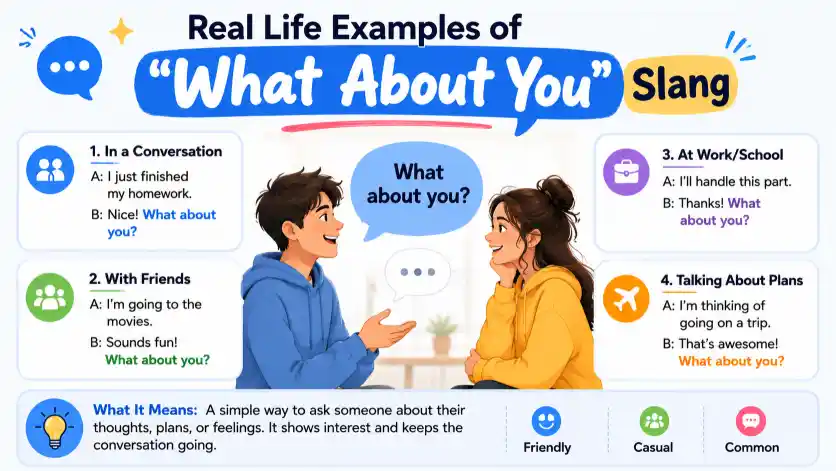
Real Life Examples of What About You Slang
The easiest way to understand what about you slang is to see it in everyday conversations. Notice how the phrase keeps the discussion moving by inviting the other person to reply.
Friends Chatting
Friend 1: I’m thinking about watching a comedy tonight.
Friend 2: That sounds fun. What about you? Are you going alone or with friends?
Text Message
Alex: I already finished today’s homework.
Sam: Nice! What about you? Are you free this evening?
School Conversation
Student A: My favorite subject is science.
Student B: Mine is English. What about you?
Workplace Chat
Coworker 1: I’m working from home tomorrow.
Coworker 2: I’ll be in the office. What about you?
Gaming Chat
Player 1: I usually play after dinner.
Player 2: Same here. What about you? What time do you get online?
Social Media
Comment: I loved the new movie.
Reply: Me too! What about you? Which scene was your favorite?
These examples show that the phrase works naturally in many different situations.
Origin and History of What About You Slang
“What about you?” is not a new internet slang term. It has been part of everyday English for many years. People used it in spoken conversations long before texting apps and social media became popular.
How the Phrase Became Popular Online
As texting became common, people started using shorter and more natural conversation styles. “What about you?” fit perfectly because it is quick, friendly, and easy to type.
Today, you will often see it on:
- Snapchat
- Discord
- Facebook Messenger
- Online gaming chats
Unlike many modern slang words, the meaning has stayed almost the same. The internet made it more common, but it did not change its basic purpose.
Is It Internet Slang?
Not exactly.
The phrase is standard English, but many people group it with internet slang because it appears so often in casual online conversations. It is better described as informal conversational English rather than true slang.
Similar Slang or Related Terms
Several expressions have a similar meaning. Some sound more casual, while others are slightly more polite.
| Phrase | Meaning | Formality |
| How about you? | Ask the same question back | Neutral |
| And you? | Short version | Casual |
| You? | Very short reply | Very casual |
| What do you think? | Ask for an opinion | Neutral |
| Your turn | Invite someone to answer | Casual |
| How’s it going with you? | Ask about someone’s situation | Friendly |
| What are your thoughts? | Ask for an opinion | Professional |
Which One Should You Choose?
Choose the phrase that matches the situation.
- What about you? → Everyday conversations.
- How about you? → Slightly more polite.
- And you? → Quick and natural.
- What are your thoughts? → Meetings or professional discussions.
When Should You Avoid Using It?
Although the phrase is friendly, it does not fit every situation.
Formal Presentations
During presentations or official speeches, use more professional language.
Instead of:
❌ What about you?
Try:
✅ What are your thoughts on this topic?
Customer Service Emails
Business emails often need a more formal tone.
Instead of:
❌ What about you?
Try:
✅ Could you please share your opinion?
Sensitive Conversations
If someone is discussing a serious problem, asking “What about you?” too quickly may sound like you are changing the subject.
It is usually better to respond with empathy before asking another question.
Academic Writing
The phrase belongs in conversation, not formal essays or research papers.
Polite Alternatives to “What About You?”
If you want a different expression, these options work well.
| Alternative | Best Used For |
| How about you? | Everyday conversation |
| And you? | Short replies |
| What do you think? | Asking opinions |
| What’s your view? | Discussions |
| Would you like to share? | Polite conversations |
| What are your thoughts? | Workplace or meetings |
| How has your experience been? | Professional conversations |
These alternatives help you match your tone to the situation.
Why Do People Use What About You Slang?
People use what about you slang because it makes conversations feel natural and balanced. Instead of talking only about themselves, they invite the other person to join the discussion.
Showing Interest
The phrase tells the other person that their answer also matters.
Example
Person A: I’m learning Spanish.
Person B: That’s great. What about you? Are you learning any other languages too?
Keeping the Conversation Going
Many chats end quickly if only one person answers questions. Adding “What about you?” encourages the other person to continue talking.
Example
- I’m visiting my grandparents this weekend. What about you?
Building Friendly Conversations
The phrase creates a warm and welcoming tone. That is why friends, classmates, coworkers, and family members use it every day.
Making Chats Feel More Natural
Without asking about the other person, a conversation can seem one-sided.
Compare these examples:
❌ I love coffee.
✅ I love coffee. What about you?
The second example sounds more engaging because it invites a reply.
Common Misunderstandings About What About You Slang
Some people misunderstand the phrase because they see it so often online. Here are the most common myths.
Myth 1: It Is a Secret Internet Code
Fact: No. It is simply a casual English expression. It does not hide a special meaning.
Myth 2: Teenagers Created It
Fact: People have used “What about you?” in spoken English for many years. Social media helped spread it, but it did not create the phrase.
Myth 3: It Is Always Slang
Fact: Not exactly. The words are standard English. However, people often call it slang because it appears frequently in informal chats and text messages.
Myth 4: It Is Rude
Fact: In most situations, it is polite. It only sounds awkward if used at the wrong time or without showing interest in the other person’s situation.
Myth 5: It Only Works in Text Messages
Fact: The phrase is common in both spoken and written conversations. You can hear it at school, at work, with family, and in online communities.
Frequently Asked Questions
Q1. What does “What about you” mean in slang?
Answer: It is a casual way to ask another person the same question or invite them to share their opinion, experience, or situation.
Q2. Is “What about you” real slang?
Answer: Not in the strict sense. It is standard English used in an informal way, so many people refer to it as conversational slang.
Q3. Can I use “What about you” in text messages?
Answer: Yes. It is one of the most common phrases in texting, social media chats, and messaging apps because it keeps conversations flowing naturally.
Q4. Is “What about you” appropriate at work?
Answer: Yes, during casual conversations with coworkers. For formal meetings or professional emails, phrases like “What are your thoughts?” or “How about you?” may sound more suitable.
Q5. Is “What about you” rude?
Answer: No. It is generally polite and friendly. The tone depends on the conversation, but the phrase itself is harmless.
Q6. What’s the difference between “What about you?” and “How about you?”?
Answer: Both expressions have nearly the same meaning. “How about you?” sounds slightly more polished, while “What about you?” is often used in everyday casual conversations.
Conclusion
What about you slang is a simple, friendly expression that helps people keep conversations balanced. It gives someone else the chance to share their thoughts, feelings, plans, or experiences after you have shared your own.
Although many people call it slang, it is actually an informal conversational phrase rather than a true internet abbreviation or coded expression.
You can use it confidently in text messages, social media, online chats, school, and most everyday conversations. However, in very formal settings, choosing a more professional alternative may be a better option.
The key is to use it naturally. Answer first, then ask “What about you?” to show genuine interest and keep the conversation going.
Explore More:
- Bennies Drug Slang: The Slang That Refuses to Fade
- SOL Slang Meaning: The Slang You’ll See in Online Chats
- Roster Meaning Slang: From Sports Term to Dating Trend

Hi, I’m Anna Whitmore. I have 7+ years of experience writing about English slang and vocabulary. At SlangShine, I create simple, easy-to-understand content for English learners.