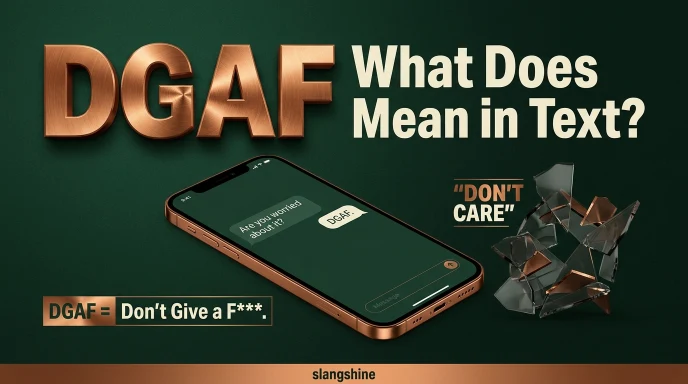
What Does DGAF Mean in Text? DGAF means “Don’t Give a F*,” a slang expression used when someone does not care about something or someone. It can express confidence, frustration, defiance, or a lack of interest, depending on the conversation.
You may see DGAF in text messages, TikTok comments, Snapchat chats, gaming communities, and online discussions. People often use it to express their feelings strongly without writing a full sentence.
However, DGAF contains profanity, so it can sound rude or offensive in some situations. Understanding the context helps you know what the sender really means.
What Does DGAF Stand For in Texting?
DGAF stands for “Don’t Give a F***.” It is an informal expression that means someone does not care about a particular situation, opinion, problem, or outcome.
People often use DGAF when they want to show that something does not bother them. Sometimes, they use it to sound bold or confident. In other situations, it can express anger or frustration.
Example:
- Friend: “Are you worried about what people will say?”
- You: “Nope, DGAF.”
In this conversation, the sender means they do not care about other people’s opinions.The abbreviation is common in informal online language, but it is not suitable for every audience.
If you are talking to a teacher, employer, or someone you do not know well, a more polite expression is usually better.
How Is DGAF Used in Text Messages?
People use DGAF in different ways, depending on what they want to communicate. Here are some common situations where the abbreviation may appear.
1. When Someone Does Not Care About Opinions
DGAF can express indifference toward other people’s judgments or criticism.
Example:
- Person A: “People might judge your new style.”
- Person B: “DGAF. I like it.”
Meaning: The person does not care what others think because they are happy with their style.
2. When Someone Feels Confident
Sometimes, DGAF expresses confidence and independence. The sender wants to show that other people’s opinions will not control their choices.
Example:
- Friend: “Aren’t you nervous about posting that video?”
- You: “Not really. DGAF what anyone thinks.”
Meaning: The sender feels confident and does not want to worry about public reactions.
3. When Someone Is Angry or Frustrated
DGAF can also sound harsh when someone feels upset about a problem or disagreement.
Example:
- Person A: “You should listen to what they’re saying.”
- Person B: “I DGAF anymore.”
Meaning: The person has lost interest in the discussion or feels too frustrated to continue caring.
4. When Someone Wants to End an Argument
A person might use DGAF to show that they do not want to keep discussing a topic.
Example:
- Friend A: “Why won’t you explain yourself?”
- Friend B: “Because I DGAF about this argument.”
Meaning: The sender does not want to continue the argument. Depending on the relationship, this reply may sound dismissive or disrespectful.
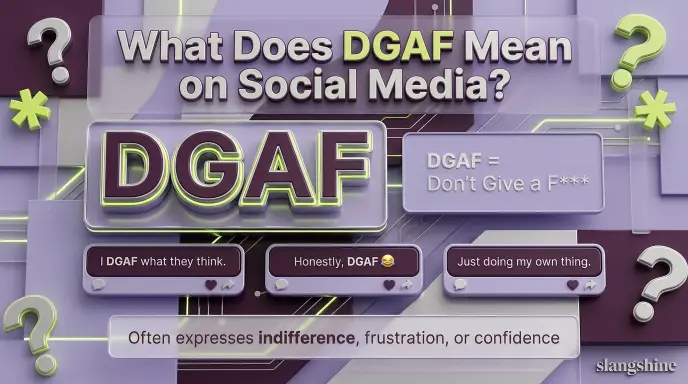
What Does DGAF Mean on Social Media?
DGAF appears in many online conversations because it expresses a strong attitude in just a few letters. However, its tone can change depending on the platform and the situation.
DGAF on TikTok
On TikTok, people may use DGAF in captions, comments, or videos about confidence, personal choices, and ignoring criticism.
For example, someone might write, “DGAF about the haters,” to show that negative comments do not affect them.
The expression can sound playful or empowering, but it may also seem confrontational.
DGAF on Snapchat
Friends may use DGAF in private messages when discussing relationships, social situations, or other people’s opinions.
Example:
“DGAF what they say 😂”
The laughing emoji may make the message seem lighthearted, although the words still carry a blunt tone.
DGAF on Instagram
On Instagram, DGAF may appear in captions, comments, or direct messages. Someone might use it to express independence or show that they are not bothered by criticism.
Example:
“Living my life and DGAF about the drama.”
This message suggests that the person does not want to get involved in other people’s problems.
DGAF in Gaming Chats
Gamers may use DGAF when discussing competition, criticism, or the outcome of a match.
Example:
“DGAF about losing. I’m here to have fun.”
Here, the player means that winning is not important to them.These examples show common ways the expression may be used. Its exact tone still depends on the conversation.
Examples of DGAF in Real Text Conversations
The following examples show how DGAF can fit into different conversations.
Example 1: Ignoring criticism
- Alex: “Some people don’t like your decision.”
- Sam: “DGAF. It’s my choice.”
Meaning: Sam does not care about other people’s opinions.
Example 2: Talking about a breakup
- Mia: “Do you still care what your ex thinks?”
- Leo: “Honestly, DGAF anymore.”
Meaning: Leo says that his ex’s opinions no longer matter to him.
Example 3: Discussing a mistake
- Friend A: “Everyone saw you trip.”
- Friend B: “DGAF 😂 It happens.”
Meaning: The person is not embarrassed by the mistake.
Example 4: Dealing with online comments
- Person A: “Someone left a rude comment on your post.”
- Person B: “DGAF about random people’s opinions.”
Meaning: The sender does not want to worry about negative comments.
Example 5: Ending a disagreement
- Friend A: “You should care about what I think.”
- Friend B: “I DGAF right now. I need some space.”
Meaning: The sender feels upset and does not want to discuss the issue at that moment.
Example 6: Talking about competition
- Player A: “You’re not even trying to win.”
- Player B: “DGAF about the score. I’m just playing.”
Meaning: The player cares more about enjoying the game than winning.
Is DGAF Rude or Offensive?
DGAF can sound rude because it includes profanity. If it is offensive depends on the people involved, the situation, and the way the expression is used.
Here is how its tone may change:
- Among close friends: It may sound casual, funny, or playful.
- During an argument: It can sound angry, dismissive, or disrespectful.
- On social media: It may express confidence or defiance.
- At work or school: It can seem unprofessional or inappropriate.
For example, saying “DGAF what strangers think” may communicate confidence. However, telling a coworker “DGAF about your problem” can sound insulting.
If you want to express the same idea without profanity, try “I don’t really care,” “It doesn’t bother me,” or “I’m not worried about it.”
What Is the Difference Between DGAF, IDGAF, and IDC?
DGAF, IDGAF, and IDC all relate to not caring, but they differ in wording and intensity.
| Abbreviation | Full form | Typical tone |
| DGAF | Don’t Give a F*** | Blunt and emphatic |
| IDGAF | I Don’t Give a F*** | Stronger personal statement of indifference |
| IDC | I Don’t Care | Usually milder and more direct |
| IDK | I Don’t Know | Expresses uncertainty rather than indifference |
The key difference is that DGAF and IDGAF contain profanity, while IDC does not. IDGAF explicitly includes “I,” making the statement more directly personal.
IDK has a completely different meaning. Someone who says “IDK” may simply lack information, while someone who says “DGAF” is expressing that they do not care.
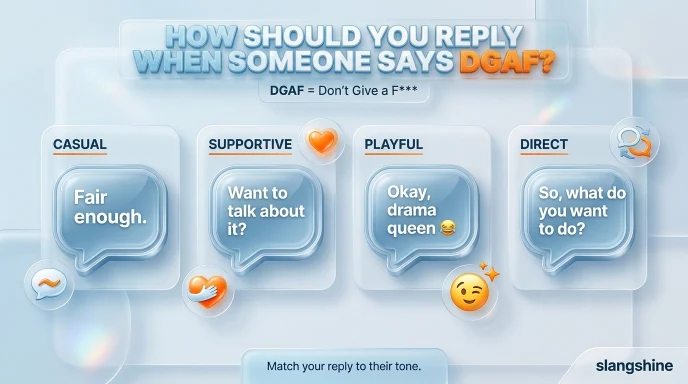
How Should You Reply When Someone Says DGAF?
Your reply depends on the situation and the sender’s tone. You can keep things casual, offer support, or respond calmly if the message sounds hostile.
If They Are Being Casual
When a friend uses DGAF jokingly, respond in a relaxed and casual way.
- “Fair enough 😂”
- “Do what makes you happy.”
- “That’s your choice!”
If They Are Showing Confidence
You can support their decision without repeating the profanity.
- “Good for you!”
- “Don’t let others bring you down.”
- “As long as you’re happy, that’s what matters.”
If They Sound Angry
A calm response can help prevent the conversation from getting worse.
- “Okay, let’s talk when you’re ready.”
- “I understand you’re upset.”
- “We don’t have to argue about this.”
If They Use DGAF to Dismiss You
You can explain how the message makes you feel or step away from the conversation.
- “I’m trying to have a respectful conversation.”
- “You don’t have to agree, but please hear me out.”
- “Let’s leave this discussion for now.”
You do not have to match someone’s harsh tone. A clear, calm reply often works better.
Common Mistakes When Understanding DGAF
Although DGAF has a clear common meaning, people can still misunderstand its tone.
Assuming It Always Shows Confidence
DGAF can express confidence, but it can also show anger, frustration, or indifference. Look at the surrounding messages before deciding what the sender feels.
Thinking It Means “I Don’t Know”
DGAF does not mean “I don’t know.” That expression is usually shortened to IDK. DGAF communicates a lack of care rather than a lack of knowledge.
Using It in Formal Conversations
Because DGAF includes profanity, it may be inappropriate in professional emails, school assignments, or formal discussions. Use a polite alternative when speaking to someone who may find it offensive.
Assuming the Sender Is Always Serious
Friends sometimes use strong language jokingly or dramatically. Emojis, punctuation, and the wider conversation can help you understand if the message is playful or serious.
Frequently Asked Questions About What Does DGAF Mean in Text
Q1. What does DGAF mean in text slang?
Answer: DGAF means “Don’t Give a F***.” People use it to express that they do not care about something, someone’s opinion, or a particular situation.
Q2. Is DGAF the same as IDGAF?
Answer: They are very similar. DGAF means “Don’t Give a F***,” while IDGAF means “I Don’t Give a F***.” Both express strong indifference.
Q3. Does DGAF mean someone is angry?
Answer: Not necessarily. DGAF can express anger, but people also use it jokingly or to show confidence. The context and tone help reveal the intended meaning.
Q4. Is DGAF a bad word?
Answer: DGAF includes profanity, so some people consider it offensive or inappropriate. It may be acceptable among close friends but is generally unsuitable for formal conversations.
Q5. What is a polite alternative to DGAF?
Answer: You can say “I don’t really care,” “It doesn’t bother me,” or “I’m not worried about it.” These expressions communicate indifference without using profanity.
Conclusion
DGAF in text means “Don’t Give a F***.” People use it to express indifference, confidence, frustration, or a refusal to worry about what others think.
Its tone depends on the conversation. Friends may use it casually, while the same expression can sound rude during an argument or in a professional setting. If you want a softer alternative, use “I don’t really care” or “It doesn’t bother me.”
Learn More About Slang:
- What Does DFW Mean in Text? Discover Its Different Meanings
- What Does DG Mean in Text? Find Out Its Real Meaning in 2026
- What Does DFT Mean in Text? Meaning, Uses & Examples

Hi, I’m Anna Whitmore. I have 7+ years of experience writing about English slang and vocabulary. At SlangShine, I create simple, easy-to-understand content for English learners.