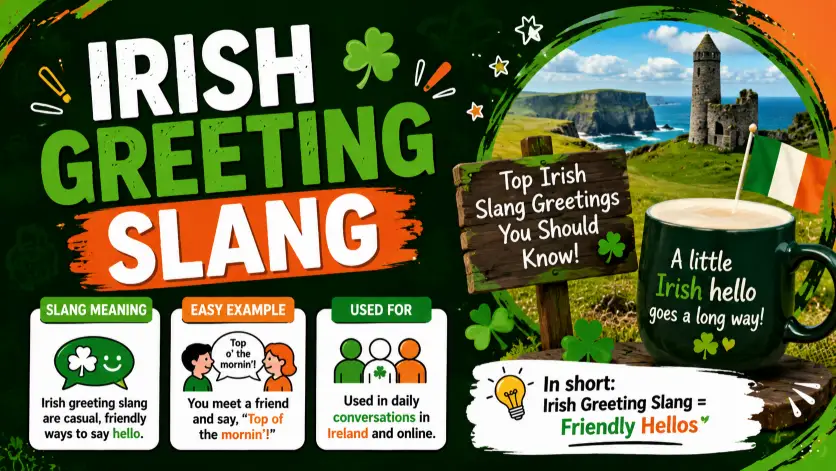
Irish greeting slang refers to informal words and phrases that people in Ireland use to say hello, welcome someone, or start a friendly conversation.
These greetings are common in daily life and may also appear in text messages, social media posts, travel conversations, and online chats.
If you’ve heard expressions like “What’s the craic?”, “Howya?”, or “Well?”, you may wonder what they really mean.
Many people search for irish greeting slang before visiting Ireland, watching Irish TV shows, or chatting with Irish friends online.
Understanding these greetings helps you communicate more naturally and avoid confusion.
In this guide, you’ll learn the meaning of popular Irish greeting slang, where people use it, it’s polite, and how to respond naturally.
Quick Answer:
Irish greeting slang includes casual Irish expressions such as “Howya,” “What’s the craic?” and “Well?” that people use instead of a simple “hello.” These greetings are friendly, informal, and commonly heard in everyday conversations across Ireland.
What Does Irish Greeting Slang Mean in Text?
In text messages and online chats, Irish greeting slang is used to start a conversation in a warm and relaxed way.
Most of these greetings do not require a detailed answer. They simply show friendliness and help begin a conversation.
For example:
- Howya? means “Hello” or “How are you?”
- What’s the craic? means “What’s happening?” or “How are things?”
- Well? is another informal way of saying hello to someone you know.
These expressions are commonly used between friends, family members, classmates, and coworkers.
Irish Greeting Slang Full Form / Definition
Unlike internet abbreviations, Irish greeting slang does not have a full form.
Instead, it refers to a collection of casual greetings used in Irish English.
These greetings are part of everyday speech and often reflect Ireland’s friendly and welcoming communication style.
Some of the most popular Irish greetings include:
- Howya
- What’s the craic?
- Well?
- How’s she cuttin’?
- Story?
- How’s things?
- Alright?
Each expression has a slightly different tone, but all are commonly used as greetings rather than serious questions.
Common Irish Greeting Slang Expressions
1. Howya
Howya is one of the most common greetings in Ireland.
Although it sounds like a question, it usually means:
- Hello
- Hi
- Nice to see you
Example:
“Howya, Tom! Long time no see.”
2. What’s the Craic?
This is probably the best known Irish greeting.
Here, craic means fun, news, or what’s happening.
Example:
“What’s the craic?”
Possible replies include:
- “Not much.”
- “All good.”
- “Just relaxing.”
3. Well?
In Ireland, Well? is often used instead of saying hello.
It does not mean someone is asking a deep question.
Example:
“Well, Sarah?”
Meaning:
“Hi, Sarah. How are you?”
4. Story?
Another common greeting is:
“Story?”
This is short for asking what’s new or what’s happening.
Example:
“Story, mate?”
Meaning:
“What’s going on?”
5. How’s Things?
People often use this instead of asking:
“How are you?”
Example:
“How’s things with you?”
6. Alright?
Although many English speakers use Alright?, it is also a very common greeting in Ireland.
Usually, it simply means:
“Hello.”
Is Irish Greeting Slang Rude, Offensive, or Neutral?
Most Irish greeting slang is friendly and completely neutral.
These greetings are used every day among friends, family, neighbors, classmates, and coworkers.
Examples of friendly greetings include:
- Howya
- What’s the craic?
- Story?
- Well?
None of these expressions are considered offensive on their own.
However, tone still matters.
For example:
“Well?”
spoken with a smile sounds welcoming.
The same word spoken angrily could sound confrontational.
As with any greeting, the speaker’s tone and body language help determine the meaning.
Where Is Irish Greeting Slang Commonly Used?
Irish greeting slang is most common in informal conversations.
Everyday Conversations
People use these greetings when meeting:
- Friends
- Family
- Neighbors
- Coworkers
- Classmates
Text Messages
Many Irish people text greetings such as:
“Howya?”
or
“What’s the craic?”
instead of writing a formal hello.
Social Media
These greetings often appear in:
- Facebook comments
- Instagram captions
- TikTok videos
- X (formerly Twitter) posts
People also use them when replying to friends online.
Messaging Apps
Irish greeting slang is common on messaging platforms like:
- Messenger
- Telegram
Friends often begin conversations with:
“Story?”
or
“Howya?”
Travel and Tourism
Visitors to Ireland may hear these greetings in:
- Cafés
- Shops
- Restaurants
- Hotels
- Local markets
- Sporting events
Although they may sound unfamiliar at first, they are simply friendly ways of saying hello and making conversation.
Real Life Examples of Irish Greeting Slang
The easiest way to understand Irish greeting slang is to see how people use it in everyday conversations. These examples show the friendly and informal tone behind the expressions.
Friendly Conversation
Person A: “Howya, Liam!”
Person B: “I’m grand. How are you?”
Meaning: “Howya” is simply another way of saying “Hi” or “Hello.”
Casual Text Message
Text:
“What’s the craic? Haven’t seen you in ages!”
Meaning: The sender is asking how things are going or what’s new.
Meeting a Friend
Person A: “Well?”
Person B: “All good. Yourself?”
Meaning: “Well?” works as a relaxed greeting between people who already know each other.
Social Media Comment
Comment:
“Howya! Hope you’re having a great day.”
Meaning: A warm and friendly greeting.
WhatsApp Chat
Message:
“Story? Are you coming tonight?”
Meaning: The sender is saying hello before asking a question.
Tourist Conversation
Local: “How’s things?”
Visitor: “Great, thanks!”
Meaning: A friendly way to begin a conversation.

Casual Group Chat
Message:
“Morning everyone. What’s the craic?”
Meaning: The sender is greeting the group and asking how everyone is doing.
Friendly Workplace Conversation
Coworker: “Alright?”
Reply: “Yeah, all good.”
Meaning: An informal greeting between colleagues.
Origin and Background of Irish Greeting Slang
Irish greeting slang developed naturally through everyday speech in Ireland. Many expressions come from Irish English, which has been influenced by both the English language and the Irish (Gaelic) language over many centuries.
Some greetings have been used for generations, while others became more popular through television, music, sports, and social media.
For example:
- Howya is a shortened form of “How are you?”
- What’s the craic? uses the word craic, which refers to fun, news, conversation, or good times rather than anything negative.
- Story? is simply a shorter way of asking, “What’s your story?” meaning “What’s new?”
Today, these greetings remain an important part of everyday Irish culture and are recognized by many visitors to Ireland.
Comparison With Similar Greetings
| Irish Greeting | Meaning | Similar Standard English Greeting |
| Howya | Hello / How are you? | Hi |
| What’s the craic? | What’s happening? | What’s up? |
| Well? | Hello | Hey |
| Story? | What’s new? | What’s going on? |
| How’s things? | How are things? | How are you? |
| Alright? | Hello | You okay? |
Although the meanings are similar, Irish greetings often sound warmer and more conversational.
Why Do People Use Irish Greeting Slang?
Irish greeting slang is popular because it creates a relaxed and welcoming atmosphere.
To Be Friendly
These greetings help people start conversations in a natural way.
Example:
“Howya!”
feels warmer than simply saying:
“Hello.”
To Show Local Identity
Many Irish people use these greetings because they reflect local culture and everyday speech.
To Keep Conversations Relaxed
Instead of formal introductions, people often begin chatting with simple expressions like:
- “Well?”
- “Story?”
- “What’s the craic?”
These greetings make conversations feel casual and comfortable.
To Connect With Others
Using familiar greetings helps strengthen friendships and build a sense of community.
Impact of Irish Greeting Slang in Communication
Irish greeting slang plays an important role in daily communication.
It helps people:
- Start conversations naturally.
- Sound friendly and approachable.
- Build stronger social connections.
- Create a relaxed atmosphere.
For visitors to Ireland, learning a few common greetings can also make conversations feel more natural and enjoyable.
Is Irish Greeting Slang Safe for Social Media?
Yes. Most Irish greeting slang is perfectly safe to use on social media.
You may see these expressions on:
- TikTok
- Snapchat
- X (formerly Twitter)
Because these greetings are friendly and informal, they work well in comments, captions, and private messages.
However, if you’re communicating in a professional setting or with people unfamiliar with Irish expressions, using standard greetings such as Hello, Hi, or Good morning may avoid confusion.
When Should You Avoid Using Irish Greeting Slang?
Although Irish greeting slang is friendly and welcoming, it is not always the best choice. Some expressions may confuse people who are unfamiliar with Irish English or who expect more formal language.
You should avoid using Irish greeting slang in situations such as:
- Business emails
- Job interviews
- Academic papers
- Formal presentations
- Official meetings
- Professional customer communication
For example, writing “What’s the craic?” in a business email could seem too informal if the recipient is unfamiliar with Irish expressions.
In those cases, greetings like Hello, Good morning, or How are you? are more appropriate.
Polite Alternatives
If you’re unsure someone will understand Irish greeting slang, these standard greetings are good alternatives.
| Irish Greeting Slang | Polite Alternative |
| Howya | Hello |
| What’s the craic? | How are you? / What’s new? |
| Well? | Hi |
| Story? | What’s happening? |
| How’s things? | How are things? |
| Alright? | Hello / How are you? |
These alternatives are easy to understand and suitable for both informal and professional conversations.
Common Misunderstandings
Because Irish greetings are unique, visitors and online users sometimes misunderstand them.
Mistake 1: Thinking “What’s the Craic?” Refers to Trouble
The word craic does not refer to illegal drugs in Irish English. It means fun, news, entertainment, or good conversation.
Example:
“What’s the craic?”
Simply means:
“What’s happening?” or “How are things?”
Mistake 2: Believing “Well?” Is Rude
Outside Ireland, “Well?” can sound impatient.
In Ireland, however, it is often just a friendly greeting between people who know each other.
Mistake 3: Answering Every Greeting Literally
Questions like “Howya?” or “How’s things?” are often used simply to say hello.
A short reply such as:
- “Grand.”
- “Good, thanks.”
- “Not bad.”
is perfectly natural.
Frequently Asked Questions
Q1:What is Irish greeting slang?
Irish greeting slang includes informal expressions such as Howya, What’s the craic?, Story?, and Well? that people in Ireland use instead of saying “hello.”
Q2:What does “What’s the craic?” mean?
It means “What’s happening?”, “What’s new?”, or “How are things?” The word craic refers to fun, conversation, or news.
Q3:Is Irish greeting slang polite?
Yes. Most Irish greetings are friendly and polite when used in casual conversations with friends, family, coworkers, or neighbors.
Q4:Can tourists use Irish greeting slang?
Yes. Many locals appreciate visitors who learn a few common Irish greetings. Using them naturally and respectfully can make conversations feel more welcoming.
Q5:Is Irish greeting slang used in text messages?
Yes. Irish people often use greetings like Howya, What’s the craic?, and Story? in text messages, WhatsApp chats, and social media conversations.
Q6:Is Irish greeting slang appropriate at work?
It depends on the workplace. Casual offices may use these greetings among colleagues, but standard greetings are usually better for formal business communication.
Conclusion
Understanding irish greeting slang helps you communicate more naturally with Irish speakers and better understand conversations in Ireland.
Expressions such as Howya, What’s the craic?, Story?, and Well? are friendly greetings that reflect Ireland’s relaxed and welcoming culture.
Although these phrases are common in everyday conversations, text messages, and social media, they may sound unfamiliar outside Ireland.
Paying attention to the setting and your audience will help you know when to use them and when a more standard greeting is the better choice.
Learning a few Irish greetings is a simple way to connect with people and enjoy authentic conversations.
Discover More Articles:

Hi, I’m Emma Carter, an English language writer with over 8 years of experience in vocabulary and language learning. At SlangShine, I write simple, accurate, and easy-to-understand articles about slang, synonyms, idioms, and everyday English to help learners build confidence and improve their communication skills.