Mug slang can be confusing because the word “mug” has several meanings in English. You might see someone called a “mug,” hear the phrase “mugged off,” or come across “mug” in a conversation about someone’s face. These uses can mean very different things depending on the context.
In British slang, mug can describe a person who seems foolish, gullible, or easy to take advantage of. The related phrase “mugged off” usually describes someone who makes another person look foolish, embarrassed, or disrespected. In some contexts, “mug” can also refer informally to a person’s face.
This makes context especially important. A message such as “Don’t be a mug” has a very different meaning from “Nice mug!” and neither is referring to a coffee cup.
Quick Answer: Mug Slang
Mug slang usually refers to a foolish or easily fooled person, especially in British informal English. Depending on context, “mug” can also mean someone’s face or appear in phrases such as “mugged off.”
What Does Mug Mean in Slang?
In slang, mug usually refers to a person whom people consider foolish, gullible, or easy to deceive. People particularly associate this expression with British informal speech.
For example:
“Don’t be a mug. He’s clearly taking advantage of you.”
Here, “mug” means someone who is allowing another person to take advantage of them.
The word can be insulting, but its strength depends on the situation. Friends may use it jokingly, while someone using it during an argument may intend it as a genuine insult.
You may also hear:
“He made me look like a mug.”
This means the person feels that someone made them look foolish or took advantage of them.
So, when you see mug meaning slang, think about the relationship between the speakers and what happened in the conversation.
Mug Slang Meaning in British English
Mug is especially common in British slang, where people use it to describe someone who has been fooled, embarrassed, or treated badly.
A person might say:
“You’re a mug if you believe that.”
The speaker is suggesting that the other person is being foolish or too trusting.
Another common expression is:
“He made a mug of me.”
This means that someone made the speaker look foolish or took advantage of them.
People often use the slang in casual British conversations, entertainment, online discussions, and social media. It can also appear in British TV shows, films, and music.
However, British speakers do not use “mug” in exactly the same way all the time. The surrounding phrase can change the meaning.
What Does “Mug” Mean When Someone Calls You a Mug?
When someone calls you “a mug,” they are usually saying that you are being foolish, gullible, or allowing someone to take advantage of you.
For example:
“You paid for everything again? You’re such a mug.”
The speaker is criticizing the person’s behavior rather than literally referring to a cup or face.
Another example:
“Don’t be a mug and lend him money again.”
Here, the speaker believes the person is being too trusting.
The expression can sound harsh, but friends sometimes use it as teasing:
“You forgot your own birthday? You’re a mug 😂”
The laughing emoji and friendly relationship can make the insult playful.
Is Mug Slang Rude or Offensive?
Mug can sound rude or insulting when people use it to describe someone. It is not usually considered one of the strongest insults, but it can still offend someone.
The tone matters greatly.
Friendly or Playful
“You absolute mug 😂”
Between close friends, this may be light teasing.
Critical
“Stop acting like a mug.”
This sounds more serious and judgmental.
Insulting
“You’re a complete mug.”
This is more directly insulting and may start an argument.
If you do not know the person well, it is safer not to call them a mug. A word that sounds funny among friends can feel disrespectful when used by a stranger.
What Does Mug Mean in “Mugged Off”?
“Mugged off” is a related British slang expression.It generally means that someone has made a person look foolish, embarrassed, or disrespected, or has taken advantage of them.
For example:
“She lied to him and completely mugged him off.”
The exact shade of meaning depends on the situation. It can suggest that someone treated another person badly or made them look foolish.
Another example:
“I can’t believe they cancelled after I paid. I feel mugged off.”
Here, the speaker feels that someone has treated them unfairly or made a fool of them.
“Mugged off” therefore relates to the idea behind calling someone “a mug,” but people use it differently in a sentence.
What Does “Mugging Someone Off” Mean?
“Mugging someone off” means treating someone in a way that makes them look foolish, disrespected, or taken for granted.
For example:
“Why are you mugging me off in front of everyone?”
The speaker feels that the other person is embarrassing or disrespecting them.
Another example:
“He kept making promises and never showed up. He was mugging her off.”
This suggests that the person was not treating her seriously and was taking advantage of her trust.
People mainly use the expression in informal British speech.
Does Mug Mean Face in Slang?
Yes. In some informal English, “mug” can mean a person’s face.
For example:
“Look at his mug.”
Here, “mug” means his face.
You may also hear:
“Get your mug over here.”
Depending on the speaker’s tone, this can be joking, affectionate, or insulting.
This meaning is different from calling someone “a mug.”
Compare:
| Expression | Meaning |
| “He’s a mug.” | He’s foolish or gullible. |
| “Look at his mug.” | Look at his face. |
| “He got mugged off.” | He was embarrassed, disrespected, or taken advantage of. |
| “Don’t be a mug.” | Don’t be foolish or too trusting. |
Understanding the exact phrase prevents a lot of confusion.
Why Does “Mug” Have Different Slang Meanings?
The different meanings developed through informal English usage over time.People have long associated “mug” with the face, especially in expressions that refer to someone’s appearance.
From there, informal uses developed around people and behavior.In British slang, people use “a mug” to describe someone they think others can easily fool or take advantage of.
This is why modern slang can feel confusing: the same short word can refer to a person, a face, or a situation involving embarrassment or someone taking advantage of another person.
It is also important not to assume that every use of “mug” is slang. The ordinary meaning remains a drinking cup, and “mug” also appears in other established expressions.
Mug Slang vs. Mugged
“Mug” and ““mugged”” may look similar, but they do not always have related meanings.
As a noun, “mug” can describe a foolish or gullible person:
“Don’t be a mug.”
“Mugged off” describes a situation where someone makes another person look foolish, disrespects them, or takes advantage of them:
“He got mugged off.”
There is also another completely different meaning of “mugged”: someone attacks or robs another person during a mugging.
For example:
“He was mugged on his way home.”
This means someone robbed or attacked him, not that someone embarrassed him.
So, context is essential whenever you encounter the word “mug.”
Where Is Mug Slang Commonly Used?
The slang uses of “mug” are most strongly associated with British informal English.
You may encounter them in:
- Everyday conversations
- British TV and films
- Social media
- Text messages
- Online discussions
- Music and entertainment
- Casual conversations between friends
The term is generally much less appropriate in formal writing.
For example, you would not normally write “He’s a mug” in a professional report or academic essay. A more precise phrase such as “He was easily deceived” would be appropriate in formal English.
On social media, however, slang can appear frequently because people often communicate in a relaxed and conversational style.
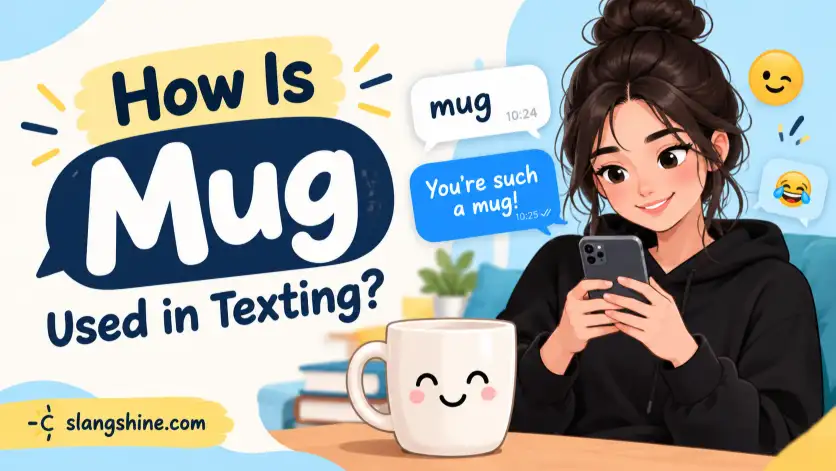
How Is Mug Used in Texting?
In texting, mug is usually understood from the sentence around it.
Someone might text:
“Don’t be a mug 😂”
This could be friendly teasing or a genuine warning.
Another person might write:
“He mugged me off again.”
This usually means the person feels embarrassed, disrespected, or taken advantage of.
And:
“Send me a pic of your mug 😂”
Could use “mug” to mean face.
Because texting often removes facial expressions and voice tone, emojis and surrounding words can help show if the person is joking or being serious.
Real-Life Examples of Mug Slang
Seeing the word in different situations makes its meaning much easier to understand. The following examples show how mug slang can change depending on tone and context.
Friendly Example
“Bro, you left your phone at home again. Don’t be a mug 😂”
Here, “mug” is being used as playful teasing between friends.
Casual Example
“I trusted him, but he made a mug of me.”
The speaker feels that the other person made them look foolish or took advantage of their trust.
Argumentative Example
“Stop mugging me off in front of everyone.”
This is more serious. The speaker feels embarrassed or disrespected.
Social Media Example
“Why did you post that picture of my mug? 😂”
Here, “mug” refers to the person’s face.
Gaming Example
“Don’t be a mug and fall for that fake strategy.”
In a gaming conversation, the term can describe someone who was easily fooled by another player.
Everyday British Conversation
“He’s a mug if he thinks they’ll give him the money back.”
In this sentence, the speaker is saying that the person would be foolish to believe that.
These examples show why you should read the entire sentence before deciding what “mug” means.
Mug vs. Mugged Off vs. Mugging Off
These expressions are related, but they are used differently.
| Expression | Basic meaning | Example |
| a mug | A foolish or gullible person | “Don’t be a mug.” |
| mug someone off | Make someone look foolish or disrespect them | “Why are you mugging me off?” |
| get mugged off | Be made to feel foolish, embarrassed, or taken advantage of | “I got mugged off.” |
| make a mug of someone | Make someone look foolish | “They made a mug of him.” |
| mug | Someone’s face in informal usage | “Look at his mug.” |
Although these phrases share the word “mug,” their meanings are not identical.
For example, “I got mugged off” does not normally mean that someone physically robbed you.
If someone says “I was mugged,” however, the meaning may be completely different: it can refer to being robbed or attacked.
Mug Slang Compared With Similar Words
Several informal words can describe someone who is foolish, gullible, or easy to take advantage of. However, their tone is not exactly the same.
| Slang term | Common meaning | Tone |
| Mug | Foolish or easily fooled person | Informal, often insulting |
| Muppet | A silly or foolish person | Often humorous |
| Idiot | A very foolish person | Direct and insulting |
| Sucker | Someone easily deceived | Informal, negative |
| Fool | Someone lacking good judgment | Mild to strong depending on context |
| Clown | Someone acting foolishly | Mocking or insulting |
Mug vs. Sucker
A sucker is generally someone who is easily tricked or persuaded. A mug can carry a similar idea, especially in British English, but it can also appear in phrases about being embarrassed or treated badly.
Mug vs. Muppet
“Muppet” is another British informal insult meaning someone who is acting foolishly. It often sounds more humorous than “mug,” although context can make either word insulting.
Mug vs. Idiot
“Idiot” is more direct. Calling someone a mug can sometimes sound like casual teasing, while “idiot” is more clearly an insult.
Is “Mug” Still Used in 2026?
Yes. Mug remains recognizable in British informal English in 2026, particularly in phrases such as “don’t be a mug,” “mugged off,” and “make a mug of someone.”
Its frequency can vary by age, region, social group, and context. Not every British speaker uses the term regularly, and younger speakers may prefer newer expressions in some situations.
Online communication has also helped informal British vocabulary travel beyond the UK. Someone outside Britain may encounter “mugged off” through British entertainment, social media, or conversations with British speakers.
That does not mean every person who uses “mug” intends the same thing. The surrounding words remain the best clue.
Why Do People Use Mug Slang?
People often use slang because it makes communication feel shorter, more expressive, and more conversational.
“Mug” can communicate an idea that would otherwise require a longer explanation.
Compare:
“Don’t be a mug.”
With:
“Don’t allow someone to take advantage of you by being overly trusting.”
The first sentence is much shorter and sounds natural in an informal conversation.
People may also use “mug” because it can add humor or personality. Among friends, calling someone a “mug” can be part of playful banter rather than a serious attack.
However, slang depends heavily on shared understanding. What sounds funny to one group may sound rude or confusing to another.
When Should You Avoid Saying “Mug”?
Although “mug” is common in informal speech, it is not a good choice for every situation.
Avoid using it when you need to sound professional, respectful, or neutral.
For example, instead of writing:
“The customer was a mug.”
A professional report could say:
“The customer appears to have been misled.”
Likewise, if you are speaking to someone you do not know well, calling them “a mug” may come across as an insult.
You should also avoid using slang when the meaning could cause confusion. If the reader is unfamiliar with British English, “mugged off” may not immediately make sense.
In formal communication, clear and direct language is usually better than slang.
Polite Alternatives to Mug
If you want to communicate the same general idea without sounding insulting, choose a neutral phrase.
Instead of:
“Don’t be a mug.”
You could say:
- “Be careful.”
- “Don’t let them take advantage of you.”
- “Think it through first.”
- “Make sure you’re not being misled.”
- “You might want to reconsider.”
- “Don’t be too trusting.”
These alternatives are especially useful at work, in school, or when speaking to someone you do not know well.
Can Mug Be Used as a Joke?
Yes. Mug can be playful when used between people who know each other well.
For example:
“You forgot your keys again, you mug 😂”
The speaker may not genuinely believe the person is foolish. The laughing emoji and familiar relationship can make the comment sound like friendly banter.
But you cannot assume that every use is harmless.
If someone says:
“You’re such a mug.”
During an argument, it is more likely to be intended as an insult.
The safest approach is to consider the relationship, situation, and tone together.
Common Mistakes About Mug Slang
Mistake 1: Assuming “mug” always means a cup
The everyday meaning of mug is a drinking cup, but informal English uses the word in several other ways.
Mistake 2: Assuming “mugged” always means robbed
“Mugged” can refer to robbery, but “mugged off” has a different informal meaning involving embarrassment, disrespect, or being taken advantage of.
Mistake 3: Assuming “mug” always means foolish
In phrases such as “look at his mug,” the word can refer to someone’s face.
Mistake 4: Treating all uses as equally common
The meaning depends on context. In ordinary British slang, calling someone “a mug” and saying someone was “mugged off” are much more likely to be encountered than some less common interpretations.
FAQs About Mug Slang
Q1. What does mug mean in slang?
Answer: In British slang, “mug” commonly describes someone who is foolish, gullible, or easy to take advantage of.
Q2. What does “don’t be a mug” mean?
Answer: “Don’t be a mug” usually means don’t be foolish or too trusting, especially when someone may be taking advantage of you.
Q3. What does “mugged off” mean in British slang?
Answer: “Mugged off” generally means being made to look foolish, embarrassed, disrespected, or taken advantage of.
Q4. Does mug mean face in slang?
Answer: Yes. In some informal English, particularly British usage, “mug” can refer to someone’s face.
Q5. Is calling someone a mug offensive?
Answer: It can be. “Mug” is often an insult, although friends may use it playfully. The relationship and tone determine how offensive it sounds.
Q6. Is mug slang mainly British?
Answer: The slang uses discussed in this article are strongly associated with British informal English, although people outside the UK may recognize them through British media and online communication.
Conclusion
Mug slang has several meanings, so the surrounding context is essential. When someone calls a person “a mug,” the word usually suggests that the person is foolish, gullible, or allows someone to take advantage of them.
In “mugged off,” the meaning shifts toward someone embarrassing, disrespecting, or making another person look foolish.
“Mug” can also mean someone’s face in informal British English, while “mugged” can have an entirely different meaning when it refers to robbery or physical attack.
People generally use the word in casual conversations, jokes, and informal online communication. If you are unsure how another person will interpret it, choose a clearer and more polite expression instead.
Ultimately, what mug means in slang depends on the exact phrase, situation, and tone.
Understanding those clues will help you recognize if someone is joking, insulting another person, describing a face, or talking about someone treating them badly.
Learn More Slang Terms:
- MBA Meaning Slang: Married But Available (2026), 5 Min Read
- Bofa Slang: The Joke That Confuses Everyone Online (2026)
- What Is a Baller Slang? Meaning, Origin & Examples (2026)

Hi, I’m Anna Whitmore. I have 7+ years of experience writing about English slang and vocabulary. At SlangShine, I create simple, easy-to-understand content for English learners.