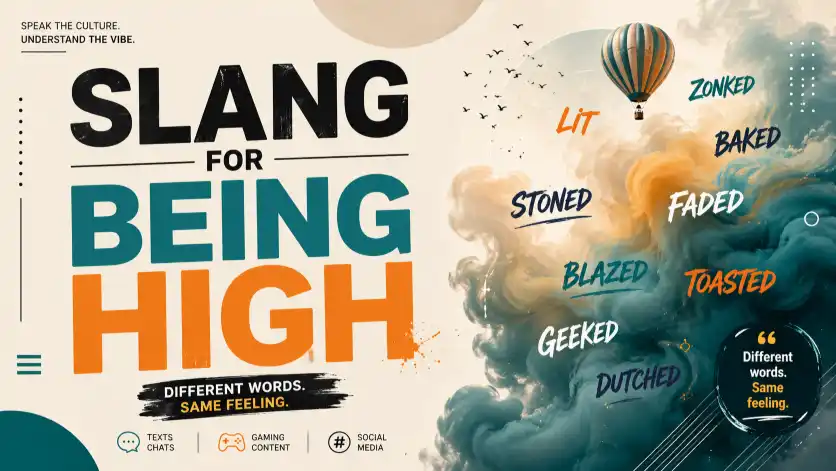
“Slang for being high” refers to informal words and phrases used to describe being under the effects of a drug. Common examples include stoned, baked, high, faded, lifted, and blitzed, although their meanings and intensity can differ.
People often search for this slang to understand texts, songs, social media posts, or conversations. However, not every term means exactly the same thing.Some slang words mainly relate to cannabis, while others describe drug intoxication more broadly.
For example, people often use stoned to describe someone who feels intoxicated, dazed, or deeply relaxed after using drugs, especially cannabis.
They may use bombed to describe someone who feels very intoxicated or high. In contrast, tripping usually describes the altered effects that people experience after taking hallucinogenic drugs.
This guide explains the most useful expressions, their differences, and how context changes their meaning.
Quick Answer: Slang for Being High
People commonly use slang terms like “stoned,” “baked,” “faded,” “lit,” “blitzed,” and “spaced out” to describe being high. The drug, level of intoxication, and context can change the meaning of these terms.People use some expressions mainly for cannabis, while they use others for drug intoxication more generally.
What Does “Being High” Mean?
Being high means experiencing the effects of a psychoactive drug. The experience can affect a person’s mood, thoughts, senses, coordination, or awareness.
The phrase “high” is itself slang and is widely used in everyday conversation.
For example:
“He said he was high.”
This means the person said they were experiencing the effects of a drug.
The word does not identify a particular substance by itself. Therefore, you cannot always tell what drug someone means simply from the word high.
Common Slang Words for Being High
Different slang terms describe different experiences. Some are broad, while others are strongly connected with cannabis.
| No | Slang Word | Simple Meaning |
|---|---|---|
| 1 | Knocked out | Extremely affected or unable to stay alert |
| 2 | Hammered | Extremely intoxicated |
| 3 | Blazed | High from cannabis |
| 4 | Hallucinating | Experiencing unreal sights or sounds |
| 5 | Blown | Very high or mentally affected |
| 6 | Chill | Relaxed or calm |
| 7 | Wasted | Very intoxicated |
| 8 | Buzzed | Mildly intoxicated |
| 9 | Smashed | Very intoxicated |
| 10 | Zooted | Very high or intoxicated |
| 11 | Toasted | Very high or intoxicated |
| 12 | Baked out | Extremely high |
| 13 | Blasted | Very intoxicated or high |
| 14 | Ripped | Very high, especially from cannabis |
| 15 | Fried | Mentally affected by intoxication |
| 16 | Couch-locked | Too high to feel like moving |
| 17 | Gone | Strongly affected by drugs |
| 18 | Out of it | Confused or mentally distant |
| 19 | Out there | Mentally distant |
| 20 | Wavy | Feeling altered or intoxicated |
| 21 | Geeked | Highly excited or stimulated |
| 22 | Turnt | Highly excited or intoxicated |
| 23 | Turnt up | Extremely excited or energetic |
| 24 | Sauced | Intoxicated or drunk |
| 25 | Sloshed | Very intoxicated |
This word suggests a stronger level of intoxication than simply saying someone is high.
Cannabis-Specific vs. General Slang
Not all slang for being high refers to the same type of drug experience.
| Term | Common meaning | Typical association |
| High | Under drug effects | General |
| Stoned | Intoxicated or dazed | Often cannabis |
| Baked | Strongly intoxicated | Often cannabis |
| Faded | Noticeably intoxicated | Broad |
| Lit | Excited or intoxicated | Context-dependent |
| Blitzed | Very intoxicated | Drugs or alcohol |
| Spaced out | Dazed or disconnected | Drugs or general behavior |
| Tripping | Experiencing a hallucinogenic drug effect | Psychedelics |
This distinction matters because slang does not always identify the substance. Context is often needed to understand what the speaker means.
What Does “Tripping” Mean?
“Tripping” can describe being under the effects of a hallucinogenic drug, especially when the experience involves altered perception or hallucinations. It can also mean acting strangely or thinking irrationally without referring to drug use.
For example:
“He was tripping after taking a hallucinogen.”
But:
“Why are you tripping over this?”
Here, tripping means overreacting or worrying, not being high.
That makes it a good example of why slang should always be understood from context.
What Does “Spaced Out” Mean?
“Spaced out” can describe someone who seems dazed, disconnected, or mentally distant. It can be connected with drug intoxication, but it can also describe ordinary tiredness or distraction.
For example:
“She looked spaced out during the conversation.”
This sentence alone does not prove that drugs were involved.
The person could simply be tired, distracted, or lost in thought.
How Do People Use Slang for Being High?
People usually use these expressions in casual conversations, texts, songs, memes, and online posts. The tone can range from playful to serious, depending on the word and situation.
For example:
“He’s really baked tonight.”
This suggests noticeable cannabis intoxication.
By contrast:
“I’m feeling faded.”
This can describe a broader feeling of intoxication and does not always identify a specific substance.
Because slang changes by group and region, the same word may not carry exactly the same meaning for every speaker.
Is Slang for Being High Always About Drugs?
No. Some expressions can describe ordinary behavior without referring to drugs.
For example, spaced out can describe someone who is tired or distracted. Lit can mean exciting or enjoyable rather than intoxicated. Tripping can mean overreacting rather than experiencing a drug effect.
Context can change the meaning:
| Expression | Drug-related meaning | Other meaning |
| Lit | Intoxicated | Exciting or fun |
| Tripping | Under a hallucinogenic drug | Overreacting |
| Spaced out | Dazed from drugs | Distracted or tired |
| Faded | Intoxicated | Sometimes mentally worn out |
So, seeing one of these words does not automatically prove that someone is using drugs.
Which Slang Terms Are More Casual?
Words such as “baked,” “stoned,” and “faded” are strongly informal. They are more likely to appear between friends than in formal communication.
Casual examples
“He was baked after the party.”
“I felt really faded.”
People who know drug slang may understand these expressions, but they should avoid using them in formal reports or professional communication.
If you need to describe someone’s condition clearly, direct wording is usually better.
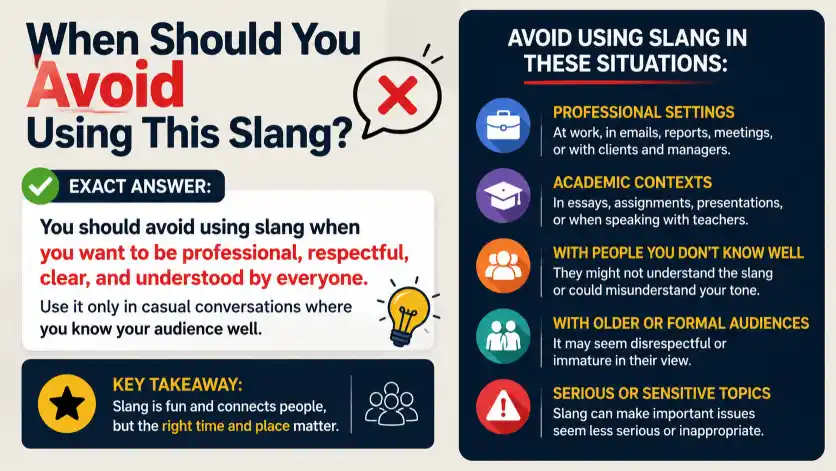
When Should You Avoid Using This Slang?
Avoid drug-related slang when the audience may misunderstand it or when precise wording is important.
This includes:
- School assignments
- Workplace communication
- Medical or emergency situations
- Official reports
- Conversations with people unfamiliar with slang
- Situations where the exact substance or condition matters
Slang can also be confusing because one word may have several meanings. In an important situation, clear language is safer than relying on informal expressions.
Why Do People Use These Expressions?
People use slang because it can make conversations shorter, more casual, or more expressive. It can also show that someone understands a particular social group or style of communication.
A person might say “baked” instead of “high from cannabis” because the first word is shorter and sounds more conversational.
Online, slang can also make captions and messages feel more natural to the intended audience.
However, slang is not universal. A term that sounds normal to one group may sound unfamiliar or outdated to another.
Are These Terms Appropriate at Work or School?
Generally, no. Drug-related slang is informal and can create confusion in academic or professional settings.
For example, instead of writing:
“He was totally blitzed.”
a formal description would need to state the situation more clearly and accurately.
The same applies to schoolwork. If an assignment discusses drug effects, standard terms are usually better than slang because they communicate the subject more precisely.
Common Misunderstandings
“High” always means cannabis
Not necessarily. High is a broad term for being under the effects of a psychoactive drug. The word alone does not identify the substance.
“Lit” always means high
No. Lit often means exciting, energetic, or enjoyable. Context is needed before giving it a drug-related meaning.
“Spaced out” proves someone is using drugs
No. A person can look spaced out because they are tired, distracted, stressed, or lost in thought.
“Tripping” always means using a psychedelic
No. In everyday speech, tripping can also mean overreacting or becoming upset about something.
All slang has the same level of intensity
No. Words such as baked, stoned, faded, and blitzed can suggest different levels or types of intoxication depending on the speaker.
Frequently Asked Questions
Q1. What is the most common slang for being high?
Answer: Common terms include stoned, baked, faded, high, and lit. Their meanings can vary by context.
Q2. What slang means high from weed?
Answer: Stoned and baked are commonly associated with being high from cannabis. The exact meaning can still vary between speakers.
Q3. What does faded mean?
Answer: Faded is informal slang for being noticeably intoxicated or mentally affected by drugs or alcohol.
Q4. What does blitzed mean in slang?
Answer: Blitzed usually describes someone who is very intoxicated. It can refer to drugs or alcohol.
Q5. Does lit mean high?
Answer: Sometimes, but not always. Lit can also mean exciting, energetic, or fun, so the surrounding context matters.
Q6. Does tripping mean being high?
Answer: It can. Tripping may describe the effects of a hallucinogenic drug, but it can also mean overreacting or behaving irrationally.
Conclusion
Slang for being high includes words such as stoned, baked, faded, lit, and blitzed. However, these terms are not exact synonyms.
People associate some terms more closely with cannabis, while others describe intoxication more broadly.The safest way to understand them is to consider the full sentence, situation, and speaker’s context.
Words such as lit, tripping, and spaced out can have completely different everyday meanings.For formal or important communication, standard language is clearer than drug-related slang.
Explore More Articles:

Hi, I’m Anna Whitmore. I have 7+ years of experience writing about English slang and vocabulary. At SlangShine, I create simple, easy-to-understand content for English learners.