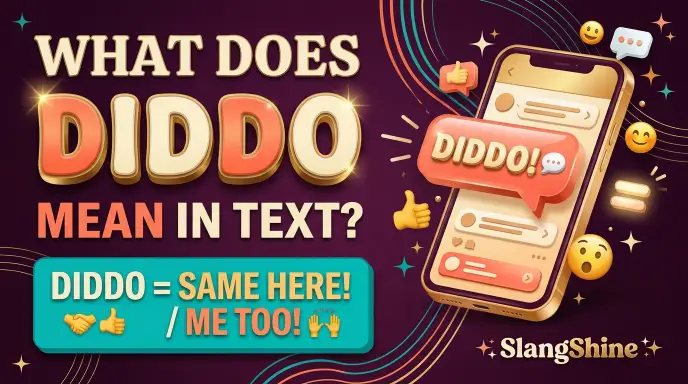
Diddo meaning in text is usually a misspelling of “ditto,” which means “same here,” “I agree,” or “I feel the same way.” People use it in text messages and social media chats to show that they share someone else’s opinion or feeling.
You may see “diddo” in messages on TikTok, Snapchat, Instagram, or WhatsApp. If you’re wondering What Does Diddo Mean in Text?, the sender likely means “ditto,” even though the spelling is incorrect.
Understanding this expression is easy once you know how people use it in everyday conversations. Let’s explore its meaning, examples, common replies, and use across social media.
What Does Diddo Mean in Text?
In texting, diddo usually means “ditto.” People use it to express agreement or say that the same statement applies to them.
For example:
A: I’m so tired today.
B: Diddo!
Here, B likely means “Ditto!” or “I’m tired too.”
The standard spelling is ditto, not diddo. However, people sometimes misspell words when typing quickly, so the incorrect version may still appear in casual conversations.
Is Diddo Slang or an Abbreviation?
Diddo is generally a misspelling of “ditto,” rather than a separate, established slang abbreviation. The word “ditto” has been used in English for a long time to indicate that something is repeated or applies equally. In modern texting, people often use it as a quick way to agree with another person.
For example:
A: I love this song!
B: Ditto!
The reply means that B loves the song too. If someone writes “diddo,” they probably intend to communicate the same thing.
What Does Diddo Mean in Everyday Conversations?
The intended meaning is usually easy to understand from the message before it.
People may use “diddo” to express three common ideas:
- Agreement: They share the other person’s opinion.
- Shared feelings: They feel the same way about a situation.
- The same preference: They like or dislike the same thing.
For example, if your friend says, “I can’t wait for the weekend,” replying “Diddo” suggests that you feel the same excitement. However, context still matters. If the surrounding conversation does not make the meaning clear, you can ask the sender what they intended.
Diddo vs. Ditto: What’s the Difference?
The main difference is spelling. Ditto is the standard English word. Diddo is commonly used as a misspelling or typing variation when someone intends to write “ditto.”
| Word | Meaning | Standard Spelling? | Example |
| Ditto | Same here; I agree | Yes | “I’m excited.” “Ditto!” |
| Diddo | Usually intended to mean ditto | No | “I’m excited.” “Diddo!” |
If you want to write the word correctly, use ditto. In an informal chat, the recipient may still understand “diddo” from the context.
Where Do People Use Diddo?
People may use “diddo” in casual digital conversations, but the spelling is not a recognized platform specific slang term. The intended word is usually “ditto.” Here is how to understand it across popular messaging platforms.
Diddo on TikTok
TikTok users often share opinions through comments, videos, and direct messages. A person may write “ditto” to show that they agree with a creator or another commenter.
For example:
A: This is the best song of the year.
B: Ditto! I have it on repeat.
The reply shows that B shares the same opinion. If someone writes “diddo” in a similar comment, they probably intend the same response.
Diddo on Snapchat
Snapchat conversations are usually casual, so short replies are common. Friends may use “ditto” when they share the same feeling or preference.
For example:
A: I need a vacation so badly.
B: Diddo 😂
B likely means, “Same here!” The spelling may be incorrect, but the meaning is understandable from the conversation.
Diddo on Instagram
On Instagram, people can use “ditto” in comments, Stories, and direct messages to show agreement.
For example:
A: Sunday mornings are the best.
B: Ditto!
The response means that B feels the same way. If you see “diddo,” the writer may have made a spelling mistake rather than used a different slang term.
Diddo on WhatsApp
WhatsApp is commonly used for personal chats and group conversations. A short reply such as “ditto” can save time when someone expresses a feeling you share.
For example:
A: I’m ready for the holidays.
B: Ditto! Can’t wait.
The reply communicates the same excitement without repeating the entire sentence.
Diddo in SMS Text Messages
People also use “ditto” in regular text messages. It works well when the previous message clearly expresses an opinion, feeling, or preference.
For example:
A: I miss our school days.
B: Ditto. Those were good times.
If the sender writes “diddo,” you can usually understand the intended meaning from the context. Still, ditto is the correct spelling when you want to use the word yourself.
10 Real Chat Examples of Diddo in Text
These conversations show how people might use “diddo” when they intend to write “ditto.” The examples use everyday situations to make the meaning easy to understand.
Example 1: Sharing the Same Feeling
A: I’m exhausted after work today.
B: Diddo!
A: We both need an early night.
B: Definitely.
Meaning: B likely means, “I’m exhausted too.”
Example 2: Agreeing About Food
A: I could eat pizza every day.
B: Ditto! 🍕
A: Especially cheesy pizza.
B: Now I’m hungry.
Meaning: B shares the same love of pizza.
Example 3: Talking About School
A: I can’t wait for summer vacation.
B: Diddo!
A: These exams are taking forever.
B: Tell me about it.
Meaning: B probably means that they also want summer vacation to arrive.
Example 4: Discussing Music
A: This is my favorite song right now.
B: Ditto! I’ve played it ten times today.
A: Same, it’s so good.
Meaning: Both people enjoy the same song.
Example 5: Sharing an Opinion
A: That movie was much better than I expected.
B: Diddo. The ending was amazing.
A: I didn’t see that twist coming.
Meaning: B agrees with the positive opinion about the movie.
Example 6: Making Weekend Plans
A: I just want to relax at home this weekend.
B: Ditto. No plans, please.
A: Sounds perfect.
B: Exactly!
Meaning: Both people prefer a quiet weekend.
Example 7: Talking About the Weather
A: I love rainy days when I can stay inside.
B: Diddo ☔
A: With a blanket and some hot chocolate.
B: That’s my kind of day.
Meaning: B shares the same preference for cozy rainy days.
Example 8: Expressing Excitement
A: I’m so excited about the concert!
B: Ditto! It’s going to be amazing.
A: We should arrive early.
B: Good idea.
Meaning: B feels the same excitement about the concert.
Example 9: Sharing a Complaint
A: Mondays should start at noon.
B: Diddo 😂
A: Imagine getting extra sleep every week.
B: That would be perfect.
Meaning: B agrees with the humorous complaint about Mondays.
Example 10: Expressing Affection
A: I’m really glad we’re friends.
B: Ditto ❤️
A: You’re always there for me.
B: Always!
Meaning: B is expressing the same positive feeling.
These examples demonstrate that “diddo” usually communicates “same here” or “I feel the same way.” The intended meaning becomes clear when you read the preceding message.
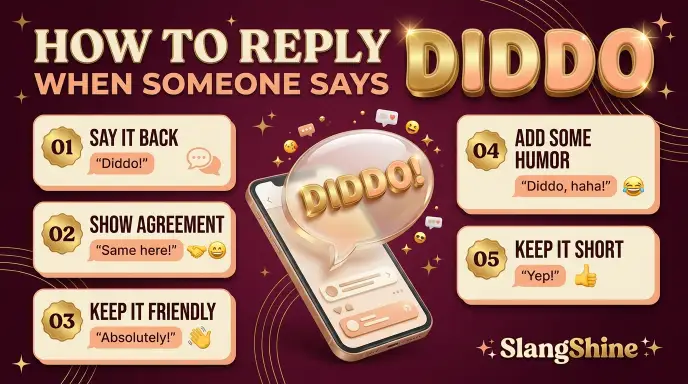
How to Reply When Someone Says Diddo
Your response depends on what the other person is agreeing with. In most cases, you can continue the conversation naturally without asking for an explanation.
Funny Replies
Use these responses when chatting with friends.
- “Haha, great minds think alike!”
- “We’re definitely on the same page 😂”
- “Copy paste feelings!”
- “Twins, honestly!”
These replies work well when you both share the same opinion or feeling.
Casual Replies
Keep your response short and natural.
- “Same!”
- “Exactly!”
- “I knew you’d agree.”
- “Right?!”
For example:
A: I need a holiday.
B: Diddo!
A: Same! Let’s plan one.
Friendly Replies
If someone agrees with you about something positive, a warm response can keep the conversation going.
- “Glad you feel the same way!”
- “I knew we agreed on that!”
- “We’re definitely alike.”
- “That’s why we get along so well!”
Choose a response that matches your relationship and the topic.
Neutral Replies
A neutral response works when the conversation is simple or you do not know the person well.
- “Same here.”
- “I agree.”
- “Me too.”
- “That’s how I feel as well.”
You do not need to overthink the reply. Since “ditto” generally indicates agreement or shared feelings, a short acknowledgment is usually enough.
Is Diddo Rude or Offensive?
Diddo is not inherently rude or offensive. When someone uses it to mean “ditto,” they are generally expressing agreement or saying that they feel the same way. The tone depends on the conversation, though. A short response can sound friendly, neutral, or sarcastic depending on the words and situation.
Is Diddo Safe to Use With Friends?
Yes, it is generally harmless in casual conversations when the intended meaning is clear.
For example:
A: I love spending time with you.
B: Ditto!
Here, B is expressing the same feeling. There is no offensive meaning in this exchange.
Can You Use Diddo at School or Work?
The word ditto is acceptable in many informal school and workplace conversations. It is a familiar English word rather than inherently offensive slang.
However, avoid relying on the misspelling “diddo” in assignments, reports, or formal emails. Using the correct spelling helps your writing look clear and professional.
For example, instead of replying “Diddo” to a teacher’s email, write a complete response such as, “I agree with your suggestion.”
Can Diddo Sound Sarcastic?
Any short response can sound sarcastic if the context suggests that the sender is not being sincere.
For example:
A: This assignment is so difficult.
B: Ditto 🙄
The eye roll emoji may suggest frustration or sarcasm. The word itself does not automatically carry that tone. Look at the full message, not just the word. Emojis, punctuation, and the relationship between the speakers can change how a response feels.
Who Uses Diddo?
People of different ages may use “ditto” in everyday conversations. The misspelling “diddo” may appear when someone types quickly or is unsure of the correct spelling. However, there is not enough reliable evidence to identify “diddo” as a widely established slang term used mainly by one age group.
Does Gen Z Use Diddo?
Gen Z often uses short replies and informal expressions in digital conversations. “Ditto” can serve as a quick way to show agreement, just as “same” and “me too” do.
However, that does not mean “diddo” is a specific Gen Z slang expression. It is more accurate to treat it as a likely misspelling of a familiar English word.
Do Teenagers and Adults Use It?
Both teenagers and adults may use “ditto” when texting friends, discussing shared interests, or expressing similar feelings.
For example, a teenager might reply “Ditto!” to a friend’s message about a favorite song. An adult might use the same word when agreeing with a colleague about a shared preference. The meaning remains the same in both cases.
Where Is Diddo Most Common?
There is no verified usage data establishing “diddo” as especially common on TikTok, Snapchat, Instagram, or WhatsApp. You may encounter it in informal messages or comments. Still, the standard spelling is ditto, and it is the better choice when writing the word intentionally.
Origin of Diddo: What Does Diddo Mean in Text?
To understand “diddo,” it helps to look at the word ditto, which has a long history in English. “Ditto” is used to indicate that something already mentioned applies again. In everyday conversation, it often means “the same thing” or “I feel the same way.”
The spelling “diddo” is generally treated as a misspelling rather than a separate word with a confirmed origin.
How Did Ditto Become a Texting Expression?
People have used “ditto” in conversation and writing long before modern social media. Digital messaging simply provides another setting where the word is useful. Instead of repeating an entire sentence, someone can write “Ditto!” to communicate the same thought.
For example:
A: I love this place.
B: Ditto!
The second person expresses the same opinion in just one word.
Why Do People Write Diddo Instead of Ditto?
Several factors may explain the spelling mistake:
- Fast typing: People sometimes enter the wrong letters when sending messages quickly.
- Uncertainty about spelling: Someone may have heard the word spoken but never seen it written.
- Autocorrect or keyboard errors: Mobile typing can produce unintended words.
- Repeated informal use: A person may continue using a spelling they have seen in casual conversations.
These are possible explanations, not proof of how every instance of “diddo” originated.
Is Diddo a New Internet Slang Word?
There is no strong evidence that “diddo” is a new slang term with a separate, established meaning. In most everyday contexts, it is best understood as an attempt to write “ditto.” If you want to express agreement, use ditto, same here, or me too. These options communicate your meaning clearly.
Diddo vs. Ditto, Same, IDK, and IMO
These expressions serve different purposes in texting. Understanding the differences can help you choose the right response.
| Term | Meaning | Type | Usage | Popularity |
| Diddo | Usually intended to mean “ditto” | Misspelling | Informal agreement or shared feelings | Usage unclear |
| Ditto | Same here; the same applies | Standard English word | Agreement or shared feelings | Widely recognized |
| Same | I feel the same way | Common expression | Agreement or shared experiences | Widely recognized |
| IDK | I don’t know | Initialism | Expressing uncertainty | Widely recognized |
| IMO | In my opinion | Initialism | Sharing a personal viewpoint | Widely recognized |
Diddo vs. Ditto
The difference is spelling. Ditto is correct, while diddo is generally a misspelling.
Both may be understood in a casual conversation when the intended word is obvious.
Diddo vs. Same
Both can express agreement, but “same” is a common informal response in modern texting.
For example:
A: I’m so hungry.
B: Same!
The reply means that B is hungry too. “Ditto” can communicate the same idea.
Diddo vs. IDK
These expressions have different purposes. “Ditto” expresses agreement or a shared feeling, while IDK means “I don’t know.”
For example:
A: I think the movie starts at seven.
B: IDK. Let me check.
Here, B is expressing uncertainty rather than agreement.
Diddo vs. IMO
IMO means “in my opinion.” People use it to introduce or qualify their viewpoint.
For example:
A: IMO, this is the best album.
B: I agree!
In contrast, “ditto” would communicate that B shares the same opinion without repeating it.
What does Diddo mean in text? Real World Usage Example
Imagine that your friend messages you on WhatsApp after a long day at school or work.
A: I’m so ready for the weekend. I need some rest.
B: Diddo!
Your friend probably means “Ditto!”, which communicates that they also want the weekend to arrive and need some rest.
You could respond:
A: We both need a break 😂
B: Seriously!
The conversation flows naturally because both people understand the intended message. In this situation, “diddo” is not a special code or a complicated slang expression. It is most likely a spelling mistake in a reply that means “same here.”
FAQs About What does Diddo mean in text
Q1. What does diddo mean in text messages?
Answer: Diddo usually means “ditto,” which expresses agreement or means “same here.” The standard spelling is ditto.
Q2. What does diddo mean on TikTok?
Answer: On TikTok, diddo usually appears to be a misspelling of ditto. The intended meaning is generally “I agree” or “I feel the same way.”
Q3. Is diddo slang?
Answer: Diddo is generally a misspelling of the standard English word ditto, rather than a separate, established slang term.
Q4. Is diddo rude or offensive?
Answer: No, it is not inherently rude or offensive. When intended as ditto, it usually expresses agreement or shared feelings.
Q5. How should you reply to diddo?
Answer: You can reply with “Same!”, “Me too!”, “Exactly!”, or “Glad you agree!” Choose a response that fits the conversation.
Conclusion
Diddo usually means “ditto” in text messages. When exploring What Does Diddo Mean in Text?, it helps to know that people use it to express agreement, share a feeling, or show that the same statement applies to them. You may encounter it in casual conversations on TikTok, Snapchat, Instagram, WhatsApp, and SMS.
Although the intended meaning is usually clear from context, ditto is the correct spelling. When someone sends you “diddo,” you can respond naturally with “Same here!” or “Me too!” If you want to use the word yourself, choose “ditto” to keep your message clear and correctly spelled.
Learn More About Slang:
- What Does DHZ Mean in Text? Slang or Just a Typo? (2026)
- What Does DI Mean in Text? Understand It in Seconds
- What Does DHO Mean in Text? Find Out What It Really Means

Hi, I’m Emma Carter, an English language writer with over 8 years of experience in vocabulary and language learning. At SlangShine, I write simple, accurate, and easy-to-understand articles about slang, synonyms, idioms, and everyday English to help learners build confidence and improve their communication skills.