1950s Slang helps describe the language and style of the 1950s. Many of these expressions became part of American pop culture, while others are now mainly used to talk about the era or its history.
The 1950s slang refers to the fun and colorful words people used in everyday conversations during the 1950s.
Teenagers, musicians, movie stars, and families used these expressions to sound friendly, stylish, or exciting.
Many of these slang terms became part of American pop culture, and some are still used today.
If you have watched a classic 1950s movie, listened to old rock and roll music, or read vintage books, you have probably heard words like cool, square, or dig.
In this guide, you’ll learn the meanings of popular 1950s slang, where it came from, how people used it, and which expressions are still recognized today.
Quick Answer: 1950s Slang
1950s slang is a collection of informal words and phrases that became popular during the 1950s. These expressions were commonly used by teenagers, musicians, and everyday people to describe friends, fashion, music, relationships, and daily life.Many terms came from American youth culture, jazz, and the growing rock and roll scene. While some expressions have disappeared, others, like cool, are still used around the world.
What Does 1950s Slang Mean?
1950s slang is not a single word. Instead, it describes the informal language that was popular during the 1950s.
People used slang to:
- Sound modern.
- Express emotions.
- Describe people.
- Talk about music and dancing.
- Make conversations more fun.
Unlike formal English, slang changed quickly as new trends appeared.
Why Was 1950s Slang So Popular?
The 1950s was a time of major cultural change.
Several things helped slang spread across the United States:
- Rock and roll music
- Teen culture
- Radio shows
- Hollywood movies
- Television
- School life
- Drive in restaurants
Young people wanted their own way of speaking, and slang became part of their identity.
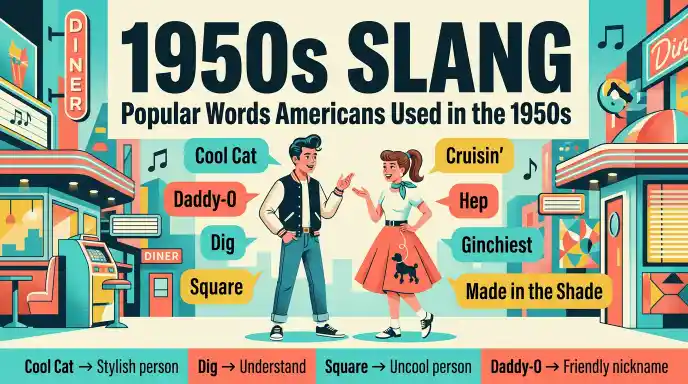
Most Popular 1950s Slang Words
Here are some of the best known expressions from the 1950s.
| Slang | Meaning | Example |
| Cool | Excellent or stylish | That car is cool. |
| Square | Someone old fashioned or boring | Don’t be such a square. |
| Dig | To understand or like something | I dig this song. |
| Daddy O | A friendly way to address someone | Thanks, Daddy O! |
| Cat | A person, usually someone stylish | He’s one cool cat. |
| Chick | A young woman | That chick is nice. |
| Cruisin’ | Driving around for fun | We’re cruisin’ tonight. |
| Made in the Shade | Everything is going well | We finished early, so we’re made in the shade. |
| Ginchy | Great or wonderful | That’s a ginchy jacket! |
| Bashful Bucket | Someone who is shy | He’s a real bashful bucket. |
Common Categories of 1950s Slang
People in the 1950s used different slang depending on the topic.
Friends
- Daddy O
- Cat
- Pal
Compliments
- Cool
- Ginchy
- Neat
Fun Activities
- Cruisin’
- Dig
- Rockin’
Insults
- Square
- Goof
- Birdbrain
These expressions made conversations more colorful and entertaining.
Did Everyone Use the Same Slang?
No.
Different groups used different expressions.
For example:
- Teenagers had their own slang.
- Jazz musicians used different words.
- Rock and roll fans created new expressions.
- Adults often preferred more traditional language.
Because of this, not every slang word was popular in every city or state.
Were 1950s Slang Words Only Used in America?
Most famous 1950s slang came from the United States.
However, American movies, music, and television helped spread many of these expressions to other English speaking countries.
Some words became internationally recognized, while others stayed closely connected to American culture.
Where Was 1950s Slang Commonly Used?
People used 1950s slang almost everywhere. It was part of daily life and could be heard in schools, restaurants, music clubs, and family neighborhoods.
Unlike today’s internet slang, these expressions were spoken more often than they were written.
1. At School
Teenagers loved using slang with their classmates.
It helped them sound modern and fit in with their friends.
Example
Tom: That’s a cool jacket.
Mike: Thanks, Daddy O!
Here, both words were friendly and informal.
2. At Drive In Restaurants
Drive in restaurants became very popular during the 1950s.
Friends often gathered there after school to eat, listen to music, and talk.
Example
Sarah: Let’s go cruisin’ after dinner.
Jenny: Sounds cool!
In this conversation:
- Cruisin’ means driving around for fun.
- Cool means great or exciting.
3. In Rock and Roll Music
Rock and roll helped many slang words become famous.
Singers and musicians used casual language that young people quickly copied.
Words like cool, cat, and dig became popular because they appeared in songs and conversations around the music scene.
4. In Hollywood Movies
Many classic movies from the 1950s included slang.
Actors used these expressions to sound natural and youthful.
As audiences watched these films, the words spread across the country.
5. Among Friends
Most 1950s slang was used between friends.
People rarely used these expressions in serious or formal situations.
Example
Jack: I dig your new bike.
Ben: Thanks!
Here, dig means “I really like.”
6. At Dances and Parties
School dances and neighborhood parties were important social events.
Teenagers often used slang while talking about music, fashion, and friendships.
Example
Emma: That band is really cool.
Lisa: Yeah, they’re rockin’ tonight!
Where Can You Still Hear 1950s Slang Today?
Although the 1950s ended many years ago, some expressions are still heard today.
You may hear them in:
- Classic movies
- Old TV shows
- Rock and roll songs
- Vintage themed events
- Retro diners
- Costume parties
- History documentaries
Some words have even become part of everyday English.
Words Still Used Today
| 1950s Slang | Still Common Today? |
| Cool | ✔ Yes |
| Dig | ✔ Sometimes |
| Square | ✔ Occasionally |
| Cat | ✔ Rarely |
| Daddy O | ✘ Mostly historical |
| Ginchy | ✘ Very rare |
| Cruisin’ | ✔ Sometimes |
Many other expressions are now mainly used for fun or to create a retro feeling.
Is 1950s Slang Rude, Offensive, or Harmless?
Most 1950s slang is harmless.
These words were created to make conversations more interesting, not to offend people.
However, a few expressions may sound outdated today.
| Expression | Modern Opinion |
| Cool | Friendly |
| Dig | Friendly |
| Daddy O | Playful |
| Square | Mildly negative |
| Chick | Can sound outdated or disrespectful in some situations |
Words That Are Still Safe to Use
Many classic expressions are still acceptable.
For example:
- Cool
- Dig
- Cruisin’
Most people understand these words without confusion.
Words to Use Carefully
Some expressions have changed over time.
Chick
In the 1950s, chick was commonly used to mean a young woman.
Today, some people do not mind the word, while others feel it sounds old fashioned or disrespectful.
Because opinions differ, it is better to use more respectful words like:
- Woman
- Girl
- Friend
- Person
Can You Use 1950s Slang Today?
Yes, but it depends on the situation.
Good Times to Use It
- Talking about history
- Watching classic movies
- Vintage parties
- Retro themed events
- Fun conversations with friends
Better to Avoid It
- Business meetings
- Job interviews
- School essays
- Professional emails
- Formal presentations
Using too much old fashioned slang may confuse people who are unfamiliar with these expressions.
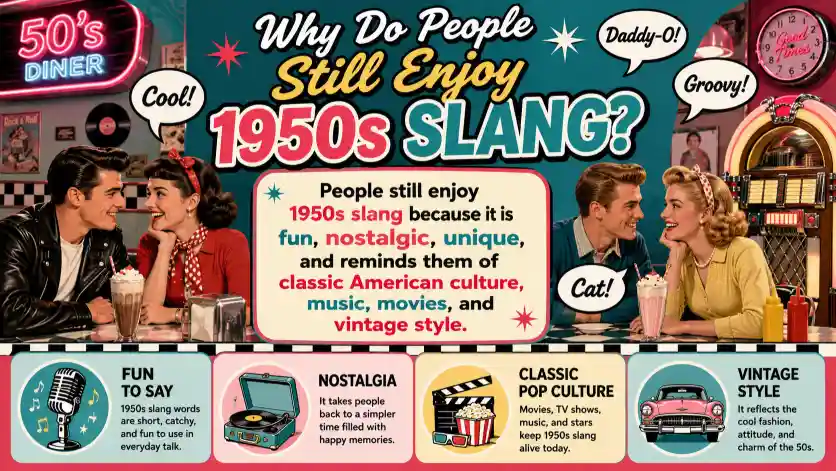
Why Do People Still Enjoy 1950s Slang?
Many people enjoy 1950s slang because it reminds them of a unique period in history.
These expressions are:
- Fun to say
- Easy to remember
- Part of classic American culture
- Connected with early rock and roll
- Popular in retro fashion and entertainment
Even though language has changed, these words still bring a sense of nostalgia and remain recognizable through films, music, and television.
Real Life Examples
The best way to understand 1950s slang is to see how people used it in everyday conversations.
Example 1: At School
Tom: That’s a cool bike.
Jack: Thanks! I just got it yesterday.
Meaning: Cool means great or impressive.
Example 2: Talking About Music
Emma: I really dig this new song.
Lisa: Me too. It’s amazing.
Meaning: Dig means to like or enjoy something.
Example 3: Hanging Out
Mike: Wanta go cruisin’ tonight?
Ben: Sure! Let’s invite everyone.
Meaning: Cruisin’ means driving around for fun.
Example 4: Greeting a Friend
Sam: Hey, Daddy O! How’s it going?
Chris: Everything’s great!
Meaning: Daddy O is a friendly way to greet someone.
Example 5: Describing Someone
Anna: He’s one cool cat.
Emma: I agree. Everyone likes him.
Meaning: Cat means a stylish or interesting person.
Example 6: Giving a Compliment
Jake: Your new jacket is ginchy!
Ryan: Thanks a lot!
Meaning: Ginchy means excellent or very nice.
Example 7: Calling Someone Old Fashioned
Alex: You never want to try anything new.
Mark: Don’t call me a square!
Meaning: Square describes someone who seems old fashioned or not interested in new trends.
Origin and History of 1950s Slang
The history of 1950s slang is closely connected to the rise of American youth culture after World War II.
During the 1950s, teenagers had more freedom, spending money, and entertainment choices than earlier generations. This helped create a unique way of speaking.
Several influences shaped the slang of the decade.
Rock and Roll
Artists like Elvis Presley helped make casual language popular among young people. Music introduced new words that quickly spread across schools and neighborhoods.
Jazz Culture
Many expressions, including cool, dig, and cat, became popular through African American jazz communities before they reached mainstream audiences. As jazz and rock music grew, these words spread across the United States.
Movies and Television
Hollywood films and television programs introduced slang to millions of viewers. Teen characters often used these expressions, making them even more popular.
Everyday Life
Drive in restaurants, school dances, diners, and neighborhood hangouts gave teenagers places to meet and develop their own language.
By the end of the decade, many of these words had become well known throughout America.
Similar Slang From the 1950s
Here are more popular expressions from the same era.
| Slang | Meaning |
| Cool | Great or fashionable |
| Dig | Like or understand |
| Cat | Stylish person |
| Daddy O | Friend |
| Square | Old fashioned person |
| Cruisin’ | Driving for fun |
| Ginchy | Excellent |
| Neat | Very good |
| Crazy | Exciting or surprising |
| Hip | Fashionable or aware of trends |
Many of these expressions helped shape modern English slang.
1950s Slang vs Modern Slang
Language changes over time. Some old expressions disappeared, while others stayed popular.
| 1950s Slang | Modern Slang |
| Cool | Fire |
| Dig | I’m into it |
| Square | Boring |
| Cat | Dude |
| Daddy O | Bro |
| Neat | Awesome |
| Ginchy | Amazing |
Modern slang changes much faster because of social media, while 1950s slang spread through music, movies, and everyday conversations.
When Should You Avoid Using 1950s Slang?
Although these expressions are fun, they are not always the best choice.
Avoid using them in:
- Business meetings
- Professional emails
- School reports
- Job interviews
- Academic writing
- Official documents
Many younger people may not recognize older slang words, and some expressions may sound outdated.
If your goal is clear communication, modern English is usually a better choice.
Modern Alternatives
If you want to express the same ideas using today’s language, here are some simple alternatives.
| 1950s Slang | Modern Alternative |
| Cool | Awesome |
| Dig | Like |
| Daddy O | Friend |
| Cat | Guy |
| Ginchy | Great |
| Square | Old fashioned |
| Neat | Nice |
These alternatives are more familiar to today’s readers while keeping the same basic meaning.
Why Do People Still Love 1950s Slang?
Even though the 1950s ended decades ago, many people still enjoy the slang from that era.
Here are a few reasons why:
- It sounds fun and unique.
- It reminds people of classic movies and music.
- It reflects an important time in American culture.
- It is popular at retro parties and vintage events.
- Some words, like cool, are still used every day.
Many people also enjoy learning old slang because it helps them understand books, films, and songs from the 1950s.
Common Misunderstandings About 1950s Slang
Because these expressions are old, people sometimes misunderstand them.
Mistake 1: Thinking Every Word Is Still Common
Some people believe all 1950s slang is still used today.
That is not true.
Words like cool remain popular, but expressions such as ginchy and Daddy O are now mostly heard in retro settings or classic movies.
Mistake 2: Assuming Every American Used the Same Slang
The United States is a large country.
People in different cities and regions often used different expressions.
Some slang became popular nationwide, while other words stayed local.
Mistake 3: Using Old Slang in Formal Writing
1950s slang was designed for casual conversations.
It is not appropriate for:
- Business emails
- Academic papers
- Job interviews
- Professional presentations
Formal English is a better choice in these situations.
Mistake 4: Believing Slang Never Changes
Language is always evolving.
Many popular words from the 1950s disappeared over time, while new slang replaced them.
Every generation creates its own expressions.
Frequently Asked Questions
Q1. What is 1950s slang?
Answer: 1950s slang is a collection of informal words and phrases that became popular during the 1950s. Many were used by teenagers, musicians, and young adults.
Q2. What was the most popular 1950s slang word?
Answer: One of the most famous words is cool, which means stylish, impressive, or excellent. It is still widely used today.
Q3. Is 1950s slang still used today?
Answer: Yes. Some words, such as cool and dig, are still used. Many other expressions are mainly found in classic movies, books, and retro events.
Q4. Where did 1950s slang come from?
Answer: It developed through American youth culture, jazz music, rock and roll, movies, television, and everyday conversations during the 1950s.
Q5. Was 1950s slang only used by teenagers?
Answer: Teenagers used it the most, but many adults also adopted popular expressions, especially those heard in music and movies.
Q6. Is 1950s slang rude?
Answer: Most 1950s slang is harmless. However, a few words may sound outdated today, so it is important to consider the audience and situation.
Q7. Why is 1950s slang still popular?
Answer: Many people enjoy it because it reflects a memorable period in history. Classic films, television shows, and rock and roll music continue to keep these expressions alive.
Q8. Can I use 1950s slang today?
Answer: Yes, you can use it in casual conversations, retro themed events, or when discussing history. For formal communication, modern standard English is usually the better choice.
Conclusion
1950s slang reflects the energy, creativity, and culture of one of the most memorable decades in modern history.
These expressions became popular through teenagers, jazz musicians, rock and roll artists, movies, and everyday conversations.
While many words have faded over time, others especially cool remain part of everyday English.
Learning 1950s slang helps you better understand classic films, vintage books, old songs, and the culture of the era.
If you come across a 1950s slang word, always consider the context. Some expressions are still easy to understand, while others are mainly used for historical interest or to create a fun retro atmosphere.
Keep Exploring:

Hi, I’m Emma Carter, an English language writer with over 8 years of experience in vocabulary and language learning. At SlangShine, I write simple, accurate, and easy-to-understand articles about slang, synonyms, idioms, and everyday English to help learners build confidence and improve their communication skills.