Bong Slang has several meanings depending on the context. Most commonly, it refers to a water pipe used for smoking substances like cannabis or tobacco, but in some regions it can also be an informal nickname for a person or have local cultural meanings. The correct meaning depends on how the word is used.
You’ll often hear this word in casual conversations, movies, or social media.
Most people use it so casually that they never stop to explain what it actually means.
If you’re coming across it for the first time, it’s easy to feel a little lost.
This guide breaks it down simply, so the meaning is clear right away.
Quick Answer: Bong Slang
Bong is a slang term that most often refers to a water pipe used for smoking. However, “Bong” is also an informal nickname for a person from Bengal. The intended meaning depends entirely on the conversation.
| Meaning | Tone | Offensive? | Common Users | Common Places |
| Water pipe for smoking or an informal name for a Bengali person | Depends on context | ⚠️ Sometimes | Friends, online communities, social media users | Text messages, social media, forums, everyday conversations |
What Does Bong Slang Mean?
The meaning of bong changes based on how people use it.
In many conversations, bong refers to a water pipe used to cool smoke before it is inhaled. This is the most common slang meaning found online.
In other situations, especially in India, Bong is an informal nickname for a Bengali person. Many people use it casually and positively, although some individuals may not like the label.
Understanding the conversation is the easiest way to know which meaning is intended.
A Simple Example
Example 1
Alex: What’s that glass thing on the table?
Ryan: It’s a bong.
Here, bong refers to a smoking device.
Example 2
Emma: My roommate is a Bong from Kolkata.
Here, Bong means a Bengali person.
Does Bong Stand for Anything?
No. Bong is not an abbreviation or acronym.
It is a standalone word with different meanings depending on the context. It does not have a full form like LOL or BRB.
Different Meanings of Bong
Bong as Smoking Slang
This is the most common slang meaning.
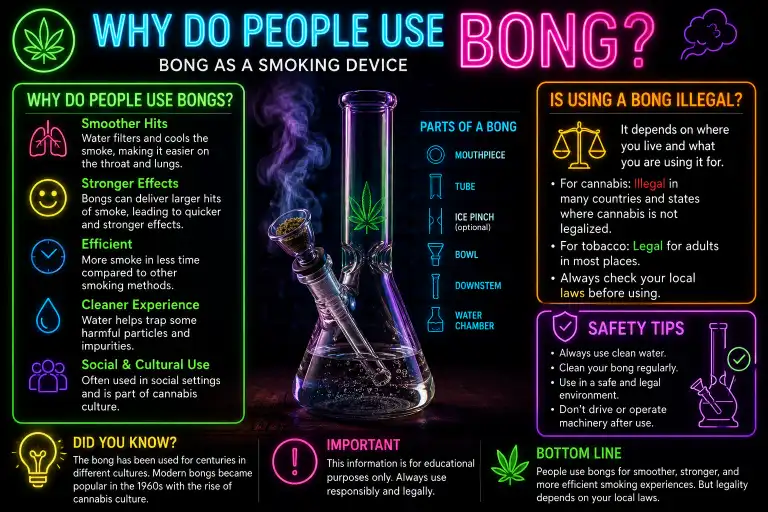
A bong is a water pipe that is used for smoking substances such as tobacco or cannabis. The water cools the smoke before it is inhaled.
Example:
“He bought a new bong from the smoke shop.”
Bong as a Nickname for a Bengali Person
In India, Bong is often used as an informal nickname for someone from West Bengal or of Bengali heritage.
Many people use it affectionately, especially among friends and online communities.
Example:
“She’s a proud Bong who loves Bengali food and festivals.”
Bong as a Sound
Less commonly, bong is also used to describe the deep ringing sound made by a large bell.
Example:
“The clock made a loud bong at midnight.”
This meaning is part of standard English rather than internet slang.
Where Is Bong Commonly Used?
The word bong appears in different places depending on its meaning.
| Platform or Situation | How It’s Used |
| Text messages | Referring to a smoking device or a Bengali person |
| Social media | Discussions about culture or smoking related topics |
| Conversations about cannabis culture or Bengali communities | |
| Movies and TV shows | Used in dialogue depending on the context |
| Everyday conversations | Informal discussions among friends |
The meaning becomes clear when you look at the rest of the conversation.
Is Bong Rude, Offensive, or Harmless?
The answer depends on which meaning of “bong” is being used.
When bong refers to a smoking device, it is simply a descriptive slang term.
However, because it is associated with smoking, it may not be appropriate in schools, workplaces, or conversations with children.
When Bong refers to a Bengali person, many people use it casually or affectionately.
However, some individuals may find the label too informal or may prefer to be called Bengali instead. If you’re unsure, it’s best to use the more formal term.
| Situation | Appropriate? | Notes |
| Casual conversations | ✅ Yes | Context matters |
| Social media | ✅ Yes | Common in informal posts |
| Talking about smoking devices | ⚠️ Sometimes | Suitable only when the topic is relevant |
| Referring to a Bengali person | ⚠️ Sometimes | Some people prefer “Bengali” |
| Formal writing | ❌ No | Use more precise and formal language |
Real Life Examples Of Bong Slang
Smoking Device
Jake: Is that a new bong?
Chris: Yes, I bought it last week.
Referring to a Bengali Person
Maya: My best friend is a Bong from Kolkata.
Sara: She makes amazing Bengali food.
Social Media
“Taking a break with friends this weekend.”
If the post includes photos of smoking equipment, bong refers to the smoking device.
Everyday Conversation
Ava: Are you Bengali?
Rohan: Yes, I’m a Bong from West Bengal.
Here, Bong is used as an informal identity rather than slang about smoking.
Origin and History Of Bong Slang
The two common meanings of bong have different origins.
Bong as a Smoking Device
The word bong is believed to come from the Thai word “baung,” which refers to a bamboo tube or pipe used for smoking.
Over time, the term spread to other countries and became the common name for a water pipe.
Bong as a Nickname
The nickname Bong developed as a shortened, informal way of referring to Bengali people, particularly those from West Bengal.
It became popular in casual conversations and online communities and is still widely recognized today.
Because these meanings developed separately, the intended meaning always depends on the context.
Similar Slang or Related Terms
If “Bong” Means a Smoking Device
| Term | Meaning | Tone |
| Water pipe | A pipe that filters smoke through water | Neutral |
| Pipe | A smoking device | Neutral |
| Glass piece | A glass smoking device | Informal |
If “Bong” Means a Bengali Person
| Term | Meaning | Tone |
| Bengali | A person from Bengal | Neutral |
| Bangali | Another spelling of Bengali | Neutral |
When Should You Avoid Using It?
Avoid using bong when:
- Discussing serious or professional topics unrelated to smoking.
- You are unsure If someone is comfortable being called Bong.
- Writing formal documents or academic papers.
- Speaking with people who may misunderstand the intended meaning.
If you’re referring to a person from Bengal in a formal setting, Bengali is usually the safer choice.
Why Do People Use “Bong”?
People use bong because it is short, familiar, and easy to understand within the right context.
It may be used to:
- Describe a water pipe used for smoking.
- Informally refer to someone from Bengal.
- Make conversations shorter and more casual.
- Communicate with people who already understand the intended meaning.
Since the word has multiple meanings, always consider the context before using it.
Common Misunderstandings
A common misunderstanding is believing that bong has only one meaning.
In reality:
- Bong can refer to a water pipe.
- Bong can also be an informal name for a Bengali person.
- The word does not automatically refer to smoking every time it is used.
Looking at the rest of the conversation will usually make the intended meaning clear.
Frequently Asked Questions
Q1. What does bong mean in slang?
Answer: In slang, bong most commonly refers to a water pipe used for smoking. In some regions, especially in India, Bong is also an informal nickname for a Bengali person. The correct meaning depends on the context.
Q2. Is bong an abbreviation?
Answer: No. Bong is not an abbreviation or acronym. It is a standalone word with different meanings in different situations.
Q3. Is bong a rude word?
Answer: Not usually. The word itself is not considered rude. However, because it can refer to a smoking device, it may not be appropriate in formal settings. When referring to a Bengali person, some people are comfortable with the nickname, while others prefer the term Bengali.
Q4. What does Bong mean in India?
Answer: In India, Bong is an informal nickname for a person from West Bengal or someone of Bengali heritage. It is commonly used in casual conversations and on social media.
Q5. Is bong used on social media?
Answer: Yes. The word appears on platforms like Instagram, Reddit, TikTok, and X. Depending on the discussion, it may refer to a smoking device or a Bengali person.
Q6. Can bong have more than one meaning?
Answer: Yes. The word has multiple meanings. It can refer to a smoking device, an informal nickname for a Bengali person, or, less commonly, the sound of a large bell. The surrounding conversation usually makes the intended meaning clear.
Q7. What is the difference between bong and pipe?
Answer: A pipe is a general term for a smoking device, while a bong is a specific type of water pipe that cools smoke by passing it through water.
| Word | Meaning |
| Pipe | A general smoking device |
| Bong | A water pipe used for smoking |
Q8. What does a bong girl mean?
Answer: A bong girl usually means a girl from West Bengal or of Bengali heritage. In Indian slang, Bong is a casual nickname for a Bengali person.
Q9. What is a bong in drug terms?
Answer: In drug related terms, a bong is a water pipe used to smoke cannabis or other smoking substances.
Q10. What is bong in Indian slang?
Answer: In Indian slang, Bong is a friendly nickname for a Bengali person, especially someone from West Bengal. It is generally not considered offensive when used respectfully.
Q11. What is a bong in UK slang?
Answer: In UK slang, bong usually refers to a water pipe used for smoking cannabis. It does not commonly have the Bengali meaning in everyday British English.
Conclusion
Bong slang has more than one meaning, making context essential for understanding it correctly.
Most commonly, it refers to a water pipe used for smoking, while in India, Bong is also an informal nickname for a Bengali person.
Less commonly, it can describe the deep ringing sound of a bell.Before using the word, consider the conversation and your audience.
Understanding its different meanings will help you avoid confusion and use the term appropriately in both online and everyday discussions.
You Might Also Like:

Hi, I’m Anna Whitmore. I have 7+ years of experience writing about English slang and vocabulary. At SlangShine, I create simple, easy-to-understand content for English learners.