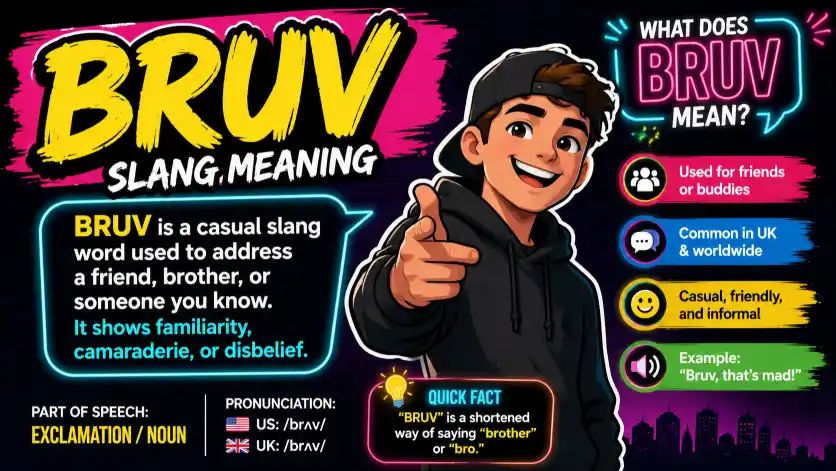
Bruv is a British slang word that means brother, friend, mate, or buddy. People often use it as a casual way to address someone they know, although it can also be used when talking to strangers in an informal setting.
If you’ve searched for bruv slang, you’ve probably heard it in British TV shows, rap music, YouTube videos, TikTok clips, or everyday conversations.
While bruv originally came from the word brother, today it is commonly used as a friendly greeting or form of address.
In this guide, you’ll learn what bruv means, where it came from, how people use it, and If it’s appropriate in different situations.
Basically, think of it as a cooler, more street-style version of “bro.” It’s not used in formal settings just among friends in casual chat.
Quick Answer: Bruv Slang
Bruv is a British slang term that means brother, friend, or mate. It is commonly used in the UK as a casual and friendly way to address someone.
| Meaning | Tone | Offensive? | Common Users | Common Places |
| Brother, friend, or mate | Friendly | ❌ No | Teenagers, young adults, friends | UK conversations, TikTok, YouTube, Instagram, text messages |
What Does Bruv Slang Mean?
In slang, bruv is a casual way of saying brother. Over time, its meaning expanded, and now many people use it to address friends, classmates, coworkers, or even strangers in relaxed conversations.
The word does not always mean someone is your actual brother. Instead, it usually shows friendliness, familiarity, or respect.
A Simple Example
Jake: Thanks for helping me move today.
Liam: No problem, bruv.
Here, bruv simply means friend or mate.
Common Characteristics
Friendly and informal
Common in British English
Often used instead of “bro”
Popular among younger speakers
Frequently heard on social media
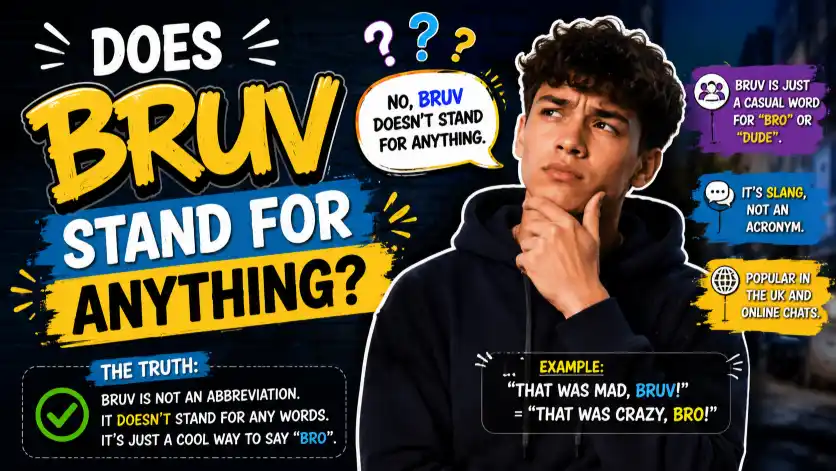
Does Bruv Stand for Anything?
No. Bruv is not an abbreviation or acronym.
It is an informal pronunciation and spelling of the word brother that became popular in British English.
Different Meanings of Bruv
The exact meaning of bruv depends on the conversation.
Bruv as Friend
This is the most common meaning.
People often use bruv instead of saying friend, mate, or bro.
Example:
“Good to see you again, bruv.”
Bruv as Brother
Sometimes bruv refers to an actual brother, especially in casual family conversations.
Example:
“My bruv is coming over later.”
Bruv as a Casual Greeting
Many people use bruv simply as a greeting at the beginning or end of a conversation.
Example:
“Alright, bruv?”
This is a very common greeting in the UK.
Where Is Bruv Commonly Used?
Although bruv is strongly associated with the United Kingdom, it is now recognized in many other countries because of social media and entertainment.
| Platform or Situation | How It’s Used |
| Text messages | Greeting or addressing friends |
| TikTok | Casual videos and comments |
| Friendly replies and captions | |
| YouTube | Gaming and reaction videos |
| UK conversations | Everyday speech among friends |
| Online gaming | Talking to teammates |
The phrase is especially popular in British online culture and is widely understood by people who watch UK content.
Is Bruv Rude, Offensive, or Harmless?
Bruv is generally harmless. It is a friendly slang word that people use to address friends, classmates, teammates, or people they know well.
In most situations, it sounds casual rather than disrespectful.
However, the tone of voice matters. If someone says “Listen, bruv!” during an argument, it may sound confrontational even though the word itself is not offensive.
| Situation | Appropriate? | Notes |
| Casual conversations | ✅ Yes | Very common in the UK |
| Text messages | ✅ Yes | Sounds friendly and relaxed |
| Social media | ✅ Yes | Frequently used in comments and posts |
| Workplace chats | ⚠️ Sometimes | Fine with close coworkers but avoid in formal settings |
| Business emails | ❌ No | Use the person’s name instead |
Real Life Examples Of Bruv Slang
Friendly Conversation
Noah: Thanks for helping me with my project.
Ethan: Anytime, bruv.
Text Message
Friend: You coming tonight?
Reply: Of course, bruv. See you there.
Social Media
“That goal was unreal, bruv!”
Gaming
Player 1: Nice shot!
Player 2: Cheers, bruv.
Everyday Conversation
Oliver: You dropped your wallet.
Jack: Thanks, bruv. I didn’t even notice.
Origin and History Of BRUV Slang:
Bruv comes from the British pronunciation of the word brother. Over time, it became a shortened and more informal way of speaking, especially in London and surrounding areas.
The word has long been associated with Multicultural London English (MLE), a variety of English spoken by many young people in London.
It is also common in British street culture, music, and everyday conversations.
As British rap, grime music, YouTube creators, and social media became popular around the world, bruv spread beyond the UK.
Today, many people outside Britain recognize the word, even if they don’t use it regularly.
Similar Slang or Related Terms
| Term | Meaning | Commonly Used In |
| Bro | Brother or close friend | Worldwide |
| Mate | Friend | UK, Australia |
| Fam | Close friend or family | UK, online slang |
| Broski | Close friend | Internet slang |
| Buddy | Friend | North America |
| Pal | Friend | UK, US, Canada |
Although these words are similar, bruv has a distinctly British feel and is most closely associated with UK English.
When Should You Avoid Using Bruv?
While bruv is friendly, there are situations where it may sound too informal.
Avoid using bruv when:
- Writing business emails.
- Attending job interviews.
- Speaking with clients.
- Writing academic papers.
- Addressing teachers, professors, or senior officials unless the relationship is very informal.
In these situations, using the person’s name or words like sir, ma’am, or colleague is usually more appropriate.
Why Do People Use Bruv?
People use bruv because it creates a relaxed and friendly atmosphere.
Common reasons include:
- Greeting friends.
- Showing respect in an informal way.
- Making conversations sound more natural.
- Expressing friendship and familiarity.
- Reflecting British culture and speech.
Its popularity has also grown because of British music, online videos, and social media, where the word is often heard in everyday conversations.
Common Misunderstandings Of Bruv Slang
Many people think bruv always means brother.
In reality, that’s not how it’s usually used.
For example:
- “Thanks, bruv.” → Thanks, friend.
- “Alright, bruv?” → Hello, how are you?
- “My bruv lives in Manchester.” → My brother lives in Manchester.
The surrounding conversation makes the intended meaning clear.
Frequently Asked Questions
Q1. What does bruv mean in slang?
Answer: In slang, bruv means brother, friend, or mate. It is a popular British expression used to address someone in a friendly and informal way.
Q2. Is bruv only used in the UK?
Answer: Bruv is most commonly used in the United Kingdom, especially in England. However, because of British music, movies, YouTube, TikTok, and social media, people in many other countries now recognize and sometimes use the word.
Q3. Is bruv the same as bro?
Answer: They are very similar. Both words are used to address friends or people you know well. The main difference is that bruv is strongly associated with British English, while bro is more common in American English.
Q4. Is bruv rude?
Answer: No. Bruv is generally a friendly and harmless slang word. However, the tone of voice matters. If it is said during an argument, it may sound sarcastic or confrontational.
Q5. Can I call anyone bruv?
Answer: You can use bruv with friends or people who are comfortable with casual language. It is usually best to avoid using it in formal situations, business meetings, or when speaking to teachers, clients, or senior professionals.
Q6. Is bruv still popular?
Answer: Yes. Bruv is still widely used in the UK and remains popular on platforms like TikTok, Instagram, YouTube, and X. It is especially common among younger speakers and in British online culture.
Q7. What is the difference between bruv and mate?
Answer: Both words are friendly ways to address someone, but mate is more widely used across the UK and Australia. Bruv has a stronger connection to London speech and modern British slang.
| Word | Meaning | Common Usage |
| Bruv | Brother or close friend | Mainly UK slang |
| Mate | Friend or companion | UK, Australia, New Zealand |
Q8. What does bruv mean in slang?
Answer: Bruv is British slang for brother, friend, or buddy. People use it to address someone they know in a casual and friendly way.
Q9. What is bruh in Gen Z slang?
Answer: Bruh is Gen Z slang used to express surprise, frustration, disbelief, or amusement. It can also be another way of saying bro.
Q10. Is “bruv” the same as “bro”?
Answer: Yes. Bruv and bro have similar meanings. However, bruv is mainly used in the UK, while bro is more common in the US and many other English-speaking countries.
Q11. Can girls say “bruv”?
Answer: Yes. Although bruv originally referred to a male friend or brother, many girls also use it casually when talking to friends, especially in the UK and on social media.
Conclusion
Bruv slang is a friendly British expression that means brother, friend, or mate.
Although it started as an informal pronunciation of brother, it is now widely used to greet friends, thank someone, or simply make conversations sound more relaxed.
Today, bruv is heard not only in everyday life across the UK but also on TikTok, YouTube, Instagram, gaming communities, and other online platforms.
While it works well in casual conversations, it’s best to avoid using it in formal or professional settings.
Understanding the context will help you use bruv naturally and confidently.
Before you go, check out:

Hi, I’m Anna Whitmore. I have 7+ years of experience writing about English slang and vocabulary. At SlangShine, I create simple, easy-to-understand content for English learners.