
Feen meaning slang refers to strongly wanting, craving, or desiring something. It is often used when someone wants something so badly that they keep thinking about it or looking for it.
Feen meaning slang is closely related to “fiend,” which can describe someone with a strong desire or craving for something.
The term is informal and is commonly used in casual conversations, texts, and online chats.
For example:
“I’m feening for some pizza.”
This means:
“I really want some pizza.”
The Feen meaning slang can describe a strong desire for many things, such as food, entertainment, attention, or an activity.
However, in some contexts, Feen meaning slang can also refer to a strong craving related to drugs. The exact meaning depends on the sentence and context.
Quick Answer: Feen Meaning Slang
“Feen” usually means to strongly crave or want something. It can describe an intense desire for food, attention, entertainment, or another activity.
For example:
“She’s feening for coffee.”
This means she really wants coffee.
The expression is informal, so it is more common in texting, social media, music, and casual speech than in formal writing.
What Does “Feen” Mean?
Feen is an informal slang spelling related to fiend.
When used as a verb, “feen” means to strongly want or crave something. The -ing form is “feening.”
For example:
“I’m feening for a burger.”
The speaker means:
“I really want a burger.”
The word often adds more intensity than simply saying want.
Compare:
“I want some ice cream.”
and:
“I’m feening for some ice cream.”
The second sentence suggests a much stronger craving.
What Does “Feening” Mean?
“Feening” means strongly craving or wanting something.
“Feening” is the -ing form of “feen” and is commonly used to describe an active or ongoing craving.
For example:
“I’ve been feening for that new game all week.”
This means the speaker has really wanted to play the game for a long time.
Another example:
“He’s feening for some fries.”
This means he strongly wants fries.
The spelling may vary online. You may see feen, feening, or fiending, depending on the speaker and context.
Where Is “Feen” Used?
You may come across feen in several informal settings, including:
- Text messages
- Social media
- Music and lyrics discussions
- Online comments
- Casual conversations
- Internet slang
It is not normally the best choice for formal writing.
For example, a friend might text:
“I’m feening for a late-night snack.”
But in a formal context, you would simply write:
“I really want a snack.”
The second version is clearer and more appropriate for professional or academic communication.
Is “Feen” the Same as “Fiend”?
They are closely related, but the spelling and usage can vary.
Fiend is the standard English spelling. In informal speech and slang, feen is sometimes used as a phonetic or slang spelling.
You may therefore see:
- Feen
- Feening
- Fiend
- Fiending
For example:
“I’m feening for pizza.”
And:
“I’m fiending for pizza.”
Both can express a strong craving in slang.
However, fiend has other standard meanings too, so context is important.
What Does “Feen” Mean in Texting?
In texting, feen usually means really wanting or craving something.
For example:
Friend: “Want to order pizza?”
You: “Yes, I’m feening for it.”
This means you strongly want pizza.
Another example:
“I’m feening for a good movie tonight.”
This means the person really wants to watch a good movie.
Because texting is informal, slang spellings such as feen can feel natural between friends.
What Does “Feen” Mean on Social Media?
On social media, people may use feen when talking about something they strongly want.
For example:
“I’m feening for this new phone.”
This means the person really wants the phone.
Someone might also write:
“Why am I feening for this right now?”
This means:
“Why do I suddenly want this so badly?”
The word can make a statement sound more casual and expressive.
Can “Feen” Be Used for Food?
Yes. Food is one common context for this slang.
Someone might say:
“I’m feening for tacos.”
This means they have a strong craving for tacos.
You could also say:
“She’s been feening for chocolate all day.”
The speaker means she has strongly wanted chocolate for a while.
In these examples, the word simply describes an intense craving.
Can “Feen” Be Used for Non Food Things?
Yes. The word is not limited to food.
People can use it for many things they strongly want or enjoy.
For example:
“I’m feening for a vacation.”
Meaning: I really want a vacation.
“He’s feening for a new gaming setup.”
Meaning: He really wants a new gaming setup.
“She’s feening for attention.”
Meaning: She strongly wants attention.
The object of the desire makes the exact meaning clear.
Does “Feen” Always Have a Drug Meaning?
No. “Feen” does not always refer to drugs.
In everyday slang, it can simply mean to crave or strongly want something, such as food, entertainment, attention, or a hobby.
However, the word can also appear in drug-related contexts. In those situations, it may describe a strong craving for a substance.
For example, if a conversation is clearly about drug use, feening may carry that more serious meaning.
Therefore, context matters.
You should not automatically assume that someone is talking about drugs just because they use the word feen.
Is “Feen” a Positive or Negative Word?
It can be either, depending on context.
When someone says:
“I’m feening for pizza.”
the expression is usually harmless and playful.
However, describing someone as feening for a substance can have a more serious meaning.
The word can also suggest that a person’s desire is very strong or difficult to control.
So, the surrounding conversation is important when deciding how the expression should be understood.
Feen vs. Crave vs. Want
These words are related, but they have different levels of intensity.
| Word | Common meaning | Strength |
| Want | To desire something | Mild to moderate |
| Crave | To strongly desire something | Strong |
| Feen | To strongly crave or want something | Strong and informal |
| Need | To require something | Depends on context |
For example:
“I want coffee.”
This simply expresses a desire.
“I crave coffee.”
This shows a stronger desire.
“I’m feening for coffee.”
This is an informal way to express a strong craving.
Because feen is slang, it sounds more casual than want or crave.
Quick Examples of Feen Meaning Slang
Example 1: Food
“I’m feening for pizza.”
Meaning: I really want pizza.
Example 2: Entertainment
“I’m feening for a new show to watch.”
Meaning: I really want to find a new show.
Example 3: Travel
“I’m feening for a vacation.”
Meaning: I strongly want a vacation.
Example 4: Gaming
“He’s feening for the new game.”
Meaning: He really wants the new game.
Example 5: Attention
“She’s feening for attention.”
Meaning: She strongly wants attention.
Example 6: Casual Texting
“I’m feening for some coffee right now.”
Meaning: I really want coffee right now.
Why Do People Use “Feen”?
People use feen because it expresses a strong desire in a short, casual way.
Instead of saying:
“I really want some pizza.”
someone might say:
“I’m feening for pizza.”
The second sentence sounds more informal and expressive.
The word is especially useful when the speaker wants to show that an ordinary want feels much stronger.
Is “Feen” Used in Music and Pop Culture?
Yes. You may hear or see forms of feen or fiend in music, online conversations, and other forms of pop culture.
Artists may use the word to describe a strong desire for something. However, the meaning depends on the lyrics or surrounding context.
It is important not to assume that every use has a drug-related meaning. A song, post, or conversation may simply be describing a strong craving or desire.
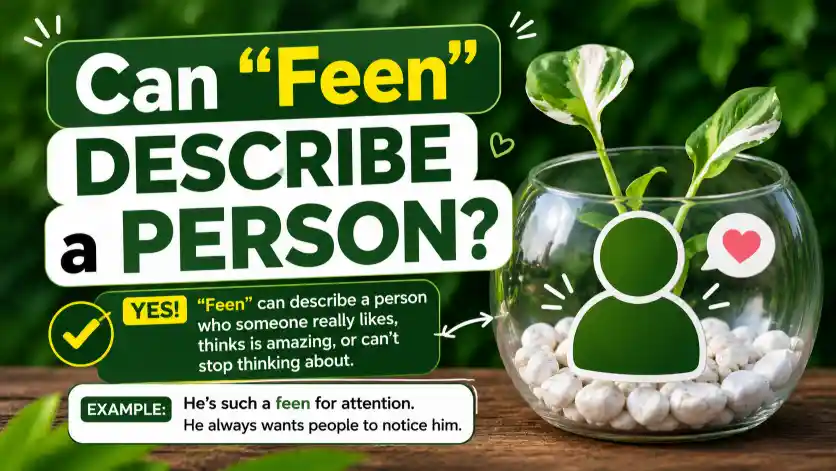
Can “Feen” Describe a Person?
Yes, but the meaning depends on how it is used.
For example:
“He’s a coffee feen.”
This can playfully describe someone who really loves or strongly craves coffee.
However, fiend can also have a more negative meaning when used to describe someone with an intense or unhealthy interest in something.
For this reason, be careful when calling someone a “fiend,” as it can sound judgmental depending on the context.
A safer option is to say:
“He really loves coffee.”
if you simply mean that someone enjoys something a lot.
What Does “Feen for” Mean?
“Feen for” is a common informal pattern used to say that you strongly want or crave something.
For example:
“I’m feening for a burger.”
This means:
“I really want a burger.”
The word for connects the expression to the thing being desired.
You may also see:
“She’s feening for a vacation.”
Meaning:
“She really wants a vacation.”
This pattern is common in casual speech and online writing.
Is “Feen” Appropriate for School or Work?
“Feen” is informal slang, so it is usually better to avoid it in formal writing.
For example, in a text to a friend:
“I’m feening for coffee.”
sounds natural.
In a school essay or workplace email, a clearer choice would be:
“I really want some coffee.”
or:
“I have a strong craving for coffee.”
Using standard English makes the meaning easier for a wider audience to understand.
Is “Feen” Rude or Offensive?
The word itself is not normally a profanity or an insult. When it simply means “strongly want” or “crave,” it can be harmless slang.
However, context can change the tone.
If it is used in a drug-related conversation, it may describe a serious craving for a substance. Also, calling someone a fiend can sound negative if you are suggesting that they have an unhealthy obsession.
So, the meaning should always be judged from the full sentence and situation.
Common Misunderstandings About “Feen”
“Feen always means drugs.”
No. It can simply mean strongly wanting or craving something, such as food, entertainment, or a hobby.
“Feen and want mean exactly the same thing.”
Not quite. Both can describe desire, but feen usually suggests a stronger craving and has a more informal tone.
“Feen is the standard English spelling.”
No. Feen is a slang spelling. Fiend is the standard English word, although it has several meanings.
“Feen can only describe food.”
No. Someone can use it for many things they strongly desire, including a vacation, game, show, or attention.
“Calling someone a feen is always harmless.”
Not necessarily. Depending on the context, it can sound judgmental or suggest an unhealthy obsession.
“Everyone uses feen in the same way.”
No. Slang can vary between communities, regions, and online spaces. Context helps determine the intended meaning.
What Can You Say Instead of “Feen”?
If your audience may not understand the slang, use a clearer phrase.
| Slang | Clear alternative |
| I’m feening for pizza. | I really want pizza. |
| I’m feening for coffee. | I really want coffee. |
| She’s feening for a vacation. | She really wants a vacation. |
| He’s feening for that game. | He really wants that game. |
| She’s feening for attention. | She really wants attention. |
In formal writing, crave, strongly desire, really want, or have a strong desire for may be better choices.
When Should You Use “Feen”?
Use feen when the setting is casual and the people involved understand slang.
It can work in:
- Text messages
- Social media posts
- Casual conversations
- Online comments
- Informal discussions
- Friendly chats
Be more careful in:
- School assignments
- Academic writing
- Job applications
- Workplace emails
- Business reports
- Formal presentations
If you are writing for a broad audience, really want or crave is usually clearer.
Feen vs. Fiend: A Simple Guide
These words are related, but they are not interchangeable in every sentence.
Feen is mainly seen as an informal slang spelling used to describe a strong craving or desire.
Fiend is a standard English word with several meanings. It can describe an evil or cruel person, but it can also appear informally in phrases describing someone who strongly enjoys or seeks something.
For example:
“He is a coffee fiend.”
This can mean that he really loves coffee.
By contrast:
“I’m feening for coffee.”
means that the speaker strongly wants coffee.
The surrounding words help make the intended meaning clear.
FAQs About Feen Meaning Slang
Q1. What does feen mean in slang?
Answer: Feen usually means to strongly want or crave something. It is an informal slang spelling related to fiend.
Q2. What does feening mean?
Answer: Feening means strongly craving or wanting something. For example, “I’m feening for pizza” means “I really want pizza.”
Q3. Does feen always refer to drugs?
Answer: No. It can describe an ordinary craving for food, entertainment, attention, or other things. However, it can have a drug-related meaning when the context is about substance use.
Q4. Is feen the same as fiend?
Answer: They are closely related, but feen is mainly used as an informal slang spelling, while fiend is the standard English spelling and has several meanings.
Q5. Is feen appropriate for school or work?
Answer: It is better suited to casual communication. In formal school or workplace writing, phrases such as really want or strongly desire are clearer.
Q6. Is feen a bad word?
Answer: Feen is not normally a profanity. However, its meaning can become more serious in drug-related contexts, and calling someone a fiend can sound negative depending on the situation.
Conclusion
Feen is informal slang that usually means to strongly want or crave something. It can describe a desire for food, entertainment, attention, hobbies, or many other things.
You may see feen and feening in texts, social media, music, and casual conversations. The word is stronger and more informal than simply saying want.
However, context matters. In some conversations, especially those involving drugs, feening can describe a strong craving for a substance. Also, describing a person as a fiend can sometimes sound negative.
For everyday casual use, feen can be understood as “really want” or “strongly crave.” In formal writing, clearer words such as crave, desire, or really want are usually better.
Explore More Articles:
- Epic Meaning Slang: What People Mean When They Say “Epic”
- Roach Slang: Cannabis & Common Meanings
- 808 Meaning Slang: What Does “808” Mean in Text in 2026?

Hi, I’m Anna Whitmore. I have 7+ years of experience writing about English slang and vocabulary. At SlangShine, I create simple, easy-to-understand content for English learners.