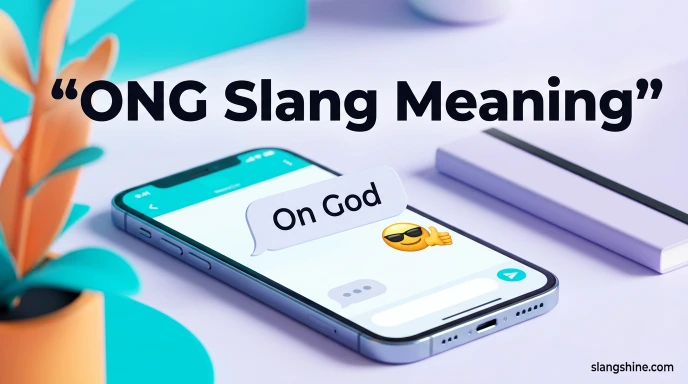
If you have seen someone write “ONG” in a text, TikTok comment, Snapchat message, or group chat, you may wonder what it means. The ONG slang meaning is simple: it stands for “On God.”
People use it to emphasize that they are telling the truth, showing they are serious, or strongly agreeing with something.
The expression can sound different depending on the conversation. Sometimes, people use it to insist that something really happened.
In other situations, it simply means “for real,” “I swear,” or “exactly.” You may see it written as ONG, ong, or on God, with capitalization usually making little difference.
Quick Answer: ONG slang meaning
ONG usually means “On God” in texting and internet slang. It is used to emphasize honesty, seriousness, strong belief, or agreement.
What Does ONG Mean in Text?
The most common ONG slang meaning in text is “On God.” It is an informal expression that adds extra emphasis to whatever someone is saying.
For example:
“ONG, I didn’t take your charger.”
This means something like:
“I swear, I didn’t take your charger.”
The person is not simply giving information. They are trying to make the other person believe that the statement is true.
ONG can also appear at the end of a sentence:
“That was the best burger ever, ONG.”
Here, the writer is emphasizing how strongly they believe the burger was excellent.
In a short reply, ONG can work differently:
“That game was wild.”
“ONG!”
In this situation, ONG can mean “For real,” “Exactly,” or “I completely agree.” The phrase is therefore not limited to proving that a personal statement is true. It can also show strong agreement.
What Is the Full Form of ONG?
The ONG full form in texting slang is “On God.”
The phrase existed as spoken language before the abbreviation became common online. In casual speech, saying “on God” is a way of putting strong emphasis on the truth or seriousness of a statement.
When people started using the shorter form ONG, it became easier to fit the expression into quick messages, comments, captions, and group chats.
What Does ONG Stand For?
In internet slang, ONG generally stands for:
- O = On
- N = God? No, ONG is better understood as a shortened form of the spoken phrase “On God,” rather than a perfectly letter-by-letter acronym.
- Meaning = On God
This distinction is useful because people sometimes assume every three-letter slang term is a strict initialism. ONG is commonly treated as a shortened texting form of “on God.”
What Does ONG Mean in Slang?
The ONG meaning slang depends slightly on the situation, but it normally communicates one of these ideas:
- I swear
- I am telling the truth
- I am serious
- I genuinely mean this
- For real
- I strongly agree
The strongest meaning usually appears when someone is trying to convince another person that they are being truthful.
For example:
“ONG, I saw him at the mall.”
The natural interpretation is:
“I swear, I saw him at the mall.”
But in a casual reaction:
“That song is so good.”
“ONG.”
It means:
“For real. I completely agree.”
So, context matters more than the three letters themselves.
Is ONG Rude, Offensive, or Neutral?
ONG is generally not a rude or offensive slang term. In most casual conversations, it is simply an informal way to emphasize sincerity or agreement.
However, its tone can change.
A friendly message might sound enthusiastic:
“ONG, that was hilarious 😂”
A disagreement might sound more forceful:
“ONG, I never said that.”
The second example can feel defensive because the person is strongly insisting that they are telling the truth.
There is also a religious reference in the phrase because it uses the word “God.” Some people may avoid expressions that invoke God casually because of their personal or religious preferences.
So, ONG is usually neutral in slang usage, but it is not necessarily appropriate for every audience or situation.
Where Is ONG Commonly Used?
ONG is mainly found in informal digital communication. It is especially useful in spaces where short expressions and quick reactions are common.
You may encounter it in:
- Text messages
- Group chats
- TikTok comments
- Instagram comments and DMs
- Snapchat conversations
- Discord chats
- Gaming communities
- Reddit discussions
- Memes and casual social posts
Its basic meaning generally stays the same across these platforms. What changes is the tone.
For example, a gamer might write:
“ONG, that boss fight was impossible.”
A TikTok user might comment:
“ONG this is literally me.”
Someone on Snapchat might text:
“You looked amazing today ong.”
In each case, the phrase adds emphasis rather than introducing a completely new idea.
ONG Meaning on TikTok, Snapchat, and Instagram
On social media, ONG is often used as a quick reaction to something relatable, surprising, funny, or strongly agreed with.
ONG on TikTok
On TikTok, you may see ONG in comments such as:
“ONG this is so true.”
The commenter is saying they strongly agree with the video.
ONG on Snapchat
On Snapchat, it can appear in private messages or story replies:
“ONG I forgot we had homework 😭”
The writer is emphasizing that they genuinely forgot.
ONG on Instagram
Instagram users may place ONG in comments, captions, or DMs:
“That outfit is perfect ONG.”
The phrase makes the opinion sound more emphatic and sincere.
These platforms did not necessarily invent the phrase. Rather, social media helped make expressions like “on God” and the shortened ONG form more visible and widespread in online communication.
Real-Life Examples of ONG Usage
The best way to understand ONG is to see how its meaning changes with tone.
Friendly Example
“ONG, you have to try that restaurant.”
Here, ONG emphasizes a strong recommendation.
Casual Example
“I’m so tired ong.”
This means:
“I’m seriously so tired.”
It does not necessarily mean the person is making a formal promise. It simply adds emotional emphasis.
Argumentative Example
“ONG, I didn’t send that message.”
Here, ONG makes the denial sound stronger and more serious.
Strong Agreement
“That movie was way better than I expected.”
“ONG.”
The second person means:
“Absolutely. I agree.”
Gaming Example
“ONG, we would have won if our team had defended.”
The player is strongly expressing an opinion about what happened in the game.
Social Media Example
“This video is too relatable ONG 😭”
The writer is strongly agreeing with or reacting to the content.
Is ONG the Same as OMG?
No. ONG and OMG have different meanings.
They look similar because they differ by only one letter, which is why people sometimes mistake ONG for a typo.
| Slang | Meaning | Typical Use |
| ONG | On God | Honesty, seriousness, agreement |
| OMG | Oh my God | Surprise, shock, excitement |
| FR | For real | Agreement or sincerity |
| NGL | Not gonna lie | Honest opinion |
| ISTG | I swear to God | Strong emphasis or frustration |
| No cap | No lie | Saying something is true |
The easiest way to remember the difference is:
OMG expresses a reaction. ONG emphasizes truth or sincerity.
For example:
“OMG, that was unexpected!”
means the person is surprised.
But:
“ONG, that really happened.”
means the person is insisting that the statement is true.
ONG vs. FR vs. No Cap
ONG belongs to a wider group of slang expressions used to emphasize honesty or agreement, but the terms are not completely interchangeable.
With ONG, the speaker is strongly emphasizing that something is true or expressing serious agreement.
FR means “for real” and is usually shorter and more flexible. It can show that someone is being serious, agreeing, or confirming something.
No cap means the speaker is saying they are not lying, exaggerating, or pretending.
For example:
“That was the best concert ever, ONG.”
“FR, that concert was amazing.”
“No cap, that concert was amazing.”
All three expressions can show strong sincerity, but ONG has its own style because it refers to “On God.”
Why Do People Use ONG?
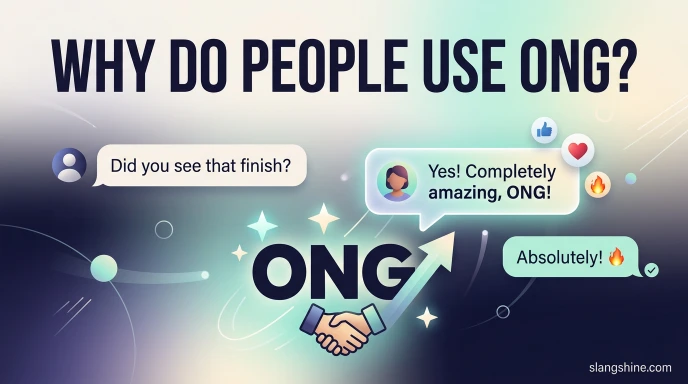
People use ONG because digital conversations often lack the vocal tone and facial expressions that make spoken communication easier to interpret.
Compare:
“That was good.”
With:
“That was good ONG.”
The second version feels more emphatic.
ONG can help communicate:
- Sincerity
- Confidence
- Strong agreement
- Emotional intensity
- Personal conviction
- A casual online tone
It also makes messages feel shorter and more natural in slang-heavy conversations.
In many cases, the abbreviation is less about saving a huge amount of typing and more about matching the style of modern online communication.
Origin and Background of ONG Slang
The exact origin of the ONG abbreviation is difficult to establish with certainty. The important distinction is between the older spoken phrase “on God” and the later internet abbreviation ONG.
“On God” is associated with African American Vernacular English and with a broader tradition of using expressions involving God to strongly emphasize truth or sincerity.
The phrase became more visible in popular culture, hip-hop-related language, online communities, and social media before the abbreviated form became widespread.
Online references show that “on God” was already circulating before TikTok became dominant.
Some historical accounts place its online visibility in the 2000s and 2010s, although there is no reliable single date when the slang was invented.
That means it would be misleading to say TikTok created ONG. TikTok and other platforms helped spread and normalize the expression among broader internet audiences.
The abbreviation itself follows a common pattern in digital language: a longer phrase becomes shortened because users want quick, recognizable expressions for chats, comments, and posts.
Is ONG Religious?
The phrase contains a reference to God, but in modern slang it is often used as an emphasis expression rather than a religious statement.
For example:
“ONG, this is the funniest video I’ve seen today.”
The person is usually not making a religious statement. They are emphasizing how strongly they feel about the video.
Still, the original expression has religious language, so the phrase can feel inappropriate to some people depending on their beliefs and personal preferences.
The safest interpretation is therefore based on context: in internet slang, ONG usually signals sincerity or strong agreement rather than a literal religious message.
When Should You Avoid Using ONG?
ONG works best in relaxed conversations where the other person understands internet slang.
Avoid it in situations such as:
- Formal emails
- Academic assignments
- Job applications
- Business proposals
- Official documents
- Professional customer communication
- Serious messages where clarity matters more than casual tone
For example, instead of writing:
“ONG, I completed the report.”
In a professional email, write:
“I can confirm that I completed the report.”
The second version is clearer and more appropriate for formal communication.
Is ONG Safe for Social Media?
Yes, ONG is generally safe as ordinary internet slang. The abbreviation itself is not normally vulgar or offensive.
However, social-media safety is not only about individual words. A message containing ONG could still be inappropriate if the surrounding content is insulting, threatening, harassing, or otherwise problematic.
Also remember that slang can be misunderstood by people who are unfamiliar with it. If your audience includes teachers, employers, clients, older relatives, or a broad public audience, plain language may communicate your meaning more effectively.
Why Context Matters With ONG
A three-letter abbreviation cannot always tell you the speaker’s exact emotion.
Consider:
“ONG.”
Depending on the conversation, this could mean:
- “For real.”
- “Exactly.”
- “I agree.”
- “I swear.”
- “Seriously.”
Now compare:
“ONG, I didn’t do it.”
That clearly sounds like a strong defense or insistence on truth.
This is why you should read the complete message and the messages around it before deciding exactly what ONG means.
How Do People Use ONG in a Conversation?
ONG can appear at the beginning, middle, or end of a sentence.
At the Beginning
“ONG, I forgot my keys.”
This gives the statement immediate emphasis.
At the End
“That was actually so funny ONG.”
This adds emphasis after the main statement.
As a Standalone Reply
“That new game is amazing.”
“ONG.”
Here, the reply expresses strong agreement.
The position does not completely determine the meaning. The surrounding conversation still matters most.
Can ONG Be Used in a Serious Conversation?
Yes, but carefully.
If someone is discussing something important and writes:
“ONG, I’m telling you the truth.”
they are probably using the phrase to emphasize sincerity.
However, ONG can also make a serious message sound less formal or less professional because it is strongly associated with internet slang.
For sensitive conversations, a clearer phrase such as “I am being honest with you” may be better.
Is ONG Used by Kids and Adults?
Yes. ONG is not a gender-specific expression, so people of different ages and genders can use it.
For example, a kid might say:
“ONG, I didn’t say that.”
An adult might say:
“ONG, that was wild.”
The basic slang meaning stays the same.
What ONG means depends on the situation and surrounding conversation, not the person’s gender or age.
If someone asks “What does ONG mean from a girl?”, the safest answer is that it normally means “On God.” The exact tone should be understood from the conversation.
It does not automatically indicate flirting, attraction, anger, or any other hidden romantic meaning.
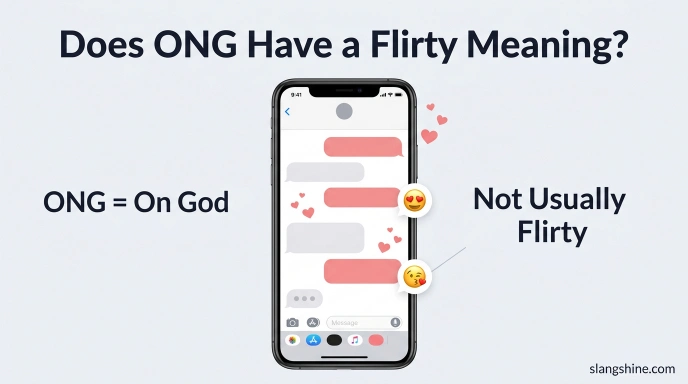
Does ONG Have a Flirty Meaning?
Not by itself.
ONG is primarily an expression of sincerity, emphasis, or agreement. It is not inherently a flirting abbreviation.
For example:
“ONG, you look great today.”
Could be a compliment, but ONG itself does not make the message romantic.
The sender’s relationship with you, the rest of the message, and the overall conversation determine if there is a romantic tone.
Common Misunderstandings About ONG Slang Meaning
Several misunderstandings can happen when someone sees ONG for the first time.
ONG Does Not Usually Mean OMG
Although the two look similar, they serve different purposes.
ONG Is Not Automatically Religious
It contains religious language, but internet users often employ it as casual emphasis.
ONG Is Not Always Serious
Friends may use it dramatically or humorously.
ONG Does Not Have a Secret Dating Meaning
If someone uses ONG while talking to you, do not assume it is a romantic code.
ONG Is Not Appropriate Everywhere
It is casual slang, so formal communication usually calls for standard wording.
What Are Polite Alternatives to ONG?
If you want the same general meaning without slang, you can use:
- “Honestly”
- “Seriously”
- “I really mean it”
- “I promise”
- “I agree”
- “Absolutely”
- “For real”
- “I am telling the truth”
The best alternative depends on the context.
For example:
“ONG, that was amazing.”
Can become:
“Honestly, that was amazing.”
And:
“ONG, I didn’t do it.”
Can become:
“I promise, I didn’t do it.”
These alternatives are easier to understand across different age groups and communication settings.
What Impact Can ONG Slang Meaning Have on Communication?
Slang can make digital communication feel more natural and expressive, especially when everyone in the conversation understands the same vocabulary.
ONG can make a message feel:
- More emphatic
- More casual
- More emotionally expressive
- More conversational
- More connected to online culture
But slang can also create confusion.
If someone does not know what ONG means, they may mistake it for a typo or another abbreviation. This is why audience awareness matters.
Good communication is not about avoiding slang completely. It is about choosing language that fits the people, platform, and situation.
ONG Slang Meaning: Quick Comparison
| Expression | Main Meaning | Tone |
| ONG | On God; I swear / for real | Casual, emphatic |
| FR | For real | Casual |
| NGL | Not gonna lie | Honest, casual |
| No cap | No lie / seriously | Casual, emphatic |
| ISTG | I swear to God | Stronger, sometimes frustrated |
| I swear | I am telling the truth | Casual to neutral |
| Honestly | Speaking truthfully | Neutral |
These expressions overlap, but they are not exact substitutes in every sentence.
FAQs About ONG Slang Meaning
Q1. What does ONG mean in text?
Answer: ONG usually means “On God.” It is used to emphasize honesty, seriousness, strong belief, or agreement.
Q2. What does ONG stand for in slang?
Answer: ONG stands for “On God.” In texting, it is a shortened form of the phrase rather than a completely separate word.
Q3. Is ONG the same as OMG?
Answer: No. OMG means “Oh my God” and usually expresses surprise or excitement, while ONG means “On God” and emphasizes truth, sincerity, or agreement.
Q4. Is ONG rude?
Answer: ONG is generally not rude or offensive, but it is informal. Its tone can sound intense or defensive during an argument.
Q5. What does ONG mean on TikTok?
Answer: On TikTok, ONG usually means “On God.” People use it in comments, captions, and replies to show strong agreement, sincerity, or a strong reaction.
Q6. Does ONG have a romantic meaning?
Answer: No. ONG does not have a standard romantic or flirty meaning. If it appears in a romantic conversation, the surrounding message determines the tone.
Conclusion
The ONG slang meaning in text is usually “On God.” People use it to emphasize that they are telling the truth, being serious, strongly agreeing, or genuinely standing behind an opinion.
You may see ONG in text messages, TikTok comments, Snapchat chats, Instagram DMs, Discord conversations, gaming communities, and other informal online spaces.
It can appear at the beginning or end of a sentence, or it can be used alone as a strong agreement.
Although the phrase has connections to African American Vernacular English and older ways of emphasizing sincerity, the exact history of the abbreviation is not completely established.
Social media helped spread its modern online form rather than necessarily creating the expression from scratch.
The main thing to remember is context. ONG is normally casual and neutral, but its tone can become serious, defensive, humorous, or enthusiastic depending on the conversation.
Use it naturally with people who understand internet slang, and choose clearer language in formal or professional situations.
Learn More Slang Terms:
- Mug Slang Meaning: What Does “Mug” Mean in Slang in 2026?
- Bofa Slang: The Joke That Confuses Everyone Online (2026)
- What Is a Baller Slang? Meaning, Origin & Examples (2026)

Hi, I’m Emma Carter, an English language writer with over 8 years of experience in vocabulary and language learning. At SlangShine, I write simple, accurate, and easy-to-understand articles about slang, synonyms, idioms, and everyday English to help learners build confidence and improve their communication skills.