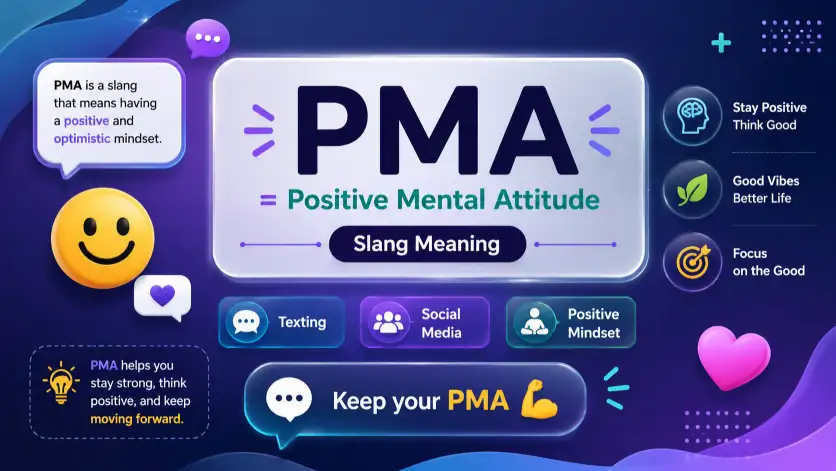
PMA Slang stands for “Positive Mental Attitude.” It is a popular slang term used to describe staying optimistic, confident, and focused even during difficult situations.
PMA Slang is widely used in online conversations, gaming communities, fitness groups, and social media to encourage a positive mindset.
If you have seen PMA Slang in a message or post, it usually reminds people to stay hopeful and keep a good attitude.
Although PMA Slang is short, it carries a strong message about confidence and resilience. In this guide, you’ll learn PMA Slang meaning, where people use it, common examples, and why PMA Slang has become so popular online.
Quick Answer: PMA Slang
PMA stands for Positive Mental Attitude. It is a slang abbreviation that encourages people to stay optimistic, confident, and positive, especially during difficult situations.
Word at a Glance
| Feature | Details |
| Meaning | Positive Mental Attitude |
| Pronunciation | US: /ˌpiː.emˈeɪ/ • UK: /ˌpiː.emˈeɪ/ |
| Full Form | Positive Mental Attitude |
| Part of Speech | Abbreviation (Slang) |
| Tone | Positive, supportive, and encouraging |
| Used In | Text messages, gaming, social media, and casual conversations |
| Popular Platforms | TikTok, Instagram, Reddit, Discord, WhatsApp, X (Twitter) |
What Does PMA Mean in Slang?
In slang, PMA means Positive Mental Attitude. It reminds people to stay hopeful, calm, and confident when life becomes difficult.
Instead of writing a long motivational message, many people simply type PMA. The abbreviation delivers a positive message in just three letters.
For example:
- “Keep your PMA. You’ll get through this.”
- “Stay PMA and keep moving forward.”
- “A strong PMA can change your mindset.”
In each example, PMA encourages optimism and resilience.
What Does PMA Mean in Text?
In text messages, PMA also means Positive Mental Attitude. Friends often use it to cheer someone up or offer support.
You might receive PMA when you’re feeling stressed, disappointed, or worried. It serves as a quick reminder to focus on the positive side of a situation.
Examples:
- “Don’t worry. Stay PMA!”
- “Keep your PMA. Tomorrow is a new day.”
- “You’ve got this. PMA always.”
PMA Full Form
The full form of PMA is Positive Mental Attitude.
The phrase has been used for decades in personal development, sports, business, and motivational speaking.
Today, it is also popular in texting, gaming, and online communities because it is short, easy to remember, and encouraging.
Unlike many internet abbreviations, PMA has one widely accepted slang meaning. In most casual conversations, it refers to Positive Mental Attitude.
Is PMA Slang Rude, Offensive, or Neutral?
PMA is completely positive and neutral. It is not rude, offensive, or disrespectful. Instead, people use it to encourage others and promote a healthy mindset.
If someone is facing a challenge at work, school, sports, or in daily life, PMA is a simple way to offer support.
Examples:
- Keep your PMA. Better days are ahead.
- Stay PMA. You’ve got this.
- A little PMA can make a big difference.
British vs American Usage
Although PMA is understood in many English speaking countries, it is more common in American self improvement culture.
However, people in the UK also use it in online communities, sports, and motivational discussions.
| Feature | American Usage | British Usage |
| Meaning | Positive Mental Attitude | Same meaning |
| Everyday Use | Common in personal development, sports, and online communities | Less common in daily speech but understood online |
| Tone | Positive and motivational | Positive and encouraging |
| Popular Platforms | Reddit, Discord, TikTok, Instagram, X | Reddit, Instagram, Discord, online forums |
No matter where you see it, PMA carries the same positive message.
Where Is PMA Slang Commonly Used?
People use PMA in many places where encouragement and motivation are important.
| Platform | How People Use PMA |
| Text Messages | Encouraging friends and family |
| Discord | Supporting teammates and community members |
| Sharing motivation and self improvement tips | |
| Writing inspirational captions | |
| TikTok | Posting motivational videos |
| Gaming | Keeping teammates positive after a loss |
| Fitness Communities | Encouraging discipline and consistency |
Text Messages
Friends often send PMA when someone feels stressed or discouraged.
Example:
“Stay PMA. Everything will work out.”
Gaming
Gamers use PMA to keep the team calm and focused after losing a round.
Example:
“Keep the PMA. We can still win this.”
Social Media
Many creators include PMA in motivational posts and captions.
Example:
“A positive mindset can change your life. PMA always.”
Real Life Examples of PMA Slang
Here are a few examples that show how people naturally use PMA.
Friendly Conversation
- Keep your PMA. I’m proud of you.
- Stay PMA. You’ll do great.
Casual Conversation
- Try to keep a PMA today.
- A little PMA goes a long way.
Motivational Conversation
- Success starts with PMA and hard work.
- Every challenge becomes easier with PMA.
Gaming Chat
- Team, keep the PMA.
- We can still win if we stay PMA.
Origin & History Of PMA Slang
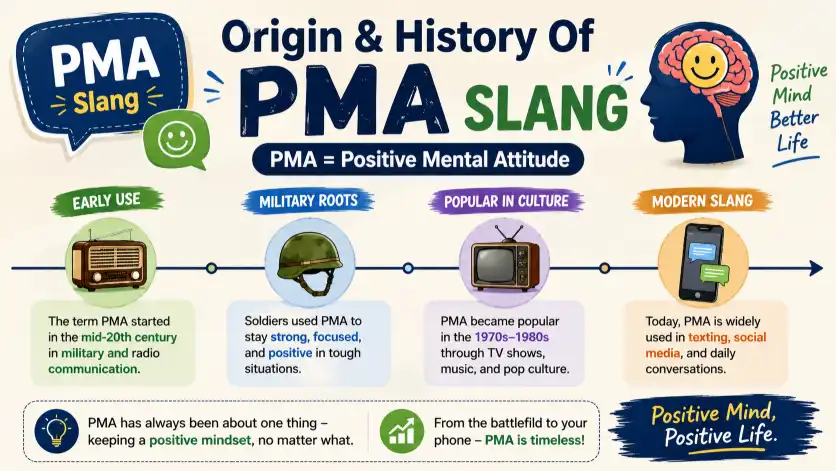
The phrase Positive Mental Attitude became popular during the 20th century through personal development books, motivational speakers, and business training.
Over time, people shortened the phrase to PMA because it was faster to type and easier to remember.
Today, PMA is widely recognized in texting, gaming, fitness communities, and social media as a simple reminder to stay positive.
Did You Know?
The abbreviation PMA is popular in many sports teams, fitness groups, and gaming communities. Coaches, trainers, and team leaders often use it to remind people that a positive attitude can improve performance, teamwork, and confidence.
Why Do People Use PMA?
People use PMA because it is short, simple, and encouraging. Instead of writing a long motivational message, they can remind someone to stay positive with just three letters.
Common reasons people use PMA include:
- Encouraging friends during difficult times
- Motivating teammates after a setback
- Promoting a positive mindset
- Supporting personal growth
- Inspiring others to keep working toward their goals
- Sharing motivational content online
Because of its positive message, PMA has become popular in texting, gaming, fitness, and online communities.
When Should You Avoid Using PMA?
Although PMA has a positive meaning, it is not the best choice in every situation.
Avoid using PMA when:
- Writing business emails
- Preparing school or college assignments
- Creating formal reports
- Speaking with people who may not know internet slang
- Responding to serious or sensitive situations where empathy is more important than a short abbreviation
In these situations, writing “Stay positive” or “Keep a positive attitude” is usually clearer.
Similar Slang Terms
| Slang Term | Meaning |
| PMA | Positive Mental Attitude |
| LFG | Let’s Freaking Go; shows excitement and encouragement |
| GG | Good Game; shows respect after a game |
| YOLO | You Only Live Once; encourages making the most of life |
| Stay Strong | A phrase used to encourage someone |
| Keep Going | Motivates someone not to give up |
| You Got This | A phrase that builds confidence |
Impact of Using PMA in Communication
Using PMA can make conversations more positive and supportive. It helps people encourage others without writing a long message.
When used at the right time, PMA can:
- Create a positive atmosphere
- Build confidence
- Encourage resilience
- Improve teamwork
- Promote supportive communication
However, not everyone knows internet slang. If someone is unfamiliar with PMA, writing the full phrase Positive Mental Attitude is usually the better option.
Is PMA Safe for Social Media?
Yes. PMA is completely safe to use on social media. It promotes optimism, encouragement, and personal growth.
People commonly use PMA on:
- TikTok
- Discord
- X (Twitter)
Because it has a positive meaning, PMA is widely accepted across different online platforms.
Frequently Asked Questions
Q1. What does PMA mean in slang?
Answer: PMA means Positive Mental Attitude. It is a slang abbreviation used to encourage people to stay positive, confident, and optimistic during difficult times.
Q2. What is PMA short for?
Answer: PMA is short for Positive Mental Attitude. The phrase encourages optimism, resilience, and a positive mindset in everyday life.
Q3. What does PMA mean in text messages?
Answer: In text messages, PMA means Positive Mental Attitude. People use it to encourage friends, family members, or teammates to stay positive during difficult situations.
Q4. What does PMA mean in gaming?
Answer: In gaming, PMA means Positive Mental Attitude. Players use it to remind teammates to stay calm, avoid negativity, and keep trying even after losing a match.
Q5. Is PMA a positive slang term?
Answer: Yes. PMA is a positive slang term. It promotes optimism, confidence, resilience, and emotional strength.
Q6. Where is PMA commonly used?
Answer: PMA is commonly used in text messages, Discord, Reddit, TikTok, Instagram, gaming communities, fitness groups, and motivational content.
Q7. Can I use PMA in everyday conversations?
Answer: Yes. PMA is suitable for casual conversations with friends, family members, coworkers, and teammates when you want to encourage a positive attitude.
Q8. Is PMA appropriate for professional communication?
Answer: Although PMA has a positive meaning, writing the full phrase Positive Mental Attitude is usually more appropriate in formal business or academic communication.
Q9. What does PME mean in slang?
Answer: PME is not a widely recognized slang abbreviation. It can have different meanings depending on the context, but it does not have one commonly accepted slang definition like PMA.
Conclusion
PMA slang stands for Positive Mental Attitude. It reminds people to stay optimistic, confident, and resilient during difficult time.
If you’re encouraging a friend, motivating a teammate, or sharing an inspiring post, PMA is a simple way to spread positivity.
Today, PMA is widely used in text messages, gaming, fitness communities, and social media. Understanding its meaning helps you recognize supportive conversations and use the abbreviation naturally in everyday life.
You might find these useful too:

Hi, I’m Emma Carter, an English language writer with over 8 years of experience in vocabulary and language learning. At SlangShine, I write simple, accurate, and easy-to-understand articles about slang, synonyms, idioms, and everyday English to help learners build confidence and improve their communication skills.