“Shade” meaning slang usually refers to a subtle insult, criticism, or disrespectful comment aimed at someone, often without directly naming or confronting them.
For example, if someone makes a sarcastic comment about another person’s behavior, you might say, “She was throwing shade.” The word can also have several ordinary meanings, so context matters.
In everyday English, shade can mean protection from sunlight, a darker area, or something that blocks light. In slang, however, it often describes a clever or indirect way of criticizing someone.
Quick Answer: Shade Meaning Slang
In slang, shade means an indirect insult, criticism, or disrespectful remark. The person may not say the criticism openly, but their words or attitude make the message clear.
For example:
“Did you hear that comment? She was throwing shade at him.”
Here, throwing shade means making a subtle negative comment about someone.
Shade can be playful between friends, but it can also be genuinely rude. The tone and relationship between the people involved help determine the meaning.
What Does “Throwing Shade” Mean?
“Throwing shade” is one of the most common slang expressions using the word shade. It means criticizing, mocking, or insulting someone in an indirect way.
Instead of saying exactly what they think, a person may use sarcasm, humor, facial expressions, or a pointed comment.
For example:
“He said he prefers working with people who actually show up on time. That was definitely throwing shade at his coworker.”
The speaker does not directly insult the coworker. However, the message clearly targets them.
You may also see throw shade, throwing shade, or threw shade depending on the sentence.
What Does “Shade” Mean on Social Media?
On social media, shade often describes a subtle public criticism.
Someone might post a comment, caption, meme, or video that seems general but clearly refers to another person or situation. If followers understand who the message targets, they may call it shade.
For example:
“That post was definitely shade.”
You might see this usage in:
- TikTok comments
- Instagram posts
- X conversations
- Reddit discussions
- Snapchat chats
- Group messages
Online, shade can spread quickly because other people may join the conversation or react to the original comment.
Is “Shade” the Same as an Insult?
Not exactly. An insult is usually more direct, while shade often has an indirect or clever quality.
Compare these examples:
Direct insult:
“You are terrible at your job.”
Shade:
“Some people really do need three reminders before they finish one simple task.”
The second sentence does not name anyone. Still, the intended criticism may be obvious from the situation.
Shade can therefore feel more subtle than a direct insult. It may also sound humorous, sarcastic, or witty.
How Is “Shade” Used in a Sentence?
The meaning becomes easier to understand when you see it in natural examples.
Common Examples
- “She was throwing shade at her ex.”
- “That comment sounded like shade.”
- “He threw some serious shade during the interview.”
- “I wasn’t trying to throw shade.”
- “Her caption was definitely shade.”
- “They were throwing shade at each other all night.”
These examples show that shade usually depends on context. The same sentence could sound harmless in one conversation and insulting in another.
“No Shade” Meaning
You may also see the expression “no shade.”
It usually means that the speaker does not intend to insult or criticize someone.
For example:
“No shade, but I think the old version was better.”
The speaker is softening the criticism. However, “no shade” does not always make a comment feel completely neutral. The words that follow can still sound critical.
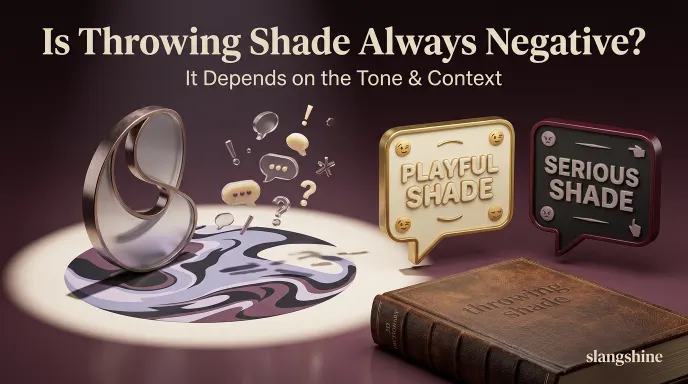
Is Throwing Shade Always Negative?
Not necessarily. Shade can be playful, humorous, or genuinely hostile.
Friends sometimes throw shade at each other as part of friendly teasing. In other situations, someone may use shade to embarrass, criticize, or attack another person.
For example:
“My friend said my cooking needs professional help. We were just throwing shade at each other.”
This sounds playful because the people involved understand the joke.
On the other hand:
“She kept making comments about her coworker’s mistakes.”
If those comments were intended to embarrass the coworker, the shade would be more hostile.
Tone, context, and relationship matter more than the word itself.
Where Did the Slang “Shade” Come From?
The slang sense of shade has a strong connection to LGBTQ+ and Black American cultural history, particularly ballroom culture.
The expression became more widely known through popular culture and later spread into mainstream informal English.
The related expression “throwing shade” became especially recognizable through the documentary Paris Is Burning and later through television, music, social media, and internet culture.
The word has an older history of figurative meanings connected with darkness, concealment, and indirect expression.
However, the modern slang use developed within specific cultural communities before becoming much more common in general English.
Because slang develops through speech and culture, its exact development cannot always be reduced to one single moment or source.
Is “Shade” Still Used as Slang in 2026?
Yes. Shade is still widely recognized in informal English in 2026, especially online and in conversations about social interactions, celebrities, entertainment, and relationships.
People commonly use expressions such as:
- “throwing shade”
- “throw shade”
- “threw shade”
- “no shade”
- “that was shady”
The expression is familiar to many English speakers, although people may use it differently depending on age, region, community, and online culture.
Is “Shade” Appropriate in Formal English?
The slang meaning of shade is informal, so it is better suited to casual conversations, social media, entertainment writing, and everyday speech.
In professional or formal writing, clearer words may work better, such as:
- criticism
- insult
- indirect criticism
- sarcastic remark
- negative comment
For example, instead of writing:
“The manager threw shade at the employee.”
A formal version could be:
“The manager made an indirect critical remark about the employee.”
The ordinary meaning of shade, such as protection from sunlight, is completely normal in formal English.
Origin and History of “Shade” in Slang
The slang use of shade has roots in LGBTQ+ and Black American cultural communities, especially the ballroom scene.
In these communities, people developed creative ways to criticize or challenge others through witty comments, gestures, and indirect remarks.
The expression later reached a much wider audience through popular culture.
The 1990 documentary Paris Is Burning helped introduce ballroom language and culture to many viewers, while television, music, and celebrity culture helped spread terms such as throwing shade.
Today, shade has moved well beyond its original communities. People commonly use it online and in everyday informal conversations when someone makes a subtle criticism.
The meaning has stayed fairly consistent: shade usually involves criticism that is indirect, clever, sarcastic, or deliberately understated.
What Is the Difference Between “Shade” and “Shady”?
Although shade and shady are related, they do not always work the same way.
Shade usually refers to the act of criticizing or insulting someone indirectly.
“She was throwing shade at her former boss.”
Shady describes something suspicious, questionable, dishonest, or untrustworthy. It can also describe a person who behaves in a questionable way.
“That deal sounds shady.”
In some informal conversations, shady can also mean someone is being deliberately sneaky or indirectly insulting.
“That was a shady comment.”
So, shade is often the criticism itself, while shady describes the behavior or comment.
What Does “No Shade” Mean?
“No shade” is an informal phrase people use before or after a critical comment to show that they do not intend to be disrespectful.
For example:
“No shade, but I liked your old design better.”
The speaker is giving an opinion while trying to make the criticism sound less harsh.
However, the phrase does not automatically make a comment polite. If the statement is strongly insulting, adding “no shade” will not completely remove the negative tone.
You may also see “no shade intended” or “no shade, but…” in online conversations.
What Does “Shady” Mean in Slang?
In slang, shady can describe someone or something that seems suspicious, dishonest, sneaky, or intentionally questionable.
For example:
“That guy is acting shady.”
It can also describe an indirect insult:
“That was a shady thing to say.”
The exact meaning depends on context. A shady person might be behaving dishonestly, while a shady comment might simply be unnecessarily indirect or insulting.
This is why shade, shady, and throwing shade are related but should not be treated as identical expressions.
Common Mistakes When Understanding “Shade”
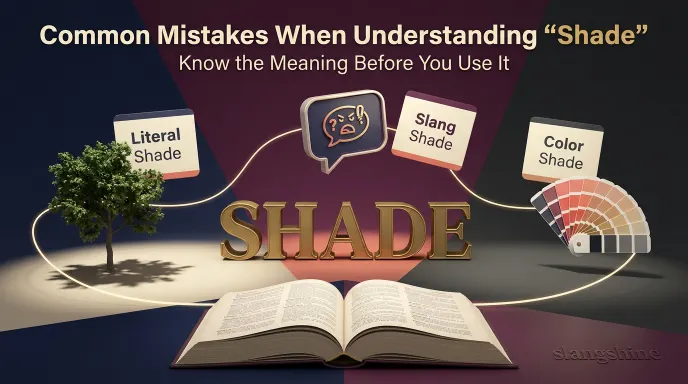
Mistake 1: Thinking Shade Always Means an Insult
Not every use of shade is slang.
For example:
“We sat in the shade.”
Here, shade simply means an area protected from direct sunlight.
Always check the surrounding sentence before interpreting it as slang.
Mistake 2: Assuming “Throwing Shade” Means Physical Shade
Throwing shade is normally an idiom in informal English. It does not mean literally throwing darkness or blocking sunlight.
It usually means making an indirect criticism or insult.
Mistake 3: Treating Every Sarcastic Comment as Shade
Sarcasm and shade can overlap, but they are not exactly the same.
A sarcastic comment may simply be humorous or ironic. Shade usually has a target and carries some form of criticism or disrespect.
Mistake 4: Assuming Shade Is Always Serious
Friends may throw shade at each other as playful banter. The same expression can become hurtful when used during an argument or public conflict.
Mistake 5: Using “Shade” in Every Formal Situation
The slang meaning is informal. In professional writing, words such as criticism, negative remark, or indirect comment are usually clearer.
Is “Shade” Offensive?
Shade is not automatically offensive, but it often carries a negative or mocking tone.
A playful comment between close friends may be harmless. A public comment designed to embarrass someone can feel insulting.
The phrase also has cultural roots that are important to recognize. Using slang casually is different from making fun of the communities and cultures from which expressions developed.
If you want to avoid sounding disrespectful, use more direct and neutral language when discussing criticism.
How Can You Tell If Someone Is Throwing Shade?
Look at the context, tone, and target.
Someone may be throwing shade when:
- Their comment indirectly criticizes another person.
- The statement sounds sarcastic or pointed.
- Everyone understands who the comment targets.
- The speaker avoids saying the person’s name.
- The comment seems designed to embarrass or mock someone.
- The situation involves an ongoing disagreement or rivalry.
For example:
“Some people should learn to arrive on time before complaining about other people’s schedules.”
If everyone knows who repeatedly arrives late, the comment could be interpreted as shade.
FAQs About Shade Meaning Slang
Q1. What does “shade” mean in slang?
Answer: In slang, shade means an indirect insult, criticism, or disrespectful remark. It often involves sarcasm or a subtle comment aimed at another person.
Q2. What does “throwing shade” mean?
Answer: Throwing shade means criticizing, mocking, or insulting someone indirectly. The speaker may not mention the person’s name, but the target is usually clear from the context.
Q3. What does “no shade” mean?
Answer: “No shade” means the speaker claims they are not trying to insult or disrespect someone, usually before giving a critical opinion. For example, “No shade, but I preferred the old version.”
Q4. Is “shade” a bad word?
Answer: Shade is not a swear word, but its slang meaning can be negative or insulting. If it sounds offensive depends on the speaker, target, tone, and situation.
Q5. What is the difference between shade and shady?
Answer: Shade usually refers to an indirect criticism or insult, while shady can describe suspicious, dishonest, sneaky, or questionable behavior. Both words can also describe indirect or disrespectful actions.
Q6. Is “shade” still used in 2026?
Answer: Yes, shade is still used in 2026, especially in social media, entertainment, casual conversations, and discussions about celebrity or interpersonal drama. The expression is widely recognized, although usage varies by community and age group.
Key Takeaways of Shade Meaning Slang
- Shade in slang means an indirect insult, criticism, or disrespectful comment.
- Throwing shade means criticizing or mocking someone indirectly.
- No shade is often used to soften a critical opinion.
- Shady is related but can also mean suspicious, dishonest, or sneaky.
- Shade can be playful between friends or genuinely hurtful.
- The slang has important roots in LGBTQ+ and Black American cultural communities.
- The ordinary meaning of shade, such as protection from sunlight, is completely different.
- Context, tone, and the relationship between speakers help determine the intended meaning.
- The slang remains recognizable and commonly used in informal English in 2026.
Conclusion
The shade meaning in slang is usually an indirect criticism, insult, or pointed remark. Unlike a straightforward insult, shade often uses sarcasm, humor, or subtle wording to communicate the criticism.
The expression “throwing shade” remains especially common in social media, entertainment, and casual conversations. At the same time, shade can be playful among friends or hurtful when someone uses it to embarrass another person.
Because shade also has several ordinary meanings, context is essential. Understanding the tone and situation will help you decide if someone is talking about sunlight, making a sarcastic comment, or genuinely throwing shade.
Learn More Slang Terms:
- Stoned Meaning Slang: What Does “Stoned” Mean?
- MTB Slang: What Does MTB Mean on TikTok and in Dating? (2026)
- 1980 Slang: Rad Words and Phrases from the Decade (2026)
- What Does SMT Mean in Slang? Explained Simply (2026)

Hi, I’m Anna Whitmore. I have 7+ years of experience writing about English slang and vocabulary. At SlangShine, I create simple, easy-to-understand content for English learners.