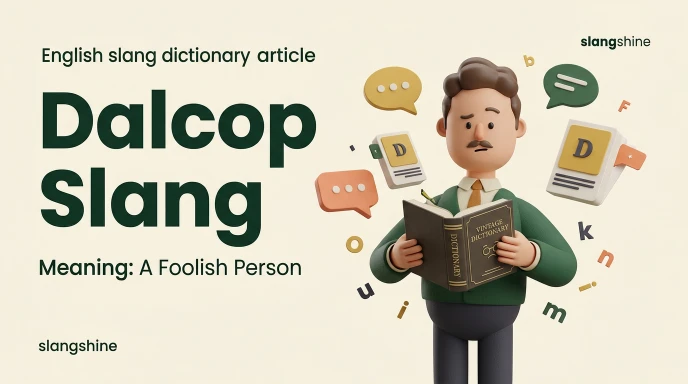
If you have seen dalcop slang and wondered what this strange word means, it refers to a foolish, or dull-headed person. The word is an old English dialect term, not a common piece of modern internet slang.
Historical word sources record dalcop as meaning “an idiot,” while explanations of old English insults describe it as a “dull-head.”
You are unlikely to see dalcop used often in everyday texting, TikTok comments, or casual conversations in 2026.
It is more likely to appear in lists of old insults, historical writing, word games, or discussions about unusual English vocabulary.
Understanding this difference matters. Calling dalcop modern slang would give the wrong impression. It is an old-fashioned insult that has survived mainly as an obscure vocabulary word.
Quick Answer Table
| Question | Answer |
| Meaning | A foolish, or dull-headed person |
| Tone | Insulting, old-fashioned, sometimes humorous |
| Used by | Mostly people discussing old or unusual English words |
| Platforms | Not strongly associated with modern social media |
| Offensive? | It is an insult, so it can be rude when directed at someone |
The interesting part is that dalcop is built around an older meaning of cop. In Middle English, cop could mean the top or head, and older English sources connect the word with the idea of the crown or top of the head.
What Does Dalcop Mean in Slang?
Dalcop means an idiot, fool, or particularly foolish person. It can be understood in simple modern English as something like “dull-head” or “foolish person.”
Historical sources specifically record dalcop as an English dialect noun meaning “an idiot.” The word is usually presented as an old insult rather than a modern slang expression.
That distinction is important because someone searching for “dalcop slang” may expect a term currently used online.
In reality, dalcop belongs more naturally with archaic English insults and old dialect vocabulary.
Modern speakers may recognize it from articles or lists about unusual words, but most people would not use it in ordinary texting.
Is Dalcop a Modern Slang Word?
Not really.
It is more accurate to call dalcop an old English dialect insult or archaic slang term. A historical dictionary source dates its recorded use to 1858 English dialect, where it is defined as “an idiot.”
That does not mean the word was invented in 1858. The date is evidence of a recorded use, not necessarily the first moment the word existed.
Dalcop Pronunciation
A practical pronunciation is roughly:
DAL-kop
The first part sounds like “dal”, followed by “cop.”
Because dalcop is rare today, there is not the same level of standardized pronunciation guidance that you would find for common modern slang.
If you encounter it while reading, saying “DAL-kop” is a reasonable way to approach the spelling.
The second part is especially interesting. Historical English sources show that cop could mean “head” or “top,” long before the modern slang meaning of cop as a police officer became common.
Where Does Dalcop Come From?
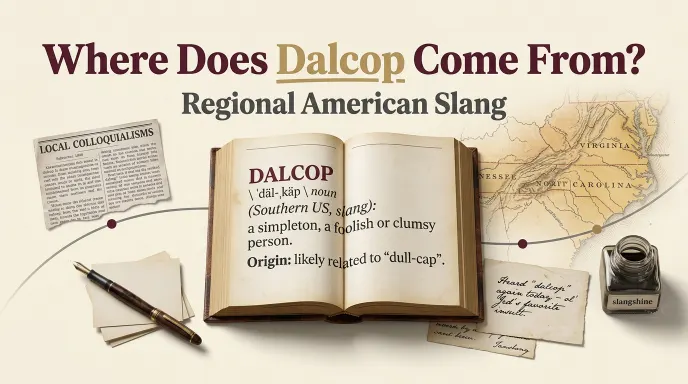
The exact history of the complete word dalcop is not as well documented in easily available modern references as its meaning. What is clear is that it belongs to older English dialect vocabulary.
The word is commonly explained as a “dull-head.” In that explanation, cop means head, not police officer.
The Meaning of “Cop” in Dalcop
This is one of the easiest ways to misunderstand the word.
Modern English speakers often know cop as a word for a police officer. That meaning has nothing to do with dalcop.
Older English used cop for the top, crown, or head. A Middle English dictionary records cop as “top, head,” and etymological sources trace this older sense through Old English.
So, in simple terms:
dalcop → dull head → foolish person
That explanation also helps show why dalcop sounds unusual to a modern English speaker.
Is Dalcop Still Used in 2026?
Dalcop is rare in modern everyday English.
There is no strong evidence that it is a mainstream slang term on platforms such as TikTok, Instagram, Snapchat, Discord, or Reddit.
Current online references tend to discuss it as an old or obscure insult, rather than as a trending expression.
That makes its 2026 status best described as:
Rare / archaic / mostly historical
You may still encounter it in articles about old English insults, unusual vocabulary, historical language, or word collections.
For example, modern articles discussing classic English insults include dalcop alongside other unusual terms such as cumberworld, bobolyne, and harecop.
Is Dalcop an Insult?
Yes.
Calling someone a dalcop means describing them as foolish. Because of that, it can be insulting if directed at a real person.
The tone, however, can change with context. Since the word sounds very old-fashioned, using it today may sound playful, theatrical, literary, or humorous rather than like a serious modern insult.
For example, saying:
“You absolute dalcop!”
Could sound like someone deliberately using an old-fashioned word for comic effect.
Still, the underlying meaning is negative. It should not be treated as a compliment.
Is Dalcop Rude or Offensive?
Dalcop is rude because it calls someone foolish. However, it is not generally known as a modern profanity or a highly offensive slur.
The safest way to understand its tone is:
- Meaning: Negative
- Purpose: Insult
- Strength: Mild to moderate, depending on context
- Modern feel: More humorous or archaic than aggressive
- Profanity: No
If you are learning the word for vocabulary purposes, there is no issue with discussing it. Using it directly toward someone is different because the word still carries an insulting meaning.
Where Is Dalcop Used?
Because dalcop is rare, it does not have a strong platform-specific meaning.
| Platform | How It Is Used | Example |
| TikTok | Rare; may appear in vocabulary or old-word content | “Apparently dalcop means a fool.” |
| Rare; mostly educational or humorous posts | “Learning strange old insults today.” | |
| Possible in discussions about unusual English words | “I found the word dalcop in an old word list.” | |
| Discord | Not common slang | “What does dalcop even mean?” |
| Texting | Very uncommon | “You old dalcop 😂” |
The key point is that dalcop does not become a different slang term simply because it appears on a different platform. Its basic meaning remains the same.
Dalcop vs. Modern Words for a Fool
People searching for dalcop slang may also want a modern equivalent.
| Word | Basic Meaning | Modern Use |
| Dalcop | A foolish person | Very rare |
| Fool | A silly or unwise person | Common |
| Idiot | A very foolish person | Common, but insulting |
| Dummy | A foolish person | Often milder or playful |
| Nincompoop | A silly or foolish person | Old-fashioned but recognizable |
Dalcop is much less common than all of these modern alternatives. If your goal is normal conversation in 2026, fool, dummy, or another context-appropriate modern expression will usually sound more natural.
How to Use Dalcop in a Sentence
Since dalcop is an old and rare insult, it works best when the speaker is deliberately using unusual or humorous language. It would sound strange in most normal 2026 conversations.
Here are a few natural examples:
- “You dalcop, you forgot the keys again!”
- “He was being a real dalcop when he ignored the obvious answer.”
- “Don’t be a dalcop. Read the instructions first.”
- “That old book called him a dalcop, which apparently meant a fool.”
The first three examples use the word as a playful insult. The last one uses it in a historical context.
Real-Life Examples of Dalcop Slang
Text Message
Mason: You sent the email to the wrong person again.
Caleb: I know 😭
Mason: You absolute dalcop 😂
Here, dalcop is being used jokingly. The emoji also makes the message feel less serious.
Social Media Comment
Nora: I just learned that dalcop is an old word for an idiot.
Priya: That is such a random word 😂
This is a realistic way someone might encounter dalcop online today: as a word being explained or shared, rather than as normal modern slang.
Casual Conversation
Ethan: I left my phone at home.
Marcus: Again? You dalcop!
In this situation, the word is playful because the speakers know each other. It is still technically an insult, but the tone makes it teasing rather than harsh.
Historical or Creative Writing
The character shook his head. “You foolish dalcop,” he muttered.
This setting makes the word feel more natural because dalcop has an old-fashioned sound. Writers may use unusual historical insults to give dialogue a distinctive style.
When Should You Use Dalcop?
Use dalcop when you want to:
- Talk about old English vocabulary
- Explain unusual historical insults
- Add humor to creative writing
- Joke with someone who understands the unusual word
- Discuss dialect or slang history
- Describe a person as foolish in an intentionally old-fashioned way
It is not a good choice when you need clear modern language. Most readers may not know what you mean.
If you are writing a work email, school assignment, or formal message, use a clearer word such as foolish or unwise if that is what you mean.
When Should You Avoid Dalcop?
Avoid using it as a direct insult when the other person may not understand the word.
The problem is not that dalcop is a major modern swear word. The problem is that it still has a negative meaning, and unusual insults can confuse people.
For example, this:
“You’re a dalcop.”
May make the other person ask:
“What does that even mean?”
That can be funny among friends, but it may not work in a serious conversation.
Common Mistakes About Dalcop
Mistake 1: Thinking It Is Popular Internet Slang
Searching for dalcop slang does not mean that dalcop is currently trending online.
The available historical references identify it as an English dialect word meaning an idiot. A historical dictionary records it under English dialect usage, while modern articles generally present it as an old-fashioned insult.
Mistake 2: Thinking “Cop” Means Police Officer
The cop in dalcop has nothing to do with a police officer.
In the old expression, cop refers to the head or top of the head. That is why dalcop is commonly explained as a “dull-head.”
Mistake 3: Treating It as a Compliment
Dalcop is not positive slang.
It describes someone as foolish, so the basic meaning is negative.
Mistake 4: Assuming It Has a Different Meaning on TikTok
There is no strong evidence that dalcop has developed a separate TikTok meaning. If you see it in a social media post, the surrounding context matters, but the historical meaning remains the safest interpretation.
Dalcop vs. Similar Old-Fashioned Insults
Some older English insults have meanings close to dalcop. They are useful comparisons because someone searching for this word may also be interested in unusual ways to describe a foolish person.
| Term | Meaning | Style |
| Dalcop | Fool or idiot | Rare, old-fashioned |
| Harecop | Hare-brained or foolish person | Old-fashioned |
| Nincompoop | Silly or foolish person | Old-fashioned but familiar |
| Fopdoodle | Foolish or insignificant person | Very old-fashioned |
| Bobolyne | Fool | Historical/rare |
| Dummy | Foolish person | Modern and informal |
The important difference is modern familiarity. Words such as dummy are easy for most people to understand. Dalcop is much more obscure.
Is Dalcop Positive, Negative, or Neutral?
Dalcop is negative.
It describes a person as foolish. However, the word’s old-fashioned sound can make it feel playful when used between friends.
Think about the difference between:
“You are foolish.”
And:
“You absolute dalcop!”
The first sounds direct and modern. The second sounds theatrical or humorous because dalcop is unusual.
The meaning remains negative, but context can soften the way it feels.
Is Dalcop Formal or Informal?
Dalcop is not a normal formal English word for modern communication.
It belongs to older dialect vocabulary and works better in:
- Historical discussions
- Creative writing
- Language articles
- Word games
- Humorous conversations
- Discussions of unusual English insults
It would be unusual in a business email or academic paper unless you are specifically discussing the word itself.
Does Dalcop Have an Emoji Meaning?
There is no established emoji that officially means dalcop.
If someone uses the word jokingly, they might pair it with an emoji that shows laughter, confusion, or playful frustration.
For example:
“You dalcop 😂”
or
“What a dalcop 🤦”
These emojis add tone. They do not create a separate meaning for the word.
People Also Ask About Dalcop
Q1. Is dalcop a real word?
Answer: Yes. Historical dictionary sources record dalcop as an English dialect word meaning an idiot. It is not a common modern slang term, but it is a genuine historical vocabulary item.
Q2. Is dalcop still used today?
Answer: It is very rare. In 2026, you are more likely to find dalcop in discussions of old English insults, unusual vocabulary, or historical language than in everyday texting and social media conversations.
Q3. Is dalcop offensive?
Answer: It is an insult because it calls someone foolish. However, it is not generally treated as a modern profanity or slur. Its unusual, old-fashioned sound can make it feel humorous in some contexts.
Q4. Can I use dalcop in a text?
Answer: Yes, but most people may not know the word. It works best as a playful or humorous insult between people who understand its meaning. If you need to communicate clearly, a common modern word will usually be better.
Q5. What does cop mean in dalcop?
Answer: In dalcop, cop refers to the head or top of the head, not a police officer. This older sense helps explain why the word is commonly interpreted as something like “dull-head.”
Q6. What is a modern synonym for dalcop?
Answer: Depending on tone, modern alternatives include fool, idiot, dummy, silly person. The best choice depends on how strong or playful you want the insult to sound.
Q7. Is dalcop British slang?
Answer: It is better described as English dialect vocabulary than modern British slang. Historical sources specifically label the word as English dialect usage.
Q8. Why does dalcop sound so strange?
Answer: It comes from older English vocabulary and uses a historical sense of cop meaning “head.” Modern speakers are more familiar with other meanings of cop, so the construction can sound unusual today.
Key Takeaways
- Dalcop means a foolish person.
- It is an old English dialect insult, not mainstream 2026 internet slang.
- The cop in dalcop means head, not police officer.
- It can sound humorous because it is so old-fashioned and rare.
- Use it mainly when the context makes its unusual meaning clear.
Conclusion
Dalcop slang is best understood as an old English insult for a foolish, or dull-headed person. Historical sources record dalcop as an English dialect word meaning “an idiot,” while modern explanations connect it with the older word cop, meaning “head.”
In 2026, dalcop is rare rather than trending. You are more likely to find it in articles about unusual English words, historical insults, creative writing, or language discussions than in everyday texts or social media posts.
That makes the word interesting, but it also means context matters. If someone calls another person a dalcop, they are calling them foolish.
The old-fashioned wording may make the insult sound playful, but the basic meaning is still negative.
If you enjoy unusual slang, dalcop is a good example of how older English words can survive in modern language discussions even after they stop being part of everyday speech.
Learn More Slang Terms:
- Montucky Slang: From Big Sky to Backwoods (2026)
- Fein Meaning Slang: Why Everyone Is Talking About It
- HB Slang Meaning: What Does HB Mean in Text and Online?
- What Does FN Mean in Text Slang? The Real Meaning Explained

Hi, I’m Anna Whitmore. I have 7+ years of experience writing about English slang and vocabulary. At SlangShine, I create simple, easy-to-understand content for English learners.