What does DIY mean in text? DIY stands for “Do It Yourself.” People use it when talking about making, fixing, decorating, or creating something on their own instead of paying someone else to do it. In text messages, the meaning is usually the same as in everyday life.
You may see DIY on TikTok, Snapchat, Instagram, WhatsApp, Pinterest, or in regular text messages. If you’re wondering what does DIY mean in text, people commonly use it when sharing craft ideas, home projects, beauty tips, recipes, or creative activities.
For example, your friend might text, “I’m trying a DIY room makeover this weekend.” This means they plan to decorate or improve their room themselves.
Although DIY is best known for hands on projects, its meaning can depend on the conversation. Understanding the context will help you recognize when someone is talking about a craft, a repair, or another activity they want to do independently.
DIY Meaning in Text
In texting, DIY means “Do It Yourself.” If you’re wondering what does DIY mean in text, it describes making, building, repairing, or improving something without hiring someone else to do the work.
The abbreviation is common because it saves space and is easy to recognize. Instead of typing the full phrase, people can simply write “DIY” in a message.
Here are a few examples:
- “I’m doing a DIY project today.” I’m making or improving something myself.
- “Try this DIY decoration.” Try making this decoration on your own.
- “We need a DIY solution.” We need a solution we can create or manage ourselves.
- “I found an easy DIY tutorial.” I found instructions for making something myself.
DIY is an initialism formed from the words “Do It Yourself.” Unlike slang terms that may have several different interpretations, DIY has a widely recognized meaning in everyday conversations.
Is DIY Slang or an Abbreviation?
DIY is an abbreviation commonly used in texting and online content, rather than traditional slang. It stands for three words: “Do It Yourself.”
People use it in casual messages, but it also appears in professional articles, product instructions, craft guides, and educational content.
For example, someone might write, “I made a DIY bookshelf,” in a message to a friend. A home improvement website might also use “DIY bookshelf” as the title of a tutorial.
The phrase works in both settings because it describes a practical activity. However, if someone does not recognize the abbreviation, writing “do it yourself” can make the meaning clearer.
What Does DIY Mean in Everyday Chat?
The meaning usually stays the same across everyday conversations. However, the activity can change depending on what people are discussing.
- Home improvement: Fixing a shelf, painting a wall, or decorating a room.
- Arts and crafts: Making cards, jewelry, gifts, or decorations.
- Beauty: Trying a homemade hairstyle or a simple nail design.
- Fashion: Customizing clothes or creating accessories.
- Technology: Building a simple project or fixing something yourself.
For example, “I found a DIY gift idea for my sister” means the sender plans to make the gift themselves. In short, DIY usually suggests creativity, independence, or saving money by doing a task yourself.
Where Do People Use DIY?
DIY appears on many online platforms because people regularly share tutorials, creative ideas, and personal projects. The main meaning stays consistent, although each platform may feature different types of content.
DIY on TikTok
On TikTok, DIY often appears in short videos showing people how to create or improve something. These videos may cover room decorations, crafts, clothing changes, simple repairs, or other creative projects.
For example, someone might post a video titled “DIY desk makeover.” The video would show how they changed the appearance of a desk using their own effort.
You may also see captions such as:
- “Easy DIY for your bedroom.”
- “Try this DIY gift idea.”
- “DIY projects you can do at home.”
On TikTok, DIY usually signals a project or tutorial that viewers can try themselves. Before following a tutorial, check if it involves tools, chemicals, heat, or other safety concerns.
DIY on Snapchat
On Snapchat, people may use DIY when sharing personal projects with friends. Someone might post a snap showing a decorated room, a handmade gift, or a craft they completed at home.
For example:
A: What did you do this weekend?
B: I tried a DIY project and made some wall decorations.
The second person means they made the decorations themselves. DIY can also appear in captions or messages when someone asks for ideas. A friend might write, “Send me some easy DIY ideas for my room,” meaning they want suggestions for projects they can complete independently.
DIY on Instagram
Instagram users often share DIY projects through Reels, posts, Stories, and tutorial style captions. The content may focus on home decor, crafts, fashion, beauty, or handmade products.
For example, a creator might write, “DIY gift box for your best friend,” above a video explaining how to make one. In direct messages, someone could say, “I want to try this DIY.” They mean they want to recreate the project themselves.
The abbreviation is useful because it quickly tells readers that the content involves making or doing something rather than simply buying a finished product.
DIY on WhatsApp
On WhatsApp, DIY usually appears in conversations about projects, ideas, or practical tasks. Friends and family members might share tutorials, pictures, or instructions for something they want to make.
For example:
A: How are you decorating your room?
B: I’m trying a DIY wall design I saw online.
The message means the person plans to decorate the wall themselves. DIY may also come up in family group chats when people discuss repairs, celebrations, homemade gifts, or party decorations. The abbreviation is informal, but its meaning is widely understood.
DIY in SMS Text Messages
People also use DIY in ordinary SMS messages. The abbreviation can make a message shorter without changing its meaning.
For example:
“I’m planning a DIY birthday gift for Mom.”
This means the sender intends to make the birthday gift themselves. Another example is, “Can you help me with this DIY project?” Here, the sender wants assistance with something they are making or fixing on their own.
If the recipient is unfamiliar with the abbreviation, you can explain it by saying “do it yourself.” Otherwise, DIY is generally easy to understand from the surrounding words.
10 Real Chat Examples of DIY in Text
The following conversations show how people might use DIY in everyday messages. Each example includes a short explanation to make the meaning clear.
Example 1: Decorating a Bedroom
A: Your room looks different!
B: Thanks! I tried a DIY makeover this weekend.
A: Did you do everything yourself?
B: Yes, I made the decorations and rearranged the furniture.
Meaning: The person improved their room through a project they completed themselves.
Example 2: Making a Gift
A: What are you getting your sister for her birthday?
B: I’m thinking of making a DIY gift box.
A: That’s a cute idea!
B: I hope she likes it.
Meaning: The sender plans to create a handmade gift instead of buying a ready made one.
Example 3: Finding a Craft Idea
A: I’m bored. What should I do today?
B: Try a DIY craft project.
A: Like what?
B: You could make a photo frame or decorate a notebook.
Meaning: The friend is suggesting a creative activity that can be done independently.
Example 4: Fixing Something at Home
A: Did you get the broken shelf fixed?
B: Not yet. I’m looking for a DIY guide.
A: Make sure you have the right tools.
Meaning: The person wants to repair the shelf themselves by following instructions.
Example 5: Planning a Party
A: How are we decorating for the party?
B: Let’s try some DIY decorations.
A: We could make paper flowers and banners.
B: Perfect! That should be fun.
Meaning: The friends plan to make their own party decorations.
Example 6: Sharing a Video
A: Look at this video I found.
B: Is that a DIY organizer?
A: Yes! It shows how to make one from cardboard.
B: Send it to me. I want to try it.
Meaning: The video explains how to create an organizer yourself.
Example 7: Customizing Clothes
A: Where did you get that jacket?
B: I customized an old one with a DIY design.
A: It looks brand new!
B: I just added a few patches and changed the buttons.
Meaning: The person modified their own clothing rather than buying a new jacket.
Example 8: Asking for Help
A: Can you help me this afternoon?
B: Sure. What are you working on?
A: A DIY bookshelf for my room.
B: Okay, let’s check the instructions first.
Meaning: The sender is building a bookshelf themselves and wants help with the project.
Example 9: Trying a Beauty Project
A: How did you make your nails look like that?
B: I followed a DIY nail tutorial.
A: Was it difficult?
B: Not really. It just took some practice.
Meaning: The person followed instructions to create a nail design themselves.
Example 10: Saving Money
A: Are you buying new decorations?
B: Probably not. I’ll try a DIY project instead.
A: That’s a good way to save money.
B: Exactly! I already have some supplies at home.
Meaning: The person plans to make decorations using available materials instead of purchasing finished items.
How to Reply When Someone Says DIY
Your reply depends on what the person is discussing. They might be sharing a project, asking for help, or suggesting an activity. You can respond naturally without using the abbreviation yourself.
Casual Replies
If a friend mentions a DIY project, a short response is usually enough.
- “That sounds fun!”
- “Nice! What are you making?”
- “I’d love to see the result.”
- “That’s a great idea.”
- “Let me know how it goes.”
For example:
A: I’m trying a DIY desk makeover.
B: Nice! I’d love to see how it turns out.
This reply shows interest without making the conversation complicated.
Funny Replies
If you are chatting with close friends, you can add humor.
- “Let’s hope it looks like the tutorial 😂”
- “DIY expert in the making!”
- “Pinterest made it look so easy 😭”
- “I hope we don’t need a backup plan!”
- “Send pictures before and after.”
These replies work best when the conversation is relaxed. Avoid making fun of someone’s effort if they are genuinely excited about their project.
Friendly Replies
If someone shares an idea or asks for your opinion, offer encouragement.
- “You should definitely try it.”
- “That would make a lovely gift.”
- “I think you’ll do great.”
- “Let me know if you need help.”
- “That’s a creative idea.”
A supportive reply can encourage the other person to continue learning or creating.
Replies When Someone Asks for Help
If someone wants help with a DIY project, ask what they need before agreeing to a specific task.
- “Sure, what are you making?”
- “Send me the instructions.”
- “What materials do you need?”
- “Let’s figure it out together.”
- “I’ll help if I can.”
This keeps the conversation practical and makes it easier to plan the next step.
Is DIY Rude or Offensive?
DIY is not rude or offensive. It is a widely used abbreviation that means “Do It Yourself.” People use it to discuss creative projects, repairs, crafts, and other activities. However, the phrase can sound dismissive if someone uses it to refuse help or tell another person to handle a problem alone.
When DIY Is Harmless
DIY is usually neutral when someone is talking about a project or sharing instructions.
For example:
- “I found a DIY guide for making a bookshelf.”
- “Let’s make DIY decorations for the party.”
- “This DIY project looks easy.”
These sentences simply describe activities that someone can complete themselves.
When DIY Might Sound Dismissive
Imagine that someone asks for help with a difficult task and receives the reply, “Just DIY it.” Depending on the tone, this could sound impatient or unhelpful. The person may feel that their request has been ignored.
A more considerate reply would be, “You could try doing it yourself, and I can help you get started.” The abbreviation itself is not offensive. The way it is used can affect how the message feels.
Is DIY Appropriate at School or Work?
Yes. DIY is suitable for many school and workplace conversations, especially when discussing projects, instructions, or creative solutions.
For example, a teacher might assign a DIY science project, or a coworker might suggest a DIY display for an office event.In formal writing, explain the abbreviation if your audience may not know it. Otherwise, it is widely recognized and can be used without concern.
Who Uses DIY?
DIY is used by people of different ages and backgrounds. It is common in conversations about creativity, home improvement, crafts, and practical problem solving.
Do Gen Z Users Say DIY?
Yes, many Gen Z users encounter DIY through social media videos, craft tutorials, fashion content, and home decor ideas. They may use the abbreviation in captions, comments, or messages when discussing projects they want to try.
For example, someone might send a friend a video with the message, “We should try this DIY this weekend.” However, DIY is not exclusive to Gen Z. The abbreviation has a much broader use in everyday English.
Do Teenagers and Adults Use DIY?
Both teenagers and adults use DIY. Younger people may use it when talking about school projects, handmade gifts, or creative hobbies. Adults may use it when discussing home repairs, furniture, gardening, or other practical tasks.
The meaning remains the same across these age groups: doing something yourself instead of relying entirely on someone else to do it.
How Common Is DIY Online?
DIY is a widely recognized abbreviation, especially in content about crafts, home improvement, and tutorials. It appears in search queries, video titles, product guides, and everyday messages.
Its popularity across specific platforms may vary, and there is no need to assume that everyone uses it equally often. Still, most readers can understand the meaning when the conversation is about making or fixing something.
What Does DIY Mean in Text? Origin and History
DIY stands for “Do It Yourself.” The expression is associated with the idea of completing tasks independently rather than hiring a professional or buying a finished product.
The phrase became familiar through practical activities such as home repairs, decorating, and making things by hand. Over time, DIY grew into a broad label for projects people can complete using their own skills and available materials.
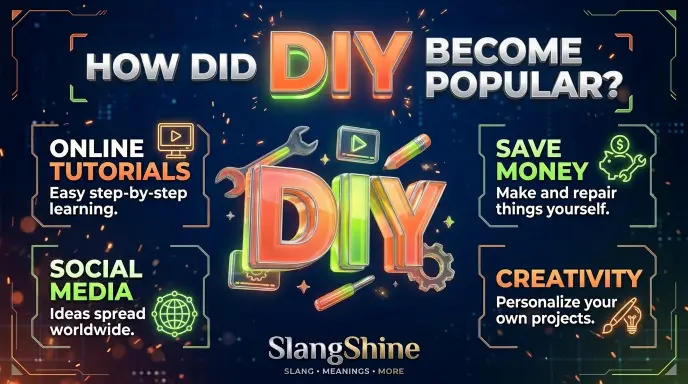
How Did DIY Become Popular?
The idea of doing tasks yourself has existed for a long time. However, DIY became a recognizable label in home improvement, crafts, and practical advice.
Magazines, instructional books, television programs, and online tutorials helped people learn how to complete projects without professional assistance.
Today, social media makes it easy to share instructions and demonstrate results. A short video can show viewers how to decorate a room, customize clothing, or make a simple craft.
Did Social Media Create DIY?
No single social media platform created the expression. The abbreviation was already established before modern platforms such as TikTok and Instagram became popular.
Social media has helped DIY content reach wider audiences. People can now share their projects, explain each step, and encourage others to try the same activity.
The main meaning remains unchanged: DIY means doing something yourself rather than having someone else do it for you.
DIY vs. IDK, IDC, IMO, and BRB
These abbreviations appear in everyday online communication, but they have different meanings and uses.
| Term | Meaning | Type | Usage | Popularity |
| DIY | Do It Yourself | Initialism | Making, fixing, or creating something independently | Widely recognized |
| IDK | I don’t know | Initialism | Expressing uncertainty | Widely recognized |
| IDC | I don’t care | Initialism | Expressing indifference | Widely recognized |
| IMO | In my opinion | Initialism | Sharing a personal opinion | Widely recognized |
| BRB | Be right back | Initialism | Temporarily leaving a conversation | Widely recognized |
How Is DIY Different From IDK?
DIY describes an activity someone plans to complete independently. IDK expresses uncertainty or a lack of knowledge.
For example:
- “I’m planning a DIY project.” I’m planning to make something myself.
- “IDK how to make this.” I don’t know how to make this.
The two abbreviations may appear in the same conversation, but their meanings are completely different.
How Is DIY Different From BRB?
DIY relates to completing a task yourself, while BRB means “be right back.”
For example, “I’m starting a DIY project” means the person is about to make or fix something. “BRB, I need some tools” means the person will return shortly after getting the tools. Understanding the full phrase behind each abbreviation makes online conversations easier to follow.
Real World Example of DIY in Use
Imagine that your friend wants to decorate a bedroom but does not want to spend much money. Instead of buying expensive decorations, they search online for simple projects they can complete at home.
They find a tutorial that shows how to make wall art using paper, paint, and a few basic supplies. Your friend sends you the video and writes, “I want to try this DIY project.” You understand that they plan to create the decoration themselves. You might reply, “That looks fun! I can help you this weekend.”
In this situation, DIY describes a practical activity that combines creativity and independent work. It may also help someone save money, learn a skill, or reuse materials they already own. The example shows why DIY is easy to understand in context. Whenever you see it in a message about crafts, repairs, or creative ideas, it usually means “Do It Yourself.”
FAQs About what does DIY mean in text
Q1. What Does DIY Mean in Text Messages?
Answer: DIY stands for “Do It Yourself.” It means making, fixing, or creating something on your own instead of paying someone else to do it.
Q2. What Does DIY Mean on TikTok?
Answer: On TikTok, DIY usually refers to projects or tutorials that people can try themselves, such as crafts, room decorations, and simple repairs.
Q3. Is DIY Slang?
Answer: DIY is an initialism, not traditional slang. It stands for “Do It Yourself” and is used in both casual conversations and practical guides.
Q4. Is DIY Rude or Offensive?
Answer: No, DIY is generally neutral and inoffensive. However, telling someone to “just do it yourself” can sound dismissive depending on the context.
Q5. How Should You Reply to DIY?
Answer: You can reply with “That sounds fun,” “What are you making?” or “I’d love to see the result.” Choose a response that fits the conversation.
Q6. What Does DIY Stand For?
Answer: DIY stands for “Do It Yourself.” It describes completing a project or task independently.
Q7. What Does DIY Mean on Instagram?
Answer: On Instagram, DIY usually refers to creative projects, crafts, home decor, or tutorials that people can recreate themselves.
Q8. Can DIY Be Used in Formal Writing?
Answer: Yes. DIY is widely recognized, but spelling out “Do It Yourself” may be clearer when writing for readers unfamiliar with the abbreviation.
Conclusion
DIY means “Do It Yourself.” If you’re wondering what does DIY mean in text, it refers to making, fixing, decorating, or creating something independently rather than hiring someone else. You may see DIY on TikTok, Snapchat, Instagram, WhatsApp, and other platforms.
It is common in craft tutorials, home improvement ideas, handmade gifts, and practical projects. For example, someone might share a DIY room makeover or a handmade gift they created at home. The abbreviation is generally neutral and suitable for everyday communication.
When you see DIY in a conversation, think of a project someone plans to complete themselves. Understanding what does DIY mean in text can help you recognize the term in messages, social media captions, and online tutorials.
Learn More About Slang:
- What Does Dis Mean in Text? The Hidden Meaning Explained
- What Does Diff Mean in Text? Real Meaning, And Examples
- What Does Dip Mean in Text? Real Meaning, & Social Media Use

Hi, I’m Anna Whitmore. I have 7+ years of experience writing about English slang and vocabulary. At SlangShine, I create simple, easy-to-understand content for English learners.