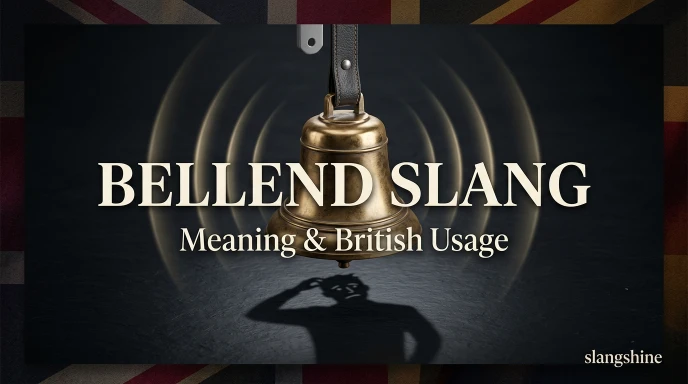
Bellend slang is a vulgar British insult used to call someone an annoying, foolish, or unpleasant person.
The word comes from a vulgar term for the penis and is usually used to criticize someone’s behavior rather than describe them literally.
For example, if someone acts selfishly or makes a foolish decision, another person might say, “Don’t be such a bellend.”
Quick Answer: Bellend Slang
Bellend is British slang for an irritating, foolish, or unpleasant person. It is a vulgar insult, so it is more offensive than mild words such as “idiot” or “fool.”
The word is especially common in British English. You may hear it in casual conversations, comedy, TV shows, online discussions, gaming chats, and social media.
For example:
- “That guy is a complete bellend.”
- “I forgot my keys again. I’m such a bellend.”
- “Don’t be a bellend. Just apologize.”
- “He was acting like a bellend all night.”
The tone can change the meaning slightly. Friends may use it jokingly, while strangers may use it as a strong insult.
What Does Bellend Mean in British Slang?
In British slang, bellend usually describes someone who is behaving in a foolish, annoying, selfish, or obnoxious way.
It can work like idiot, jerk, or asshole, although the exact strength depends on the speaker and situation.
The word often focuses on a person’s behavior. Someone might call another person a bellend after they:
- Behave selfishly
- Make a foolish mistake
- Act rude toward others
- Cause an unnecessary problem
- Show off in an irritating way
- Ignore common sense
For example, imagine someone cuts in front of everyone in a queue. A British speaker might privately describe that person as a bellend because the behavior is rude and inconsiderate.
The word can also be self-directed:
“I left my phone at home again. What a bellend.”
Here, the speaker is insulting themselves in a humorous way rather than seriously attacking another person.
Is Bellend a Bad Word?
Yes. Bellend is considered vulgar slang.
Although people often use it casually, it refers to a vulgar body part. That gives the word a stronger edge than ordinary insults such as silly, foolish, or annoying.
However, context matters. Among close friends, someone might say:
“You absolute bellend!”
With a laugh after a harmless mistake.
The same phrase said angrily to a stranger can sound much more offensive.
Is Bellend Always Offensive?
Not necessarily, but you should treat it as an insult.
British speakers sometimes use vulgar insults in a playful or humorous way. The relationship between the speakers, tone of voice, and situation can all affect how the word is received.
Even when used as a joke, bellend is not suitable for every audience.
Avoid it in:
- Formal emails
- Job interviews
- School assignments
- Professional meetings
- Customer service conversations
- Respectful or sensitive situations
For formal writing, alternatives such as rude person, foolish person, idiot, or unpleasant person may be more appropriate, depending on the context.
How Is Bellend Used in a Sentence?
Bellend is usually used as a noun. It can appear after words such as a, an, or complete.
Here are some natural examples:
- “He’s being a bellend today.”
- “That bellend parked across the entrance.”
- “I was a bellend and forgot the tickets.”
- “Why is that guy acting like such a bellend?”
- “Don’t be a bellend. Help your friend.”
- “I made a foolish mistake. I’m a proper bellend.”
The word can also appear in phrases such as complete bellend or absolute bellend. These combinations add emphasis.
For example:
“He behaved like a complete bellend.”
This means the speaker thinks the person behaved in a particularly foolish or irritating way.
Bellend Meaning in Different Contexts
The basic meaning stays similar, but the tone can change depending on where you see the word.
In Everyday British Conversation
In casual British speech, bellend can describe someone who is being annoying or foolish.
“My brother is being a bellend again.”
The speaker may be genuinely annoyed, or they may be joking about their brother.
In Social Media
On social media, people may use bellend when reacting to someone’s behavior or an irritating post.
“Who parks like that? What a bellend.”
The word can make a comment sound blunt and humorous at the same time.
In Gaming and Online Chats
Gamers may use bellend as an insult after another player behaves badly.
“That bellend stole the loot.”
Online, however, tone is harder to understand because readers cannot hear the speaker’s voice. A phrase intended as a joke can therefore sound more aggressive than expected.
In British Comedy
The word is also associated with the blunt, exaggerated style of British humor. Writers and comedians may use it because it sounds more colorful and distinctly British than a basic insult.
What Is the Origin and History of Bellend?
The history of bellend comes from its literal vulgar meaning. The word combines bell with end, referring to the shape of the glans at the end of the penis.
The literal expression developed into an insult because the body-part reference could be used to mock someone as foolish, useless, or unpleasant.
Over time, bellend became established as a recognizable British insult. Its use is strongly associated with informal British English, where colorful and humorous insults are common.
The term does not normally describe someone’s anatomy when used in modern slang.
Instead, calling someone a bellend usually means that the speaker thinks they are acting like an idiot or being particularly irritating.
The word became more widely recognizable outside everyday British conversation through British television, films, comedy, online communities, and social media.

Is Bellend British Slang?
Yes. Bellend is strongly associated with British slang.
It is much more characteristic of British English than American English. A British speaker may use it naturally in an informal conversation, while an American speaker may recognize the word mainly from British media or online content.
You may see it in:
- British TV shows
- British comedy
- Online forums
- Social media
- Gaming communities
- Informal conversations
It is also possible to encounter the word outside the UK because the internet has made regional slang easier to share.
Still, its British identity remains an important part of the word’s meaning and style.
Bellend vs. Idiot vs. Jerk
Although bellend, idiot, and jerk can all describe an unpleasant person, they do not have exactly the same tone.
Idiot is a common insult for someone who has done something foolish or made a bad decision. It is widely understood in both British and American English.
Jerk usually describes someone who behaves badly, selfishly, or disrespectfully. It is also less vulgar than bellend.
Bellend has a distinctly British flavor and sounds more vulgar and humorous. It can describe someone who is being foolish, annoying, or obnoxious.
| Word | General meaning | Tone |
| Bellend | Foolish or irritating person | Vulgar, British, often humorous |
| Idiot | Foolish person | Insulting but common |
| Jerk | Rude or unpleasant person | Informal |
| Fool | Person who acts without good judgment | Mild to moderate |
The right word depends on the situation. If you want a casual British insult with a crude edge, bellend fits that style. In formal situations, none of these insults would usually be appropriate.
When Should You Use Bellend?
Use bellend only in informal situations where a vulgar insult is acceptable.
It can work when talking with close friends, discussing British slang, or quoting casual online language. The word can also be used jokingly when someone makes a harmless mistake.
For example:
“I locked myself out again. I’m such a bellend.”
Here, the speaker is making fun of themselves.
A stronger use might be:
“That bellend deliberately blocked the driveway.”
This sounds more hostile because the speaker is directly insulting another person.
When Should You Avoid Bellend?
Avoid the word when you need to sound polite, professional, or respectful.
It is especially unsuitable when speaking to:
- A manager or employer
- A customer
- A teacher
- A stranger in a formal setting
- Someone you do not know well
- A person involved in a sensitive conversation
If you need to describe bad behavior without using an insult, say rude, inconsiderate, unhelpful, or unreasonable instead.
Is Bellend Still Used in 2026?
Yes, bellend remains recognizable as British vulgar slang in 2026.
Its meaning has not changed much. People still use it to describe someone who is acting foolish, irritating, rude, or obnoxious.
The internet has also helped regional slang travel beyond its original speech community.
As a result, people outside Britain may recognize bellend from British shows, memes, social media posts, gaming communities, or online conversations.
However, recognition does not mean everyone uses the word. Someone may understand bellend without normally saying it themselves.
Its use also depends heavily on tone. A close friend may use it as playful teasing, while the same word directed at a stranger can be insulting.
Common Mistakes When Using Bellend
Mistake 1: Treating It as a Polite Word
Bellend is not a polite synonym for “person.”
It is a vulgar insult. Even when used humorously, it carries a crude meaning.
Mistake 2: Assuming It Always Means “Foolish”
The word can suggest foolishness, but that is not its only meaning.
Depending on context, a bellend may be someone who is rude, annoying, selfish, obnoxious, or generally unpleasant.
Mistake 3: Using It in Formal Writing
A slang dictionary article can discuss the word, but that does not make it suitable for professional communication.
Instead of:
“The customer was a bellend.”
Formal writing could say:
“The customer behaved in a rude and unreasonable manner.”
Mistake 4: Assuming Every Use Is Serious
British slang often uses insults playfully between friends.
Someone saying “You bellend!” after a friend makes a silly mistake may be joking rather than expressing genuine anger.
Look at the relationship and surrounding conversation before deciding how seriously to take it.
Examples of Bellend in Real Conversations
Here are a few examples that show different tones.
Example 1 Playful
“You forgot your wallet again, you bellend.”
The speaker may be teasing a friend.
Example 2 Annoyed
“That bellend kept interrupting everyone.”
Here, the speaker is clearly criticizing someone’s behavior.
Example 3 Self Deprecating
“I sent the email to the wrong person. I’m a bellend.”
The speaker is insulting themselves after making a mistake.
Example 4 Online Comment
“Who leaves their car there? What a bellend.”
This expresses irritation with someone’s behavior.
Example 5 Stronger Insult
“He was acting like a complete bellend.”
Adding complete makes the insult more emphatic.
These examples show why context matters. The same word can sound playful, annoyed, or openly hostile.
Is Bellend the Same as Bell End?
The spelling bellend is commonly used when the word functions as the slang insult.
The expression comes from the literal phrase bell end, which refers to a bell shaped end. In the vulgar body part sense, it developed as a crude reference to the end of the penis.
Modern slang commonly writes the insult as bellend, although you may encounter variations in informal writing.
For a slang dictionary article, bellend is the clearest form to use when discussing the insult.
What Does Bellend Mean on Social Media?
On social media, bellend usually keeps its traditional British slang meaning: an annoying, foolish, rude, or obnoxious person.
People may use it in comments or posts after seeing behavior they dislike.
For example:
“Imagine doing that and then blaming everyone else. Bellend.”
Social media also makes the word easier for non British users to encounter. Someone may use it because they have picked it up from British entertainment or online culture.
The meaning is still context-dependent. A person using it jokingly with friends may intend playful teasing, while a stranger using it during an argument is more likely to mean it as a genuine insult.
Can Bellend Be Used as a Joke?
Yes. Bellend is often used humorously, especially between friends.
British humor frequently uses exaggerated insults without serious hostility.
A friend who forgets something obvious might receive a joking:
“You absolute bellend.”
The humor comes partly from the exaggerated insult and the situation.
Still, joking use is not automatically harmless. If the relationship is unfamiliar or tense, the other person may interpret the word as offensive.
A good rule is simple: use bellend only when you are confident the informal and vulgar tone fits the situation.
FAQs About Bellend Slang
Q1. What does bellend mean in slang?
Answer: Bellend is vulgar British slang for a foolish, annoying, rude, or unpleasant person. It can be serious or playful depending on the context.
Q2. Is bellend a swear word?
Answer: Bellend is generally considered a vulgar or offensive slang insult because it comes from a vulgar term for a part of the male anatomy. It is best avoided in formal situations.
Q3. Is bellend British slang?
Answer: Yes. Bellend is strongly associated with British English and is commonly recognized as a British vulgar insult.
Q4. Can bellend be used jokingly?
Answer: Yes. Friends may use bellend as playful teasing after someone makes a silly mistake. The tone and relationship between the speakers are important.
Q5. Is bellend the same as idiot?
Answer: Not exactly. Both can describe someone who behaves foolishly, but bellend has a more vulgar and distinctly British tone. Idiot is more widely used across English-speaking regions.
Q6. Should I use bellend in formal writing?
Answer: No. Bellend is informal and vulgar, so it is usually inappropriate for professional or academic writing. Use a neutral description such as “rude person” or “unreasonable person” instead.
Key Takeaways
- Bellend is vulgar British slang for an annoying, foolish, rude, or obnoxious person.
- The word comes from a vulgar body part reference.
- It is strongly associated with British English.
- Friends may use it jokingly, especially after a silly mistake.
- The same word can sound aggressive when directed at a stranger.
- Idiot and jerk can have similar meanings, but their tone is different.
- Bellend is not suitable for most professional or formal situations.
- Context, tone, and the relationship between speakers can change how offensive it sounds.
- In 2026, the word remains recognizable in British slang and online culture.
Conclusion
Bellend is a distinctly British vulgar insult used for someone who is acting foolish, annoying, rude, or obnoxious.
Its crude origin gives it a stronger edge than words such as fool or idiot, but British speakers can also use it playfully among friends.
If you see bellend in a British TV show, social media post, gaming chat, or casual conversation, the speaker is usually criticizing someone’s behavior. The exact level of offense depends on the situation and tone.
Because it is vulgar slang, bellend works best in casual contexts. It should generally be avoided in professional, academic, or highly respectful communication.
Learn More Slang Terms:
- What Is a Glizzy Slang? Meaning, Origin, and Examples
- SMS Meaning Slang Instagram: Quick Guide in 2026
- What Does Slaps Mean in Slang? Meaning, Usage & Examples

Hi, I’m Anna Whitmore. I have 7+ years of experience writing about English slang and vocabulary. At SlangShine, I create simple, easy-to-understand content for English learners.