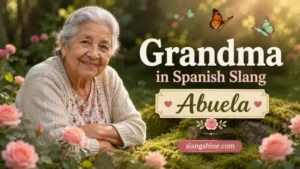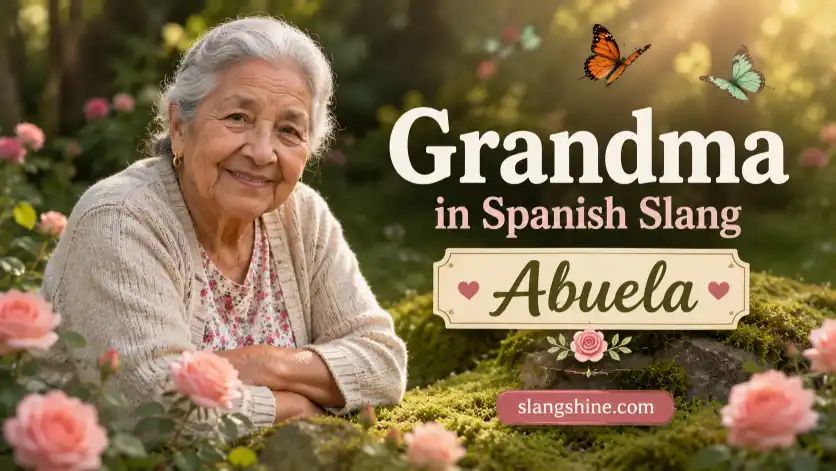
If you are searching for grandma in Spanish slang, the standard word is “abuela.” Common casual and affectionate forms include “abuelita,” “abu,” and “abue.” These forms are usually warm and familiar rather than rude.
Spanish does not have one universal slang word for “grandma.” Instead, speakers use affectionate names, shortened forms, and regional family nicknames. Abuela is the safest choice when you simply want to say “grandma” in Spanish.
This guide explains grandma in Spanish slang in simple terms, including the difference between standard Spanish and family nicknames.
It also covers Mexican usage, texting, regional names, and why words such as nana or tita may not mean exactly the same thing everywhere.
Quick Answer: Grandma in Spanish Slang
The standard Spanish word for grandma is “abuela.” Common affectionate or informal forms include “abuelita,” “abu,” and “abue.” Other names, such as yaya, nana, tita, or lita, may be used in particular families or regions, so there is no single slang word that works everywhere.
What Does “Grandma” Mean in Spanish Slang?
The standard Spanish word for grandma is:
Abuela = grandmother / grandma
For example:
Mi abuela vive cerca.
This means:
“My grandma lives nearby.”
Abuela is not slang. It is the normal Spanish word for a grandmother.
If you want the word to sound more affectionate, you may hear:
Abuelita
This can naturally mean “grandma,” “granny,” or a dear grandmother, depending on the situation.
The ending -ita adds an affectionate or familiar feeling. It does not normally mean that the grandmother is physically small.
What Does “Abuelita” Mean?
Abuelita is an affectionate form of abuela.
The change is:
abuela → abuelita
The -ita ending is a Spanish diminutive. Diminutives can show affection, familiarity, tenderness, or sometimes smallness.
For example:
Mi abuelita cocina muy bien.
means:
“My grandma cooks very well.”
Children often use abuelita, but adults can use it too.
It is also important to understand that abuelita is better described as an affectionate form than as true slang. Calling every affectionate family nickname “slang” can be misleading.
What Do “Abu” and “Abue” Mean?
Abu and abue are short, informal family forms related to abuela and abuelo.
For example:
Voy a visitar a mi abu.
Depending on the family, this could mean:
“I’m going to visit my grandma.”
Or:
“I’m going to visit my grandpa.”
The same is true of abue:
Hola, abue. ¿Cómo estás?
This can mean:
“Hi, Grandma/Grandpa. How are you?”
These nicknames are generally casual and affectionate. They can appear in family conversations, text messages, birthday posts, and social media captions.
Grandma in Spanish Slang by Tone
Different forms can communicate the same basic idea while giving the word a different feeling.
| Spanish term | Meaning | Tone |
| Abuela | Grandma / grandmother | Standard, neutral |
| Abuelita | Grandma / granny | Affectionate |
| Abu | Grandma or grandpa | Casual |
| Abue | Grandma or grandpa | Casual and familiar |
| Yaya | Grandma in some families | Regional/family |
| Nana | Grandma in some families | Regional/family |
| Tita | Grandma in some families | Regional/family |
| Lita | Grandma in some families | Affectionate/family |
If you do not know which nickname a family uses, abuela is the safest choice.
Origin and History of “Grandma” in Spanish Slang
The standard Spanish word for “grandma” is abuela, while affectionate forms such as abuelita and familiar nicknames like abue developed through everyday family use.
The word abuela ultimately comes from Latin avia, meaning “grandmother.”
Over time, Spanish-speaking families and regions developed their own informal ways of referring to grandmothers.
Terms such as abuelita, abue, nana, yaya, and nona can express affection and familiarity, although their popularity varies by country and family.
Is “Abuelita” Spanish Slang?
Not exactly.
Abuelita is an affectionate form of the standard word abuela, created with a Spanish diminutive ending. It is not a secret or coded slang term.
A diminutive can make a word sound:
- More affectionate
- More familiar
- Softer
- More playful
- More personal
So when someone says abuelita, they are usually showing warmth toward their grandmother.
This distinction is useful because the phrase “Spanish slang for grandma” can make it sound as though Spanish has one special slang word.
In reality, the choice often depends on family habits, region, and relationship.
What Do Mexicans Call Their Grandmas?
In Mexico, abuela is the standard word for grandma. Affectionate family forms such as abuelita, abue, and abu can also be used.
For example:
Voy con mi abuelita.
Can naturally mean:
“I’m going to my grandma’s.”
There is no single Mexican slang nickname that every family uses. One family may prefer abuelita, while another may use abue or a completely personal nickname.
So if someone asks, “What do Mexicans call grandmas?”, the safest answer is abuela, with affectionate alternatives depending on the family.
What Is a Cool Spanish Nickname for Grandma?
If you want a cool, cute, or casual Spanish nickname for grandma, there are several possibilities.
- Abue = short and familiar
- Abu = simple and casual
- Abuelita = warm and affectionate
- Yaya = used in some Spanish-speaking families
- Lita = a short family nickname in some usage
There is no officially “coolest” choice. A nickname that sounds natural in one family may sound unusual in another.
If you want a name that is widely understandable, Abue or Abuelita is a safer choice than a strongly regional nickname.
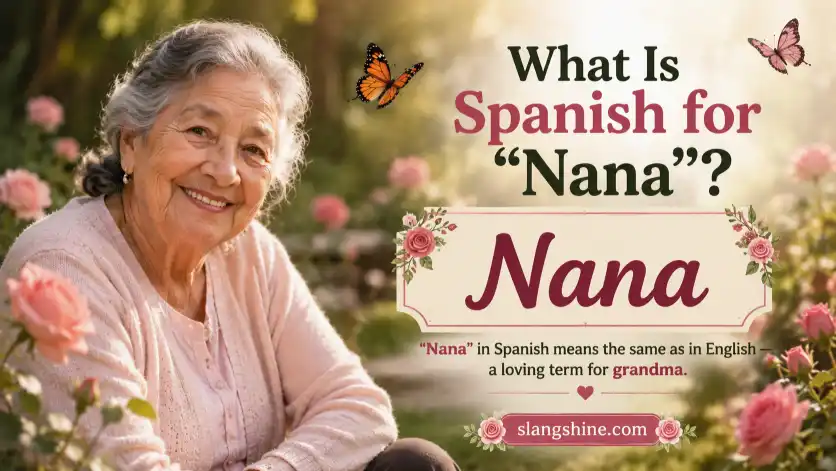
What Is Spanish for “Nana”?
Nana can mean “grandma” in some Spanish-speaking families, but it is not the standard word for grandmother. Its use varies by country, region, and family.
For example:
Mi nana vive con nosotros.
In a family where nana means grandma, this can mean:
“My grandma lives with us.”
However, nana can have other meanings in Spanish, including a nanny or caregiver in some contexts. That is why it is better not to treat nana as a universal replacement for abuela.
If you are learning Spanish and want a word that everyone is more likely to understand, abuela is the safer choice.
Regional Spanish Nicknames for Grandma
Spanish-speaking families use many different names for grandparents. Some are common in certain places, while others may be personal family nicknames.
The important thing is that not every nickname has the same meaning throughout the Spanish-speaking world.
What Does “Yaya” Mean?
Yaya is a family nickname for grandma in some Spanish-speaking communities.
For example:
Voy a visitar a mi yaya.
This can mean:
“I’m going to visit my grandma.”
It is best understood as an informal or regional family name, rather than a universal Spanish word for grandmother.
What Does “Tita” Mean?
Tita can be used as an affectionate family name for grandma in some Spanish-speaking communities.
However, its meaning changes by region. In Spain, tita can also be used informally for an aunt. Because of this difference, a Spanish learner should not assume that tita always means grandma.
This is a good example of why context and country matter when using family nicknames.
What Does “Lita” Mean?
Lita can be used as a short, affectionate family form connected with abuelita in some Spanish-speaking families.
For example:
Mi lita me llamó ayer.
If the family uses lita for grandma, the sentence means:
“My grandma called me yesterday.”
It is not a universal Spanish word, so it is best treated as a family nickname rather than standard Spanish.
What Does “Wela” Mean?
Wela is a colloquial family form used by some Spanish speakers for grandma. It is related to the pronunciation or shortening of abuela.
Because it is informal and regional, it may not sound natural to every Spanish speaker. If you are learning Spanish, abuela is still the clearest general choice.
What Does “Nona” Mean?
Nona is used as a grandmother nickname in some Spanish-speaking communities, particularly in parts of South America and in families influenced by Italian family traditions.
Its use is regional, so it should not be presented as a word that all Spanish speakers use.
Abuela vs. Abuelita: What Is the Difference?
The main difference is tone.
Abuela is the normal Spanish word for grandmother. Abuelita adds a warmer and more affectionate feeling.
| Word | Meaning | Tone |
| Abuela | Grandma / grandmother | Neutral |
| Abuelita | Grandma / granny | Affectionate |
| Abu | Grandma or grandpa | Casual |
| Abue | Grandma or grandpa | Casual |
| Yaya | Grandma in some families | Regional/family |
| Nana | Grandma in some families | Regional/family |
| Tita | Grandma in some families | Regional/family |
| Lita | Grandma in some families | Family nickname |
| Wela | Grandma in some families | Colloquial |
| Nona | Grandma in some communities | Regional |
The important point is that these words are not equally common everywhere.
Is “Grandma” in Spanish Slang or Just a Nickname?
“Abuela” is standard Spanish, not slang. Abuelita is an affectionate diminutive, while forms such as abu and abue are casual family nicknames.
Some other names may be called slang because they are informal, but “nickname,” “colloquial form,” or “regional family term” can sometimes be more accurate.
This distinction matters because a person searching for grandma in Spanish slang may expect one universal slang word. There really isn’t one.
Spanish speakers across different countries may use different names, and individual families can create their own nicknames.
How Do You Say “My Grandma” in Spanish?
The simplest expression is:
Mi abuela
This means:
“My grandma” or “my grandmother.”
For a warmer tone, you can say:
Mi abuelita
This still means “my grandma,” but it sounds more affectionate.
In a family that uses a short nickname, you may also hear:
Mi abue
The choice depends on the relationship and the family’s normal way of speaking.
How Do You Address Your Grandma in Spanish Slang?
If you are speaking directly to your grandmother, you can say:
¡Abuela!
This simply means:
“Grandma!”
A more affectionate option is:
¡Abuelita!
If the family uses abu or abue, those can also be used:
¡Hola, abue!
The best option is usually the name that the grandmother and her family already use.
Grandma in Spanish Slang Texting and Social Media
Family nicknames often appear in Spanish text messages and social media because they sound personal and warm.
For example:
Hola, abu ❤️
This means:
“Hi, Grandma ❤️”
Another example is:
Feliz cumpleaños, abuelita ❤️
meaning:
“Happy birthday, Grandma ❤️”
You might also see:
Te extraño, abue.
meaning:
“I miss you, Grandma.”
These examples show an important point: abu and abue are not necessarily internet slang. They are informal family forms that can be used both online and in normal conversation.
Is “Abuela” Formal or Informal?
Abuela is a neutral word, so it works in normal everyday speech and more careful communication.
For example:
Mi abuela vive en Madrid.
There is nothing rude or overly formal about this sentence.
If you are writing for school, explaining your family, or speaking with someone you do not know well, abuela is the safest choice.
Nicknames such as abu and abue are better suited to casual situations where the relationship is already familiar.
When Should You Avoid Using a Grandma Nickname?
Most of the common forms in this article are harmless and affectionate, but personal preference still matters.
If you meet someone’s grandmother for the first time, do not automatically assume that abu, abue, nana, or another nickname is what she prefers.
Using abuela is more neutral.
You should also be careful with regional words such as tita and nana, because their meanings can change depending on the country or context.
And although vieja can sometimes be used affectionately or jokingly for an older woman or family member in informal speech, it is not a safe universal word for grandma. Depending on the speaker and situation, it can sound blunt or disrespectful.
For formal writing, abuela is the better choice.
Why Do Spanish Speakers Use Diminutives for Grandma?
Spanish diminutives can add affection, familiarity, tenderness, or emotional warmth.
That is why:
abuela → abuelita
can make the reference feel more loving.
The -ito/-ita ending does not always mean “small.” Its meaning depends on the word and context.
With abuelita, the usual feeling is affection rather than a comment about the grandmother’s physical size.
Common Misunderstandings About Grandma in Spanish Slang
“Abuela is a slang word.”
No. Abuela is the standard Spanish word for grandmother.
“Abuelita means a physically small grandma.”
Not usually. The -ita ending can express affection or closeness rather than physical size.
“Abu always means grandma.”
Not necessarily. Abu can refer to either a grandmother or grandfather, depending on the family and context.
“Everyone in Latin America calls their grandma Nana.”
No. Different Spanish-speaking countries and families use different names.
“Tita always means grandma.”
No. Tita has regional differences and can refer to an aunt in some Spanish usage, including Spain.
“There is one universal Spanish slang word for grandma.”
No. Abuela is the standard widely understood word, while informal and affectionate names vary.
FAQs About Grandma In Spanish Slang
Q1. What is the most common slang word for grandma in Spanish?
Answer: There is no single universal slang word. Abuela is the standard word, while abuelita, abu, and abue are common affectionate or informal forms.
Q2. What do Mexicans call their grandmas?
Answer: In Mexico, abuela is the standard word for grandma. Abuelita, abue, and abu can also be used as affectionate family forms.
Q3. What is Spanish for nana?
Answer: Nana can mean grandma in some Spanish-speaking families, but it is not universal. Depending on the country and context, nana can also have another meaning, such as a nanny or caregiver.
Q4. What is a cool name for a grandma in Spanish?
Answer: Abue, abu, abuelita, yaya, and lita can work as cute or casual family names, although the most natural choice depends on the family’s country and preference.
Q5. What does “tita” mean when talking about family?
Answer: Tita can be a family nickname for grandma in some Spanish-speaking communities, but its meaning varies by region. In Spain, it can also be used informally for an aunt.
Q6. How do you say grandma in Spanish slang?
Answer: Abuela is the standard word, while abuelita, abu, and abue are common affectionate or informal forms. Other nicknames are more regional or family-specific.
Conclusion
When searching for grandma in Spanish slang, the most useful word to remember is abuela. It is the standard Spanish term and is widely understood.
For a warmer family tone, abuelita is a natural choice. Abu and abue are short, casual forms, while nana, yaya, tita, lita, wela, and nona may be used in particular families or regions.
The key is not to treat every nickname as universal slang. Spanish-speaking families have their own traditions, and a name that sounds natural in one country may be less familiar somewhere else.
If you are unsure, use abuela first. Once you know which name a family prefers, using that nickname will sound more natural and respectful.
Read More Spanish & Regional Slang:
- Paisa Slang Meaning: Pride, Culture, and Identity in One Word
- Paisa Meaning in Spanish Slang: Culture & Pride (2026 Guide)
- Cuban Slang Phrases: Common Words and Expressions

Hi, I’m Emma Carter, an English language writer with over 8 years of experience in vocabulary and language learning. At SlangShine, I write simple, accurate, and easy-to-understand articles about slang, synonyms, idioms, and everyday English to help learners build confidence and improve their communication skills.