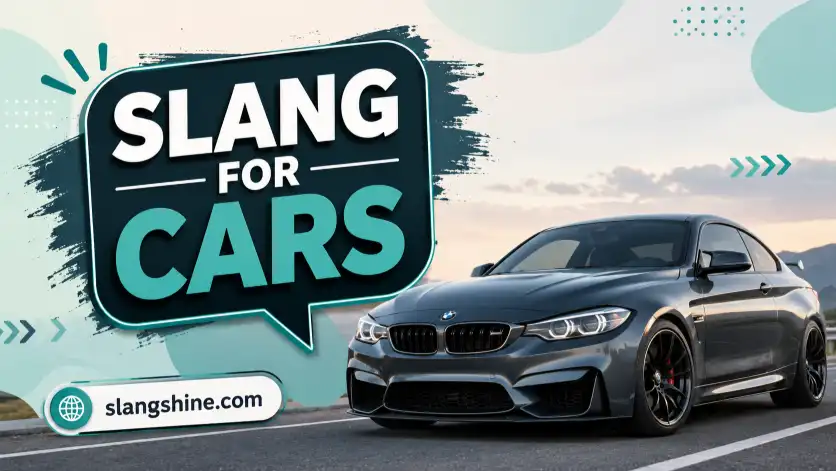
Slang for cars can make a simple conversation surprisingly confusing. You may see someone write “That’s a clean whip,” “I love your ride,” or “My old beater still runs,” and wonder if these words all mean the same thing.
People use car slang in texting, social media, gaming, car communities, and everyday conversations. Some terms simply mean “car,” while others tell you something about the vehicle’s condition, speed, appearance, or value.
The meaning can also change depending on the speaker’s tone and location.
If you are trying to understand car slang in a message or want a more casual word for your own vehicle, knowing the most common expressions makes these conversations much easier to follow.
Quick Answer: Slang For Cars
Common slang for cars includes whip, ride, wheels, beater, hooptie, clunker, jalopy, and sleeper. For a cool and casual word for a car, whip or ride are popular choices, while British speakers may use motor.
What Are Slang Words for Cars?
Slang words for cars are informal expressions people use instead of the standard word “car.” Unlike formal automotive terms, slang often adds personality, humor, admiration, or criticism.
Some common examples include:
- Whip = a car, often with a cool or stylish feeling
- Ride = someone’s car or vehicle
- Wheels = a casual term for a car or transportation
- Beater = an old or inexpensive car that is still usable
- Hooptie = a beat-up, old, or unreliable car
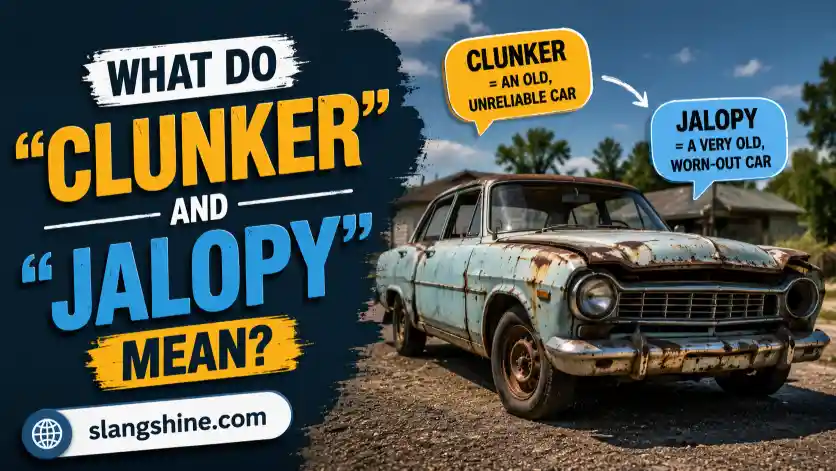
- Clunker = an old or poorly functioning car
- Jalopy = an old, worn-out car
- Sleeper = a car that looks ordinary but has unexpectedly strong performance
- Beast = an impressive or powerful car
- Lemon = a vehicle with serious or repeated problems
These words are not perfect synonyms. Whip can simply mean a person’s car, whereas beater tells you something about its condition.
Similarly, a sleeper describes a particular type of vehicle rather than simply replacing the word “car.”
That distinction is useful when reading slang online. If someone says, “Nice whip,” they are probably complimenting the vehicle.
If they say, “That old clunker,” they are likely making a negative or humorous comment.
What Does “Whip” Mean in Car Slang?
Whip is informal slang for a car. It is often used when someone is talking about their own vehicle or complimenting another person’s car.
For example:
“Check out my new whip.”
This means:
“Check out my new car.”
The word often has a cool, stylish, or confident tone, although the vehicle does not have to be expensive or luxurious.
You might also see:
“That’s a clean whip.”
Here, “clean” usually means the car looks particularly good, well-maintained, or attractive.
Whip is flexible enough to appear in jokes, captions, conversations, and online car communities. Cambridge Dictionary also lists “whip” as informal slang for a car.
What Do Gen Z Call Cars?
There is no single official Gen Z word for a car, but whip is one recognizable modern slang choice associated with younger internet and car culture.
It is important not to describe “whip” as exclusively Gen Z slang. The term has a longer history in popular and automotive culture, and people outside Gen Z can use it too.
Gen Z drivers may also use ordinary words such as “car” and “ride,” or give their vehicles personal nicknames.
A 2024 Honda UK study reported that many Gen Z drivers give their cars names, showing that younger drivers do not rely on one universal slang word for vehicles.
So, if someone asks, “What do Gen Z call cars?” whip is a useful answer, but it should be treated as one slang option rather than a special Gen Z-only word.
What Is a Cool Word for Car?
If you want a cool, casual word for a car, whip is one of the strongest choices.
For example:
“That new whip looks sick.”
The sentence expresses admiration and sounds much more casual than:
“That new car looks good.”
Other cool alternatives include:
- Ride = casual and widely understood
- Wheels = relaxed and slightly classic
- Beast = emphasizes power or impressive performance
- Sleeper = suggests hidden performance
- Hot rod = often associated with customized or performance-oriented cars
The right term depends on what you want to emphasize. If you simply mean “my car,” ride is easy.
If you are showing off a stylish vehicle, whip fits better. If the vehicle is extremely powerful, beast communicates that idea more clearly.
What Does “Ride” Mean in Car Slang?
Ride is a common informal word for someone’s car or vehicle. It is one of the easiest slang terms to understand because it usually does not judge the vehicle’s quality.
For example:
“I’ll pick you up in my ride.”
This means:
“I’ll pick you up in my car.”
You can also use it when complimenting someone:
“That’s a nice ride.”
Unlike words such as hooptie or clunker, ride is generally neutral or positive.
That makes it useful when you want your language to sound casual without suggesting that a car is old, cheap, damaged, or unreliable.
What Does “Wheels” Mean in Slang?
Wheels can be used informally to mean a car or personal transportation.
For example:
“I finally got some new wheels.”
In most casual contexts, the speaker means they got a new car rather than literally purchasing new wheels.
You might also hear:
“Do you have wheels tonight?”
This can mean:
“Do you have access to a car tonight?”
The expression has a somewhat classic feel compared with newer internet slang such as “whip,” but it remains easy to understand in informal conversation.
What Does “Beater” Mean for a Car?
A beater is usually an old, inexpensive, or rough-looking car that someone continues to drive because it is still useful.
A beater may have:
- High mileage
- Scratches or dents
- Faded paint
- An outdated interior
- Cosmetic damage
However, being a beater does not necessarily mean the car is mechanically useless.
For example:
“I’m taking the beater to work so I don’t have to worry about parking.”
The owner may actually prefer using the older vehicle for everyday errands because it is cheaper and less stressful to maintain.
The term is often humorous or mildly negative, but people frequently use it affectionately when talking about their own cars.
What Does “Hooptie” Mean?
Hooptie is slang for an old, beat-up, poorly maintained, or unreliable car.
For example:
“My hooptie barely made it home.”
The speaker is joking about the car’s condition.
It can also be used affectionately:
“It’s an old hooptie, but I love it.”
In that sentence, the owner is making fun of the car while showing that they still have an emotional connection with it.
Because hooptie can sound insulting when directed at someone else’s vehicle, it is best used when the relationship and context are clearly casual.
What Do “Clunker” and “Jalopy” Mean?
Clunker describes an old, poorly functioning, or low-quality car.
For example:
“I finally replaced that old clunker.”
The speaker is probably unhappy with the vehicle.
Jalopy has a similar meaning, but it sounds more old-fashioned and humorous.
For example:
“He arrived in an old jalopy.”
The word can create a playful image of a tired, outdated vehicle.
Both terms can be negative, but friends may use them jokingly. Context matters more than the word alone.
What Does “Sleeper” Mean in Car Slang?
A sleeper is a car that looks ordinary or unremarkable but has unexpectedly strong performance.
For example:
“Nobody expected that family sedan to be so fast. It’s a sleeper.”
The key idea is the contrast between appearance and performance.
A sleeper may look like a normal daily driver from the outside while having a powerful engine or significant performance upgrades underneath.
This term is particularly useful in car enthusiast conversations because it communicates a specific idea that “fast car” does not.
What Is British Slang for a Car?
British car slang has some terms that are less common in American English. Two useful examples are motor and banger, although their meanings are different.
Motor
Motor can be used informally in British English to mean a car or vehicle.
For example:
“I need to take the motor to the garage.”
Here, motor does not necessarily say anything negative about the vehicle. It can simply mean car.
Banger
Banger usually describes an old car in poor condition.
For example:
“He still drives that old banger.”
The term is generally humorous or mildly negative. Cambridge Dictionary defines this automotive use of “banger” as a very old car in bad condition.
Barge
Barge can be used humorously for a large, heavy-feeling car. It is more descriptive than a general synonym for “car.”
Wagon
Wagon can appear as an informal vehicle term in some British contexts, although usage varies by region and speaker.
British slang is not completely uniform, so it is better to treat these as examples of British car vocabulary rather than words every British person uses.
Common Slang for Cars at a Glance
| Slang term | Basic meaning | Tone |
| Whip | Car | Cool/casual |
| Ride | Personal car | Neutral/casual |
| Wheels | Car or transportation | Casual |
| Beater | Old but usable car | Humorous |
| Hooptie | Beat-up old car | Humorous/negative |
| Clunker | Old or poorly functioning car | Negative/humorous |
| Jalopy | Old, worn-out car | Old-fashioned/humorous |
| Sleeper | Ordinary-looking but powerful car | Positive |
| Beast | Powerful or impressive car | Positive |
| Motor | British informal term for car | Casual |
| Banger | Old car in poor condition | Humorous/negative |
Why Does Car Slang Have Different Meanings?
The biggest reason is context.
When someone says:
“I love my whip.”
They are probably expressing pride or affection.
When someone says:
“My whip broke down again.”
The same word still means “car,” but the surrounding sentence changes the emotional meaning.
Other terms carry more specific information. Beater suggests an older practical vehicle, while sleeper tells you something about performance.
Banger can tell you that a British speaker is referring to an old car in poor condition.
This is why translating every slang word simply as “car” can miss part of the message. The slang often tells you how the speaker feels about the vehicle, not just what the vehicle is.
Where Is Car Slang Commonly Used?
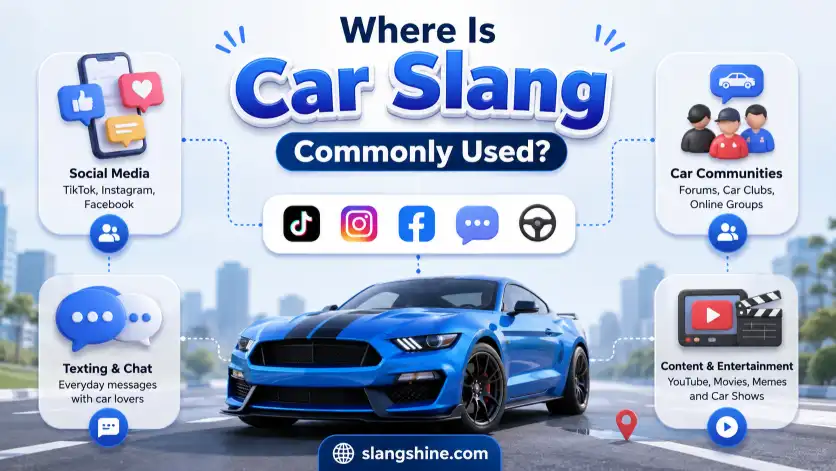
Car slang is most common in informal communication, where people want to sound relaxed, expressive, or connected to a particular community. The exact terms can vary by age, country, and context.
Texting and Messaging
In everyday texts, people often use slang because it sounds more natural and conversational.
For example:
“I’ll pick you up in my whip.”
Or:
“Can you bring your ride tonight?”
Both messages refer to a car, but the slang gives them a more casual tone.
TikTok and Instagram
Car slang also works well in short captions, comments, and videos because it communicates an opinion quickly.
Someone showing a modified car might post:
“Finally finished the whip 🔥”
Another person could comment:
“That thing is a beast.”
Here, “beast” does not literally mean car. It expresses admiration for the vehicle’s appearance, power, or performance.
Reddit and Discord
Car communities often combine general slang with enthusiast terminology. A discussion about an inexpensive daily driver might mention a beater, while a performance discussion could describe an ordinary-looking but fast vehicle as a sleeper.
The community can also influence how a term feels. A word that sounds insulting to an outsider may be completely normal among friends who regularly discuss cars.
Gaming
Car slang can appear in racing and open-world games as well.
For example:
“I just upgraded my whip.”
Here, whip simply refers to the player’s car. It does not have to describe a real-world vehicle.
How Does Car Slang Change by Tone?
The same general idea can sound very different depending on the word you choose.
Positive Car Slang
These expressions usually communicate admiration:
- Beast = an impressive or powerful vehicle
- Sleeper = a car with unexpectedly strong performance
- Hot rod = commonly associated with customized performance cars
- Clean = describes a vehicle that looks especially good or well-maintained
For example:
“That car is a beast.”
The speaker is clearly praising the vehicle.
Neutral Car Slang
Some terms simply make a conversation less formal:
- Ride
- Wheels
- Motor
- Whip
These words do not automatically tell you if the car is good or bad. The rest of the sentence provides that information.
Negative or Humorous Car Slang
These terms can suggest age, damage, low value, or poor reliability:
- Beater
- Hooptie
- Clunker
- Jalopy
- Banger
- Lemon
For example:
“That old hooptie finally died.”
The speaker is making a negative or humorous comment about the vehicle.
Real-Life Examples of Slang for Cars
Seeing these terms in different situations makes their meanings easier to understand.
Friendly Example
“Your new whip looks awesome!”
This is a straightforward compliment about someone’s car.
Casual Example
“I’ll meet you there. I’m taking my ride.”
The speaker simply means they are taking their car.
Compliment Example
“That thing is an absolute beast.”
The vehicle is being praised for its power, appearance, or overall performance.
Humorous Example
“My beater survived another road trip.”
The speaker is joking about an old or inexpensive car that is still doing its job.
Argumentative Example
“Move that clunker out of the driveway.”
Here, clunker is being used negatively and could easily sound insulting.
Car Enthusiast Example
“It looks completely stock, but it’s actually a sleeper.”
The car appears ordinary but has much stronger performance than people expect.
British Example
“He still drives that old banger.”
The speaker is referring to an old car that is in poor condition.
Gaming Example
“That’s my favorite whip in the game.”
The player is referring to their favorite virtual car.
These examples show why context and tone are essential. A word can be affectionate when someone uses it for their own car but insulting when directed at someone else’s vehicle.
Slang for Cars vs. Similar Terms
Not every car-related slang word is a direct replacement for “car.” Some terms describe a specific quality, condition, or type of vehicle.
| Term | What it describes | Typical use |
| Whip | A car | Talking about a car casually |
| Ride | A person’s vehicle | Everyday conversation |
| Wheels | A car or transportation | Informal speech |
| Beater | An old, inexpensive car | Cheap daily transportation |
| Hooptie | A beat-up vehicle | Humor or criticism |
| Clunker | An old or poorly functioning car | Complaining about a vehicle |
| Jalopy | An old, worn-out car | Humorous or old-fashioned speech |
| Sleeper | An ordinary-looking fast car | Car enthusiast discussions |
| Beast | A powerful or impressive vehicle | Compliments |
| Lemon | A vehicle with serious problems | Describing a troublesome car |
This distinction is important when understanding car slang meaning in text.
For example, calling something a sleeper gives more information than simply calling it a whip. A whip can refer to almost any car, while a sleeper specifically suggests hidden performance.
Why Do People Use Slang for Cars?
Car slang is not only about replacing one word with another. It can communicate personality, emotion, humor, and group identity.
It Makes Conversations More Casual
Compare:
“I bought a new car.”
With:
“I just got a new whip.”
The second sentence sounds more relaxed and expressive.
It Shows Enthusiasm
Words such as beast communicate excitement without requiring a long explanation.
“That car is a beast.”
The listener immediately understands that the speaker is impressed.
It Creates Community
Car enthusiasts often share specialized vocabulary. Using terms such as sleeper, beater, or hot rod can make conversations within car communities easier to follow.
The same principle appears in gaming communities, where players develop informal names for vehicles, modifications, and driving styles.
It Adds Humor
Calling an aging vehicle a hooptie or jalopy can make a conversation playful.
Someone may complain about their old car while still being genuinely attached to it.
When Should You Avoid Using Car Slang?
Car slang works well in casual situations, but it is not suitable everywhere.
Avoid slang when you are:
- Writing an official vehicle report
- Preparing a legal document
- Describing a vehicle for insurance
- Creating a professional sales document
- Writing technical automotive instructions
- Communicating with a customer in a formal setting
For example, a mechanic would normally say:
“The vehicle has a transmission problem.”
Rather than:
“Your whip has a bad gearbox.”
Formal communication requires precision, while slang is mainly useful for relaxed conversation.
If you are unsure if someone understands a slang term, simply use “car” or “vehicle.”
Is Slang for Cars Rude or Offensive?
Most common car slang is not inherently offensive, but some words can sound disrespectful depending on how they are used.
Calling your own vehicle a beater can be completely harmless:
“It’s not pretty, but my beater gets me to work.”
However, calling someone else’s expensive car a clunker could easily sound insulting.
The relationship between the speakers also matters. Friends may jokingly call each other’s cars hoopties, while the same comment from a stranger could be taken negatively.
When you want to stay friendly, choose neutral terms such as ride, car, or vehicle.
Is Car Slang Safe to Use on Social Media?
Yes. Common car slang is generally suitable for TikTok, Instagram, Reddit, Discord, Snapchat, gaming chats, and casual posts.
Terms such as whip, ride, wheels, sleeper, beast, beater, and hooptie are generally understandable in informal contexts.
The bigger issue is not the slang itself but how you use it.
For example:
“My hooptie made it through another winter 😂”
is clearly playful.
But:
“Your car is a pathetic clunker.”
is deliberately insulting.
Before posting, consider if your wording sounds like a compliment, a joke, or an attack. Context can completely change how a slang expression is received.
FAQs About Slang for Cars
1. Is “whip” still used for cars today?
Answer: Yes. Whip remains recognizable as casual slang for a car, particularly in informal conversations, online culture, and some car communities. It is not limited to one generation.
2. What does “clean” mean when talking about a car?
Answer: Clean usually means a car looks attractive, polished, well-maintained, or nicely modified. It is generally a compliment rather than a comment about cleanliness alone.
3. What does “sick” mean when someone describes a car?
Answer: In casual slang, sick can mean extremely cool, impressive, or exciting. “That car is sick” normally expresses admiration rather than criticism.
4. What does “built” mean in car culture?
Answer: Built often suggests that a car has been modified or prepared for stronger performance. The exact meaning depends on the upgrades being discussed, such as engine, suspension, or drivetrain modifications.
5. What does “stock” mean when talking about a car?
Answer: Stock generally means the vehicle remains close to its original factory specification rather than having major aftermarket modifications. It is common language among automotive enthusiasts.
6. Why do car enthusiasts use so many different slang terms?
Answer: Different terms can communicate more than the basic word “car.” They may describe condition, performance, appearance, age, personality, or the owner’s attitude toward the vehicle.
Conclusion
Slang for cars ranges from simple casual alternatives such as whip, ride, and wheels to more descriptive expressions such as beater, hooptie, sleeper, beast, and banger.
If you’re looking for a cool word for a car, whip is a popular choice, while ride is a more neutral option. When asking what do Gen Z call cars, remember that there is no single Gen Z term; younger people use a mixture of established slang, everyday language, and personal nicknames. British usage also differs, with terms such as motor and banger appearing in informal contexts.
The most important rule is to match the slang to the situation. A playful term can make a text or social media caption more natural, but professional communication should use clear and precise language.
Understanding the context behind each expression makes car slang much easier to recognize and helps you use the right word without accidentally making a compliment sound like an insult.
More Slang Meanings:
- Slang for 1000 Dollars: Common Terms & Meanings in 2026
- Slang for Amazing: Meaning, and Modern Usage in 2026
- Twitch Slang: Meanings, Terms, and Chat Language

Hi, I’m Anna Whitmore. I have 7+ years of experience writing about English slang and vocabulary. At SlangShine, I create simple, easy-to-understand content for English learners.